The Church of the Holy Trinity, often called Hollakangas by locals, sits quietly on a gentle hill in the heart of Oulu. It doesn’t demand attention like the grand cathedrals of Europe, yet those who take the time to notice it often find themselves lingering longer than expected. The red-brick walls and modest spire blend seamlessly into the surrounding wooden houses and green spaces, as if the church has always been part of the city’s rhythm. There’s something unassuming yet enduring about it—a place where time seems to move at its own pace, untouched by the rush of modern life.
Oulu in the mid-18th century was a small but thriving trading town, and its growing population needed a larger place of worship. The old wooden church no longer sufficed, so in 1777, plans were made for a new stone building. Designed by architect Matti Honka, the church was completed within a few years, embodying the restrained elegance of late Baroque style without the extravagance often associated with it. Honka’s work here reflects the practical spirit of the North—functional, yet with a quiet dignity that has allowed the church to remain relevant for centuries.
From the outside, the Church of the Holy Trinity follows the familiar lines of Scandinavian Lutheran architecture: a rectangular structure with steep gabled roofs, tall windows, and a small bell tower above the entrance. Inside, the space is divided into three naves by sturdy columns, with light streaming in through the large windows to create an atmosphere of calm. The interior is simple—whitewashed walls, wooden pews, a modest altar, and an organ that has filled the space with music for generations. There’s no excess here, just a sense of harmony that feels both timeless and welcoming.
The church has witnessed much of Oulu’s history, including the devastating fires that swept through the city in the 19th century. During the great fire of 1822, Hollakangas stood unscathed while much of the surrounding area was destroyed. This resilience only deepened its significance for the people of Oulu, turning it into a symbol of endurance. Over the years, the church has undergone restorations, but these have always been careful to preserve its original character. Unlike many historic buildings that are altered beyond recognition, Hollakangas retains the essence of what it has always been.
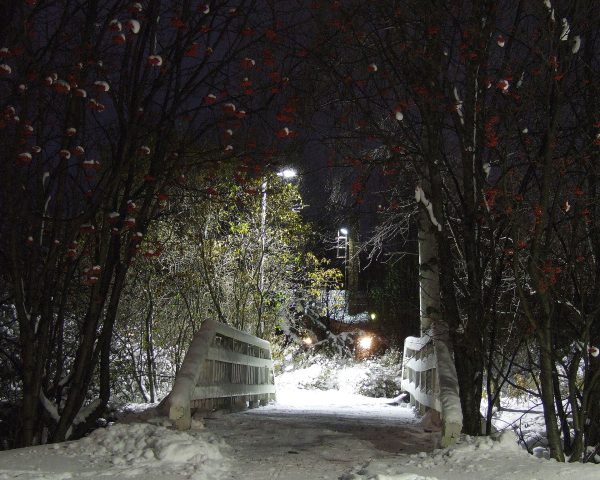
Today, the church remains an active part of the community. Services are held regularly, and the space is often used for organ concerts and exhibitions that explore the region’s heritage. In summer, visitors wander up the hill to admire the building and its surroundings, while in winter, the soft glow of its lights against the snow adds a touch of warmth to the cold northern evenings. It’s not a place that seeks to impress with grandeur or spectacle; instead, it offers something far more subtle—a sense of continuity, a quiet refuge from the noise of the world.
For those interested in Finland’s past, the church provides a natural starting point for exploring Oulu’s history. Nearby, the old cemetery holds the graves of many notable figures from the city’s golden age of trade and seafaring in the 18th and 19th centuries. The headstones tell stories of merchants, sailors, and families who shaped the region, while memorials to those lost in wars serve as reminders of the hardships endured by this northern land. Walking among them, it’s easy to feel the weight of history—not as something distant, but as a living part of the present.
What makes Hollakangas special is the way it bridges the gap between past and present without effort. There’s no need for dramatic flourishes or elaborate decorations; the church’s strength lies in its simplicity. Inside, the silence feels different—thicker, somehow, as if carrying the echoes of countless prayers, songs, and whispered conversations over the centuries. It’s a place where visitors can sit for a moment, away from the bustle of the city, and reflect on the passage of time.
Perhaps that’s why the church draws people in. It doesn’t ask for admiration, but it earns it nonetheless. There’s a humility to Hollakangas, a sense that it has always been here and will continue to be, long after the latest trends have faded. In a world that often values the new and the flashy, the Church of the Holy Trinity stands as a reminder of the quiet beauty that comes with endurance. It’s not just a building; it’s a piece of Oulu’s soul.