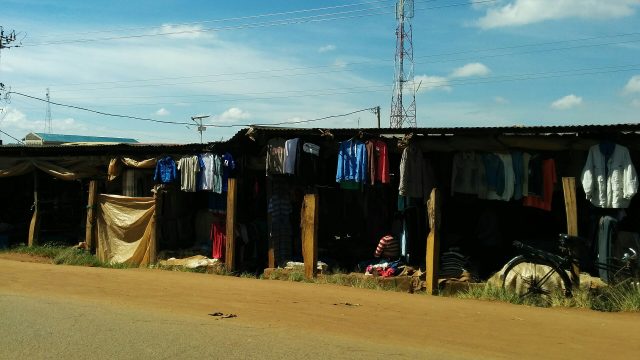
Saint Joseph’s Church in Kitale is the kind of place that doesn’t demand attention but lingers in the mind long after you’ve left. Tucked away on the edge of town, where paved roads give way to dusty tracks and the hum of the city fades into the slower rhythm of rural life, it stands quietly, almost unassumingly. There are no crowds here, no tour buses, no polished signs pointing the way—just the quiet presence of a building that has witnessed decades of ordinary lives unfolding within its walls.
The church was built in the early 1900s, a time when Uganda was under British rule and Catholic missionaries were establishing footholds in the region. Kitale was little more than a settlement then, surrounded by savannah and rolling hills, where local communities lived much as they had for generations while outsiders began to leave their mark. Saint Joseph’s was one of the first permanent structures in the area, a symbol of the new faith taking root alongside the old ways. Its architecture reflects that era—simple, functional, without ornamentation. The lines are clean, the materials unpretentious, as if the builders were more concerned with purpose than grandeur. There’s something quietly moving about that restraint, a sense that the church was meant to serve, not to impress.
Inside, the space feels lived-in rather than preserved. The wooden altar is carved with modest patterns, the pews worn smooth by generations of worshippers, the walls bearing layers of paint that haven’t been refreshed in years. It’s not a place of opulence, but that’s part of its charm. The air carries the faint scent of old wood and candle wax, and if you look closely, you might spot faded photographs tucked into corners—images of long-gone congregations, priests in cassocks, children in their Sunday best. These faces are gone now, but their presence lingers, as if the church itself is holding onto their memories.
For the people of Kitale, Saint Joseph’s is more than just a place of worship. It’s where baptisms, weddings, and funerals mark the milestones of life, where families gather week after week, some out of habit, others out of need. On Sundays, the church fills with voices raised in song, the sound spilling out into the quiet streets. For some, it’s a tradition passed down through generations; for others, it’s a rare moment of stillness in lives that are otherwise full of hard work and uncertainty. In a town where change comes slowly, the church remains a constant, a place where the past and present coexist without friction.
The area around the church offers a glimpse into the everyday life of Kitale. The town itself is small, with low-slung buildings draped in greenery and streets that move at their own unhurried pace. Nearby, the morning market bustles with activity—vendors selling piles of ripe mangoes, bananas, and pineapples, their stalls shaded by makeshift awnings. Women in bright kitenge fabrics balance baskets on their heads, children dart between the rows, and elders sit on benches, watching the world go by. The market isn’t a tourist attraction; it’s just life, unfolding as it always has. That sense of continuity makes a visit to the church feel even more authentic, as if you’ve stepped into a rhythm that existed long before you arrived and will continue long after you’ve left.
Saint Joseph’s is a place where history feels tangible, not because of grand events or famous names, but because of the quiet accumulation of small moments. It stands as a reminder of how the region has changed over the past century—from colonial rule to independence, from traditional ways of life to the creeping influence of modernity. Yet it also feels timeless, as if the prayers whispered within its walls a hundred years ago still echo in the rafters. There’s no tension here between old and new, no sense that the church is out of place in its surroundings. Instead, it feels like a natural part of the landscape, as much a part of Kitale as the hills that rise in the distance.
For travelers who venture beyond Uganda’s more famous attractions, Saint Joseph’s offers something rare: a chance to see the country through the eyes of those who call it home. There are no guided tours, no souvenir stands, no scripted experiences—just the quiet dignity of a place that has served its community for generations. The light filtering through the tall windows casts long shadows on the stone floor, and the air is still, as if inviting you to pause for a moment. It’s not the kind of place that leaves you breathless, but it might be the kind that stays with you, a quiet reminder of the beauty in ordinary things.