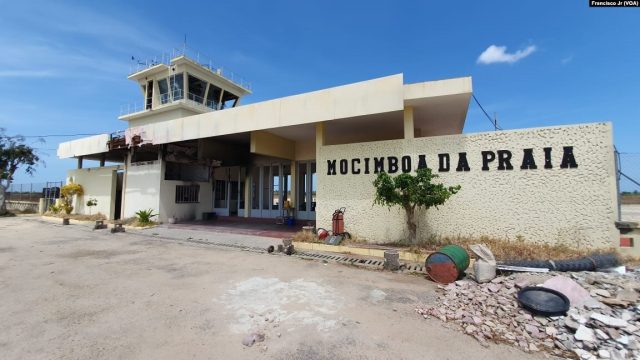
Saint Anthony’s Church in Mocímboa da Praia feels like a quiet witness to centuries of change. Perched on a gentle rise near the ocean, it stands apart from the grand cathedrals of the world, its unassuming whitewashed walls and single bell tower blending into the coastal landscape. There’s no fanfare here, no ornate carvings or towering spires—just a sense of endurance, as if the building itself has learned to weather time with grace.
The architecture is classic of Portugal’s colonial churches in East Africa: thick walls to keep out the heat, wooden shutters that creak in the sea breeze, and a simple interior where sunlight filters through narrow windows. The wooden pews are worn smooth by generations of hands, the altar modest, the icons few. It’s a place built for reflection, not spectacle, where every detail feels deliberate, as if the builders knew this church would outlast them.
Mocímboa da Praia was founded in the 16th century as a trading post, a fleeting stop for ships carrying spices, ivory, and enslaved people between Africa and Asia. The town grew around the rhythms of the ocean, its people a mix of Portuguese settlers, Swahili traders, and local communities. For the colonizers, Saint Anthony’s was more than a place of worship—it was a foothold in unfamiliar territory, a reminder of home in a land that often felt hostile.
The church arrived at a time when Islam and traditional beliefs shaped daily life along the coast. Its presence was less about conversion than about marking territory, a quiet assertion of faith in a region where religion had always been fluid. For the Portuguese, it offered solace; for the townspeople, it became part of the landscape, another layer in the town’s complicated history.
Decades of war and upheaval left their marks on Mocímboa da Praia, but the church endured. During the civil war, it survived shelling and neglect, its walls bearing the scars of conflict. Locals say it became a refuge when little else was certain—a place where people gathered not just to pray, but to remember what they still had. After the fighting stopped, the community repaired what they could, patching the roof, repainting the walls, keeping the bell ringing.
Today, the town moves at the pace of the tides. Fishermen mend their nets on the shore, children chase each other through dusty streets, and elders sit in the shade, watching the waves roll in. The church fits into this rhythm effortlessly. On Sundays, the bell calls the faithful, and for a moment, the rest of the world fades. The service is simple, the hymns familiar, the sense of continuity unshaken.
For visitors, Saint Anthony’s might not demand attention the way more famous landmarks do. There are no guided tours, no plaques explaining its significance—just the sound of the ocean nearby and the weight of history in the air. It’s the kind of place that reveals itself slowly, if at all. You might sit on the steps for a while, listening to the wind, or step inside to escape the midday sun, and find yourself wondering about the hands that built it, the lives it has touched.
Mozambique’s colonial past is often overshadowed by its natural beauty, but places like Mocímboa da Praia offer a different kind of draw. Here, history isn’t confined to museums or textbooks; it’s alive in the cracks of the church’s walls, in the way the light falls across the altar, in the stories that linger just beneath the surface. The church doesn’t need to be grand to matter. It has survived because it belongs—not just to the past, but to the people who still find meaning in its quiet presence.
It won’t be the reason most travelers come to Mozambique. There are no beaches here, no luxury resorts, no promises of adventure. But for those who seek it out, Saint Anthony’s offers something rarer: a moment of stillness, a connection to a place that has seen empires rise and fall, and yet remains. It’s not frozen in time—it breathes, it changes, it endures. And if you’re lucky, you might leave feeling like you’ve glimpsed a little of what it has seen.