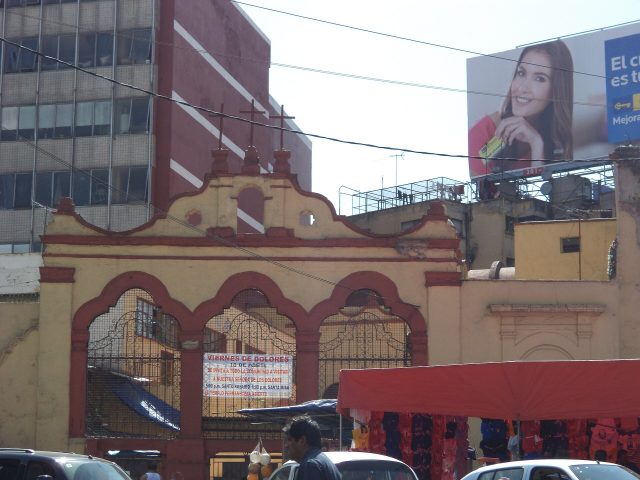
San Joaquín Church in Tacubaya is one of those rare places where time seems to have paused, preserving the quiet spirit of old Mexico. Perched on a hill, it overlooks the sprawling city below, a view that has changed little in its essential character since the church was built in the late 18th century. Tacubaya was once a distinct village, its fields and orchards supplying the capital with fresh produce, but today it’s absorbed into the vast urban expanse of Mexico City. Yet here, on this elevated ground, the pace of life still feels slower, as if the past lingers in the air.
The church’s architecture reflects the blending of colonial influences with local craftsmanship. Its facade, carved from pale stone, is understated yet elegant, with simple moldings and niches that once held statues of saints. Inside, the space is airy and uncluttered, with high vaulted ceilings supported by dark wooden beams. The altar, though modest compared to the grand cathedrals of the city center, gleams with gilded details, its restrained beauty drawing the eye without overwhelming the senses. The overall effect is one of quiet dignity, a place where the weight of history feels present but not oppressive.
Tacubaya’s history is closely tied to the church. During the colonial era, the area was dominated by haciendas, large estates where fruits and vegetables were cultivated for the capital. San Joaquín served as both a spiritual hub and a gathering place for landowners and laborers alike. Over time, Tacubaya was swallowed by the growing city, but the church remained a constant, a reminder of the days when life moved at a different rhythm. The surrounding streets still hold traces of that past, with old mansions and gardens that hint at the area’s former character.
What makes San Joaquín particularly special is its setting. From the church steps, you can see the layers of the city unfold—the modern high-rises giving way to older neighborhoods, where low-slung houses and leafy courtyards still define the landscape. Some of the historic buildings nearby have been repurposed as museums or cultural centers, adding another dimension to the area. A walk through the surrounding streets feels like stepping through different eras, where the past and present coexist without tension.
Unlike the more famous landmarks of Mexico City, San Joaquín doesn’t attract crowds. There are no tour buses idling outside, no vendors hawking souvenirs. Instead, the church remains a place where locals come not just for services but to sit on the benches under the trees, watching the city stretch out below. On weekends, a small market often springs up nearby, selling homemade food, handcrafted goods, and fresh flowers. It’s the kind of place where you might strike up a conversation with someone simply because you’re both enjoying the same quiet moment.
Inside the church, small details tell stories of its long history. The walls bear faded frescoes depicting scenes from the lives of saints, their colors softened by time. The wooden pews, worn smooth by generations of worshippers, add to the sense of continuity. The altar, though not as ornate as those in the city’s grander churches, has a balance and harmony that make it feel timeless. There’s no sense of spectacle here, just a quiet acknowledgment of the lives that have passed through these doors.
San Joaquín is more than just a historic building; it’s a living connection to the past. In a city as vast and fast-moving as Mexico City, it offers a rare opportunity to pause and reflect. That’s why people come here—not just the faithful, but anyone who feels the need to step away from the noise and remember that some things endure. The church doesn’t demand attention; it simply waits, as it has for centuries, for those who seek its quiet presence.