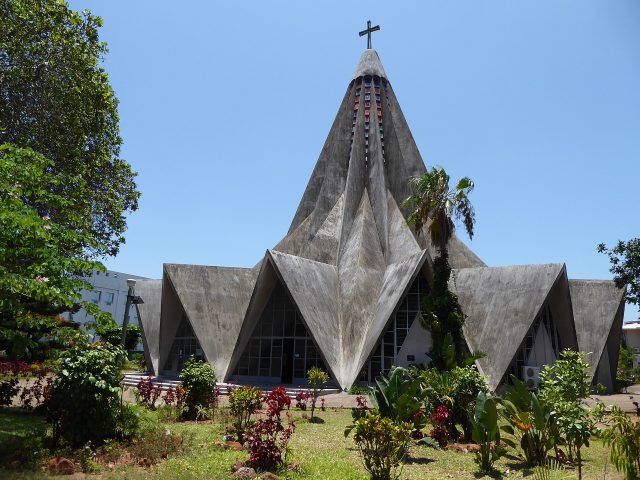
Perched on the edge of a crumbling bastion, the Chapel of Our Lady overlooks the Indian Ocean. It stands in Mozambique Island, where the past lingers in the salt air, where the footsteps of Portuguese sailors, Arab traders, and African fishermen still seem to echo along the narrow streets. This small chapel might easily be missed among the imposing stone walls of the old fort, but it holds a story of faith woven into the fabric of war, trade, and survival.
Built in the late 16th century as part of Fort São Sebastião, the chapel was a strategic outpost in a fortress that guarded one of the most vital ports on the East African coast. Mozambique Island was a crossroads where spices, gold, and enslaved people changed hands between continents. The fort’s thick coral-stone walls were meant to repel invaders, but the chapel offered a moment for soldiers facing battle, for merchants praying for safe voyages, for anyone seeking refuge from life at sea. Here, the sacred and the military existed side by side.
The chapel’s architecture reflects its purpose. The walls are sturdy and unadorned, the ceiling low and vaulted, the windows narrow—designed for defense. Inside, the space feels intimate. A few faded icons hang on the walls, the wooden altar is simple, and the stone floor bears the marks of centuries of footsteps. This simplicity makes the chapel feel authentic, as if it has remained untouched by time.
Over the centuries, the chapel’s role changed with the island’s fortunes. When the fort lost its military importance, it became a place of pilgrimage for locals and sailors. In the 19th century, as Mozambique became a Portuguese colony, it stood as a symbol of Catholic influence in a region where Islam and traditional African beliefs had long held sway. Today, it remains an active place of worship. The services here are quiet, attended by a handful of faithful.
The bastion offers one of the best views of the old harbor. From here, you can watch fishing boats glide across the water, their sails catching the wind. Nearby, the ruins of Portuguese warehouses stand as reminders of the island’s past as a center of commerce. The streets around the fort are a maze of history, where African, Arab, and European influences blend in carved wooden doors, wrought-iron balconies, and small shops selling spices.
Mozambique Island is not a place where history is confined to museums.
It lives in the stones, in the rhythm of daily life.
The Chapel of Our Lady on the Bastion is one of those spots where you can feel that connection. It doesn’t demand attention like a grand monument. Instead, it invites you to pause, to listen, to imagine the voices that have filled this space over the centuries—prayers whispered in Portuguese, orders in Swahili, the haggling of traders in a dozen languages.
Standing here, the weight of history is almost tangible. The chapel doesn’t romanticize the past; it bears witness to it. It reminds you that empires rise and fall, that trade routes shift, that faith persists even as the world changes. In its quiet way, it tells a story of conquest and resistance, of exchange and exploitation, of the lives that have intersected here.
If you visit, the chapel won’t dazzle you with its beauty. What it offers is a sense of continuity, a thread connecting the present to a past that is still alive. In a world where so much is fleeting, that matters.