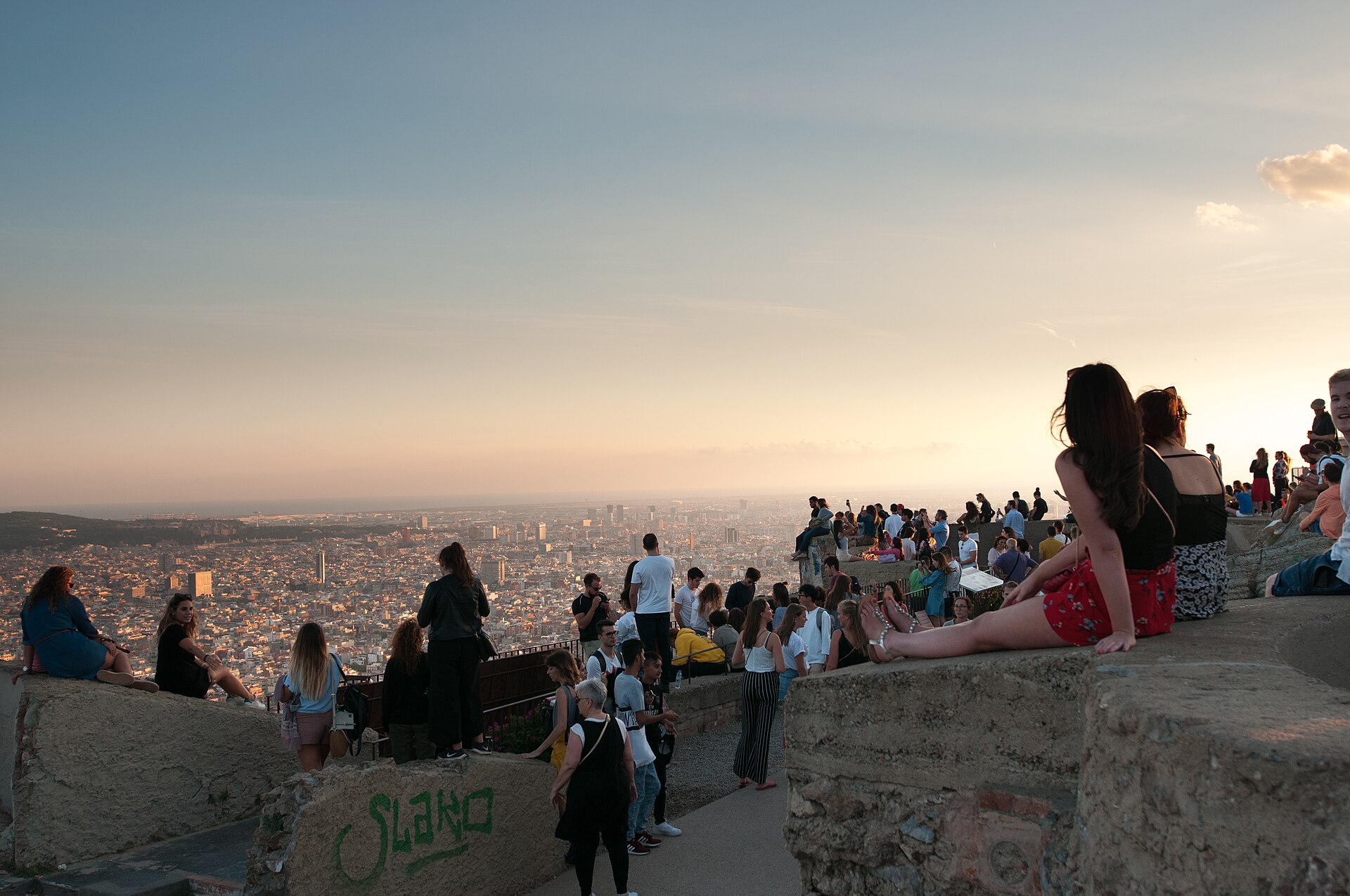
The Bunkers del Carmel sit on a hill overlooking Barcelona, a place where the city reveals itself in a way most visitors never see. Unlike the crowded plazas and polished facades of the tourist center, this spot offers something quieter—a view of the city as it really is, away from the postcard-perfect scenes. The hill, known as Turó de la Rovira, rises in the working-class neighborhood of El Carmel, a district that has long existed outside the usual travel itineraries. There are no grand boulevards or medieval cathedrals here, just a raw, unfiltered slice of Barcelona’s past and a panorama that makes it hard to look away.
During the Spanish Civil War, this hill became a strategic point in the city’s defense. In 1937, anti-aircraft batteries were installed here to protect Barcelona from Franco’s bombing raids. The city endured repeated attacks, and these bunkers were part of a network meant to shield it from the air. After the war, the site was abandoned, and the hill gradually transformed into a residential area where workers and immigrants from southern Spain settled. For decades, it was largely forgotten, until the early 2000s when locals and activists began advocating for its preservation as a reminder of the city’s wartime history.
Today, the Bunkers del Carmel aren’t a museum or an official attraction. There are no detailed plaques, entry fees, or opening hours. You can reach the top on foot, winding through El Carmel’s narrow streets, past apartment buildings with laundry hanging on balconies and small bars serving coffee and ham sandwiches. Or you can take a bus that climbs the winding road, offering glimpses of the city unfolding below. Either way, the journey feels like stepping into a different Barcelona, one that moves at its own pace.
From the summit, the view is unlike anything you’ll find in the city center. There’s no hustle here, just the sound of the wind and the occasional murmur of people who’ve come for the same reason—to see the city from above. On a clear day, the entire landscape stretches out before you: the Collserola mountains to the north, the sea to the south, the spires of the Sagrada Família, and the cranes of the port. The best time to visit is at sunset, when the light softens and the city begins to glow. In those moments, Barcelona doesn’t feel like a collection of landmarks but something alive, shifting with the hour.
The bunkers themselves are far from architectural masterpieces. They’re rough concrete structures, rusted metal remnants of a time long past. There’s a certain charm in their decay, in the way they’ve been left untouched by the polish of tourism. Graffiti covers some walls, broken bottles lie scattered, and the occasional remains of a campfire hint at the life that still pulses here—whether from local teenagers or travelers passing through. It’s a place that feels real, not curated for visitors.
El Carmel is the kind of neighborhood that rarely makes it into travel guides. It’s a working-class area where life moves slowly, where people know their neighbors and the rhythm of daily existence hasn’t been disrupted by tourism. There are no luxury hotels or high-end restaurants, just small shops selling fresh bread, bars with cheap wine, and soccer fields where local teams play. On the way up to the bunkers, you might stop in one of these bars for a coffee or a glass of sangria, getting a taste of a Barcelona that exists beyond the tourist maps.
In recent years, the bunkers have gained popularity among photographers and those seeking a different perspective on the city. You’ll often find people with cameras, couples on dates, or locals bringing friends to show off their neighborhood. The city has started paying more attention to the site, adding informational panels about its history and making some improvements to the area. But despite these changes, the place hasn’t lost its informal, open-air feel.
Winter brings wind and chill, but in summer, the hill becomes one of the most pleasant spots in the city. You can bring a blanket, a bottle of wine, and some snacks, settling onto the grass to watch the city fade into dusk. Sometimes, small concerts or performances take place here, organized by local artists or activists. Even when nothing’s happening, the place has a way of setting the mood—it doesn’t need much to feel special.
The Bunkers del Carmel aren’t for those looking to check off Barcelona’s classic sights. There’s no Gothic Quarter here, no Gaudí masterpieces. But if you’re curious about the city beyond the guidebooks, if you want to feel its history and its pulse, this is a place worth visiting. It’s where you’ll see Barcelona as it was and as it still is—unvarnished, alive, and entirely its own.