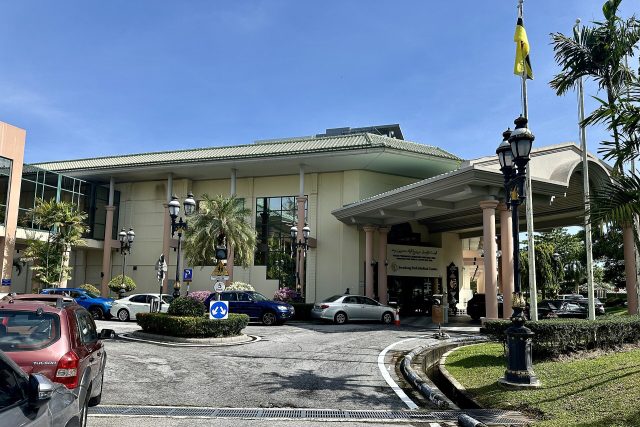
The Brunei Arts and Handicrafts Museum in Sengkurong offers more than just a glimpse into the traditions of this small but culturally rich sultanate. It’s a place where craftsmanship isn’t preserved behind glass but kept alive through practice, where skills passed down for generations remain part of everyday life. From the moment you step inside, the museum feels less like a static display and more like a workshop where history is still being made.
The building itself is a testament to Brunei’s architectural heritage, blending traditional Malay design with Islamic influences. Its high, sloping roofs, intricately carved wooden panels, and open verandas create a sense of space and light. The air carries the scent of wood and natural dyes, grounding the experience in the materials that define these crafts. Instead of arranging exhibits chronologically, the museum groups them by theme—weaving, woodcarving, metalwork, and jewelry—focusing not just on the finished pieces but on the processes that bring them to life.
Weaving holds a special place here. In Brunei, textiles are still made by hand on ancient looms, using dyes derived from plants and bark. The museum offers a rare chance to see how threads transform into intricate patterns that will later become part of national dress or household fabrics. Often, weavers work in the galleries themselves, and if you’re lucky, you might witness the entire process from start to finish. Some even allow visitors to try their hand at the loom under careful guidance, turning observation into participation.
Woodcarving is another craft deeply embedded in Brunei’s identity. Artisans here create more than decorative panels for homes and mosques—they shape everyday objects like spoons, boxes, and trays. The museum’s collection spans different eras, revealing how styles and techniques have evolved over time. The most striking pieces are the carved doors and window screens, their geometric and floral motifs catching the light in ways that make the wood seem almost alive. These aren’t just artifacts; they’re functional art, designed to be both beautiful and useful.
The museum’s collection of *kris*—traditional Brunei daggers—occupies its own space, and for good reason. These aren’t mere weapons but symbols of status, skill, and cultural significance. Forged from Damascus steel, their wavy blades are often paired with hilts adorned with precious stones and intricate carvings. Each element carries meaning: the undulating shape of the blade represents water, while the number of curves can hint at the owner’s lineage. The scabbards, often as elaborate as the daggers themselves, are displayed alongside them, showcasing the craftsmanship that goes into every detail.
Beyond exhibitions, the museum serves as a hub for learning. Workshops teach visitors the basics of traditional techniques, while occasional lectures explore the role of crafts in Brunei’s culture, from their religious significance to their place in daily life. For locals, it’s a connection to their heritage; for visitors, it’s a chance to move beyond vague notions of "Malay culture" or "Islamic art" and understand the stories behind them.
Sengkurong, a quiet suburb of Bandar Seri Begawan, lends the museum a sense of tranquility. Far from the capital’s bustle, the area feels like a natural extension of the museum’s ethos—green, unhurried, and steeped in tradition. The surrounding neighborhood, with its stilt houses and small shops selling handmade goods, offers a glimpse into local life. A visit here can easily turn into a half-day exploration, combining the museum with a walk through the nearby streets.
What makes this museum unique is its refusal to treat crafts as relics of the past. Instead, it bridges tradition and modernity, showing how skills that were once essential to survival have evolved into art forms. The museum doesn’t just preserve history; it keeps it relevant, ensuring that the connection between generations remains unbroken. For those who see Brunei only as an oil-rich nation, this place reveals another side—a country with a deep, living culture that continues to shape its identity.