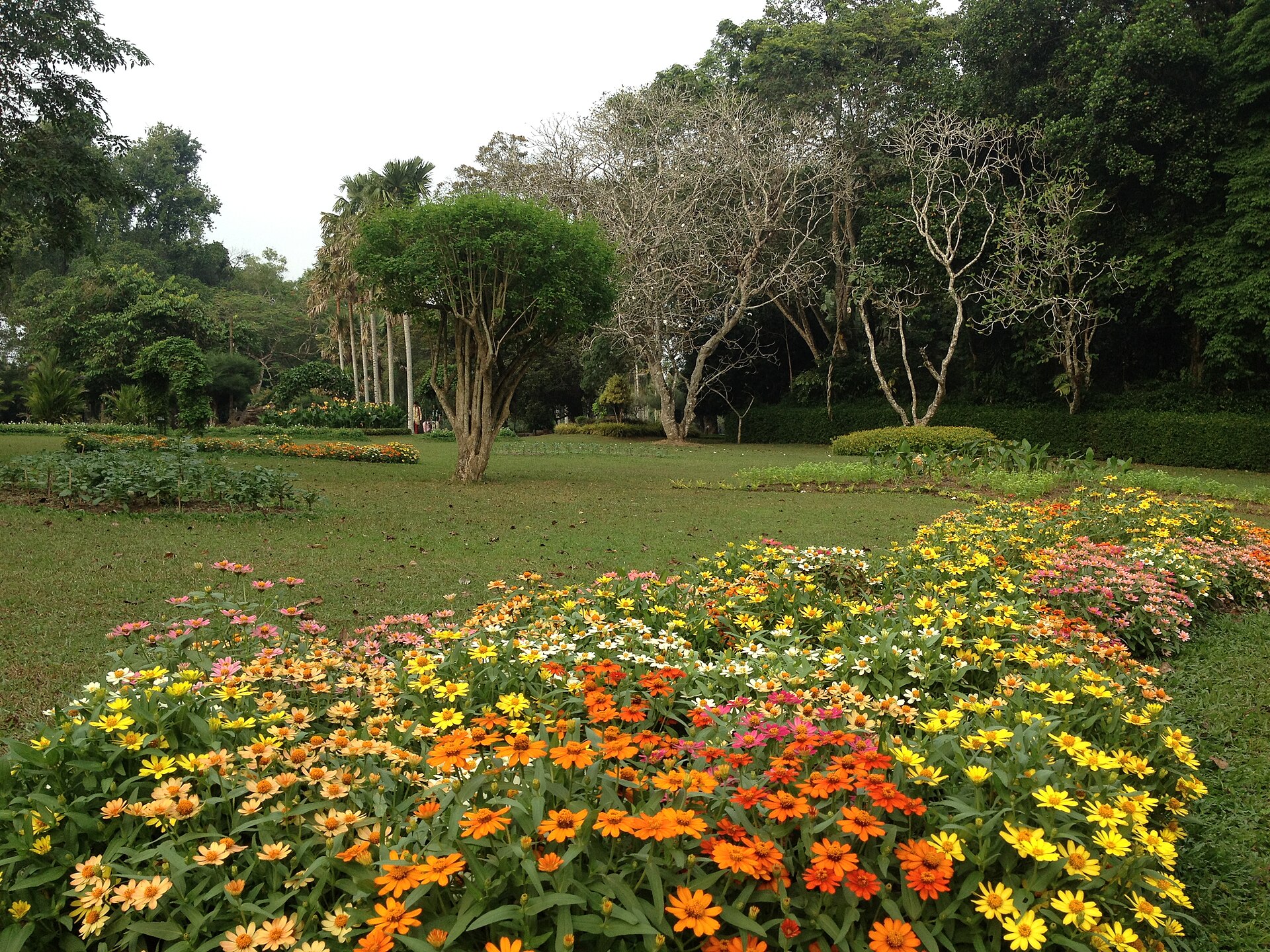
Henaratgoda Botanic Garden lies just outside Rahama, where Sri Lanka’s humid tropics gradually give way to drier landscapes. Unlike the manicured gardens that draw crowds of tourists, this place feels untamed, shaped more by nature’s own rhythms than by human design. Established in the late 19th century, it was originally a testing ground for British colonial botanists trying to adapt rubber trees to local conditions. Over time, it became a living record of how agricultural science took root on the island and how those early experiments shaped the country’s economy.
What makes Henaratgoda special isn’t just the plants themselves, but the stories they carry. The first rubber trees brought from Brazil were planted here, and some of those original giants still stand, their gnarled trunks bearing witness to a different era. Around them, other crops took hold—coffee, tea, spices—each playing a part in Sri Lanka’s rise as a global trading hub. The garden was where new varieties were trialed, where methods were refined, and where knowledge eventually spread to local farmers. Walking its paths, you can almost sense the quiet determination of the people who worked here, testing and learning.
The garden doesn’t follow the usual rules of a tourist attraction. There are no neatly labeled displays or paved walkways leading from one highlight to the next. Instead, narrow trails wind through towering trees, their roots twisting above the soil like ancient sculptures. Vines drape from branches, creating natural curtains that sway in the breeze. Some areas feel as if they’ve been left untouched for decades, giving the place a timeless quality. It’s easy to imagine scientists and laborers moving through these same spaces, digging irrigation channels or recording observations in worn notebooks.
One of the most intriguing sections is the collection of medicinal plants, many of which have been used in traditional Sri Lankan healing for centuries. Turmeric, ginger, aloe, and dozens of other species grow here, some wild, others carefully cultivated. The garden serves as a bridge between past and present, where modern research intersects with age-old wisdom. Locals still visit to gather herbs, and for outsiders, it’s a rare chance to see how deeply plant knowledge is woven into the island’s culture.
The buildings here are unassuming, blending into the landscape rather than dominating it. Low colonial-era structures with whitewashed walls and tiled roofs house small exhibits on the garden’s history, but most visitors are drawn to the outdoors. The air is thick with the scent of damp earth and blooming flowers, and the only sounds are the rustling of leaves and the occasional call of a bird. There’s no pressure to follow a set route—just the quiet invitation to explore at your own pace.
Henaratgoda isn’t a place you’ll find on most tourist itineraries, and that’s part of its charm. There are no crowds, no souvenir stalls, no guides competing for attention. Early mornings are especially peaceful, with the light filtering through the canopy and the garden slowly coming to life. Butterflies drift between flowers, lizards dart across the paths, and if you’re lucky, you might spot a monitor lizard basking in the sun. Other visitors are few and far between, and when you do encounter someone, it’s usually in shared silence, as if everyone understands this isn’t a place for loud conversations.
In recent years, the garden has drawn interest from researchers studying tropical agriculture and conservation. Some areas are still used for experiments, testing new plant varieties or methods of sustainable farming. Others are set aside for preserving rare species, ensuring that the garden remains a living laboratory. For Sri Lanka, Henaratgoda is more than just a historical site—it’s a reminder of how the island’s natural resources have shaped its past and how carefully they must be managed for the future.
A visit here feels less like a tour and more like stepping into another world. There’s no rush, no checklist of sights to see. You can wander for hours, following the curves of the paths or pausing on a bench to watch the light shift through the trees. Some trails lead to small clearings, others to ponds covered in water lilies or to ancient trees with roots that seem to defy gravity. Even if you know little about botany, the garden has a way of slowing you down, of making you notice the details—the texture of bark, the way a leaf catches the light, the quiet persistence of life in all its forms.
When you leave, it’s hard not to feel that Henaratgoda is more than just a garden. It’s a piece of history, a testament to the island’s colonial past and its agricultural evolution. It’s a place where nature and human effort have found a balance, where the land is allowed to grow wild yet still serves a purpose. And for those who walk its paths, it offers something rare—a moment of stillness, a connection to the past, and the quiet beauty of a place that has endured, unchanged in so many ways.