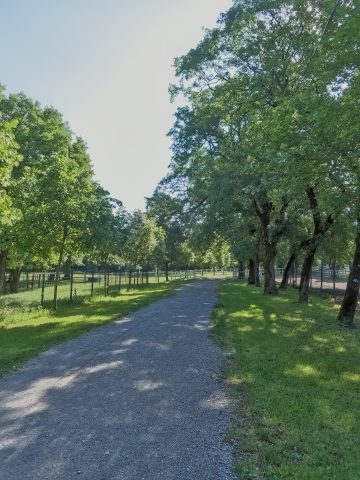
Walk through the gate, and the noise of the town fades. The air smells of warm stone and sage. This isn’t a garden you admire from a distance—it’s one you step into, where every path leads deeper into the Karst.
Here, limestone rules. The soil is thin, the wind unrelenting, the summers long and dry. Plants don’t just grow—they fight for every inch, twisting into shapes you won’t find anywhere else. Oak and hornbeam cling to the hills, their roots gripping rock. Terraces of thyme and rosemary, planted generations ago, still release their scent when crushed underfoot. The garden wasn’t built for show. It was built because people here needed these plants—to heal, to eat, to survive.
It began in the early 1900s, when the Austro-Hungarian Empire still stretched across these hills. Scientists and farmers collected the hardiest species, the ones that thrived where others withered. Over time, the garden became a record of resilience. Many of its plants are endemic—Karst violets, limestone carnations, astragalus—found only in this corner of Europe. Their survival isn’t guaranteed. That’s why the garden exists.
The paths are narrow, winding between stone terraces polished by decades of footsteps. A wooden bridge crosses a shallow ravine where rainwater trickles after storms. At the center stands an old house with a sagging tiled roof. Inside, a small exhibit traces the garden’s history. Outside, pear and quince trees, gnarled with age, still bear fruit each autumn. These aren’t museum pieces. They’re living remnants of the farms that once dotted the Karst.
One section is devoted to medicinal plants. Sage, rosemary, lavender—these weren’t just remedies; they were lifelines. Locals gathered them for teas, tinctures, and poultices, passing down knowledge through families. Some traditions persist. In summer, the air hums with the scent of drying herbs. Nearby, rarer species cling to the limestone. Their presence is a quiet defiance—proof that life thrives even here.
Turn a corner, and the garden reveals itself in fragments. A sudden view of the valley below. An old well, half-swallowed by ivy. Wild grapevines twisting up a stone wall. The seasons rewrite the landscape. Spring arrives with almond blossoms and primroses. Autumn sets the oaks ablaze in gold and red. Summer turns the garden into a refuge, where cicadas drone in the heat and the shade offers cool relief.
This isn’t just a place for strolls. Schoolchildren come to learn about the Karst’s fragile ecology. Workshops teach the old art of herb gathering. Researchers study the rare species that have adapted to this harsh land. The garden is a classroom, a laboratory, a living archive.
For visitors, it’s often an afterthought—a detour from Sežana’s more famous sights. But that’s its strength. There are no crowds, no grand statements. Just the quiet rhythm of the land. Winter strips the garden bare, frost dusting the branches, silence broken only by a bird’s call. Then spring returns, and the cycle begins again.
What makes this garden matter isn’t its size or spectacle. It’s the way it holds the Karst’s story—the limestone beneath your feet, the herbs in your hands, the fruit on the trees. It’s a place where people and land have shaped each other, over centuries. You don’t just visit. You listen.