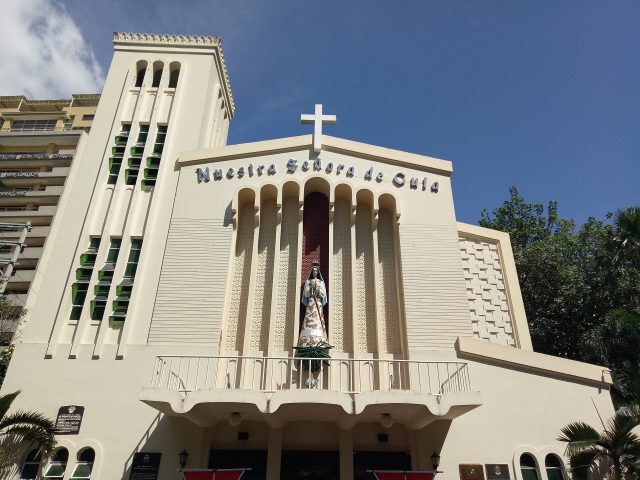
The Basilica of San Miguel Arcángel in Ermita is one of those rare places that feels suspended in time. It isn’t just a house of worship but a living witness to the Philippines’ layered history—one of conquest, resilience, and quiet endurance. Built during the Spanish colonial era, the basilica carries the weight of centuries within its walls, a silent testament to the spread of Catholicism across the archipelago and the architectural traditions that came with it. Today, it remains a spiritual anchor for locals and pilgrims, though its doors are open to anyone drawn to its understated beauty.
The basilica’s architecture tells a story of survival and adaptation. Originally constructed in the 17th century, it has been rebuilt and restored multiple times after fires, earthquakes, and wars, each iteration leaving its mark. The façade, with its towering columns and arched windows, echoes the grandeur of Spanish colonial churches, yet there’s a distinct local touch—practical adjustments for the tropical climate, like thicker walls and higher ceilings to allow for airflow. Inside, the space feels vast and airy, with soaring ceilings supported by sturdy columns. The stained glass, though not as vivid as those in European cathedrals, casts a soft, diffused light that lends the interior a sense of tranquility.
One of the most striking aspects of the basilica is its connection to World War II. Ermita, like much of Manila, was devastated during the conflict, and the basilica bore the scars of battle. Bullet holes and shrapnel marks still pockmark its walls, preserved as a reminder of the past. After the war, the church was restored, but these imperfections were left untouched, becoming part of its identity—a symbol of faith that endured even in the darkest times. They’re subtle, easy to miss if you’re not looking, but once noticed, they add a layer of depth to the experience, turning the basilica from a mere historical site into something more personal.
The interior is designed to invite reflection. The main altar, adorned with gilded details and statues of saints, draws the eye without overwhelming the senses. There’s none of the opulence of Baroque or the somber grandeur of Gothic architecture here—just a quiet dignity. The wooden pews, worn smooth by generations of worshippers, encourage visitors to sit and linger. The murmur of prayers and the soft echo of footsteps on the stone floor create an atmosphere of shared reverence. In the side chapels, old icons and relics hint at untold stories, their significance known mostly to those who have been part of the basilica’s life for decades.
Beyond its religious role, the Basilica of San Miguel Arcángel serves as a cultural touchstone. Services are held in both English and Tagalog, making it accessible to foreigners curious about Filipino traditions. On feast days, particularly during the fiesta honoring Saint Michael the Archangel, the basilica comes alive with music, flowers, and crowds. Religious rituals blend seamlessly with local celebrations, filling the air with warmth and festivity. It’s a time when the sacred and the communal intertwine, offering a glimpse into the heart of Filipino devotion.
The surrounding neighborhood of Ermita adds to the basilica’s charm. One of Manila’s oldest districts, it’s a place where colonial-era buildings stand alongside modern life. A short walk from the church reveals narrow streets lined with old houses, some repurposed as museums or cafés, others still lived in by families who have called Ermita home for generations. There’s no touristy veneer here—just the quiet rhythm of daily life, where the past and present coexist. The area feels lived-in, authentic, in a way that’s increasingly rare in a rapidly developing city.
What makes the basilica special is how its beauty reveals itself slowly. It doesn’t demand attention or dazzle with spectacle. Instead, it waits for those willing to pause, to look beyond the surface. There’s no grand narrative here, no carefully curated experience—just the quiet accumulation of history, faith, and human presence. That’s why it resonates with so many: it offers a moment of stillness in a bustling city, a connection to something enduring.
Time moves differently within its walls. In the early morning, the basilica welcomes its first visitors—elderly women fingering rosaries, men stopping by on their way to work. The light is soft, the air cool, and the space feels intimate. By midday, a few tourists might wander in, but they don’t disrupt the peace. As evening falls, candles flicker near the altar, casting long shadows and bathing the interior in a warm glow. It’s in these moments that the basilica feels most alive, not as a relic of the past, but as a place where history and faith continue to breathe. For those who know it, it’s more than a building—it’s a keeper of memories, a sanctuary in the truest sense.