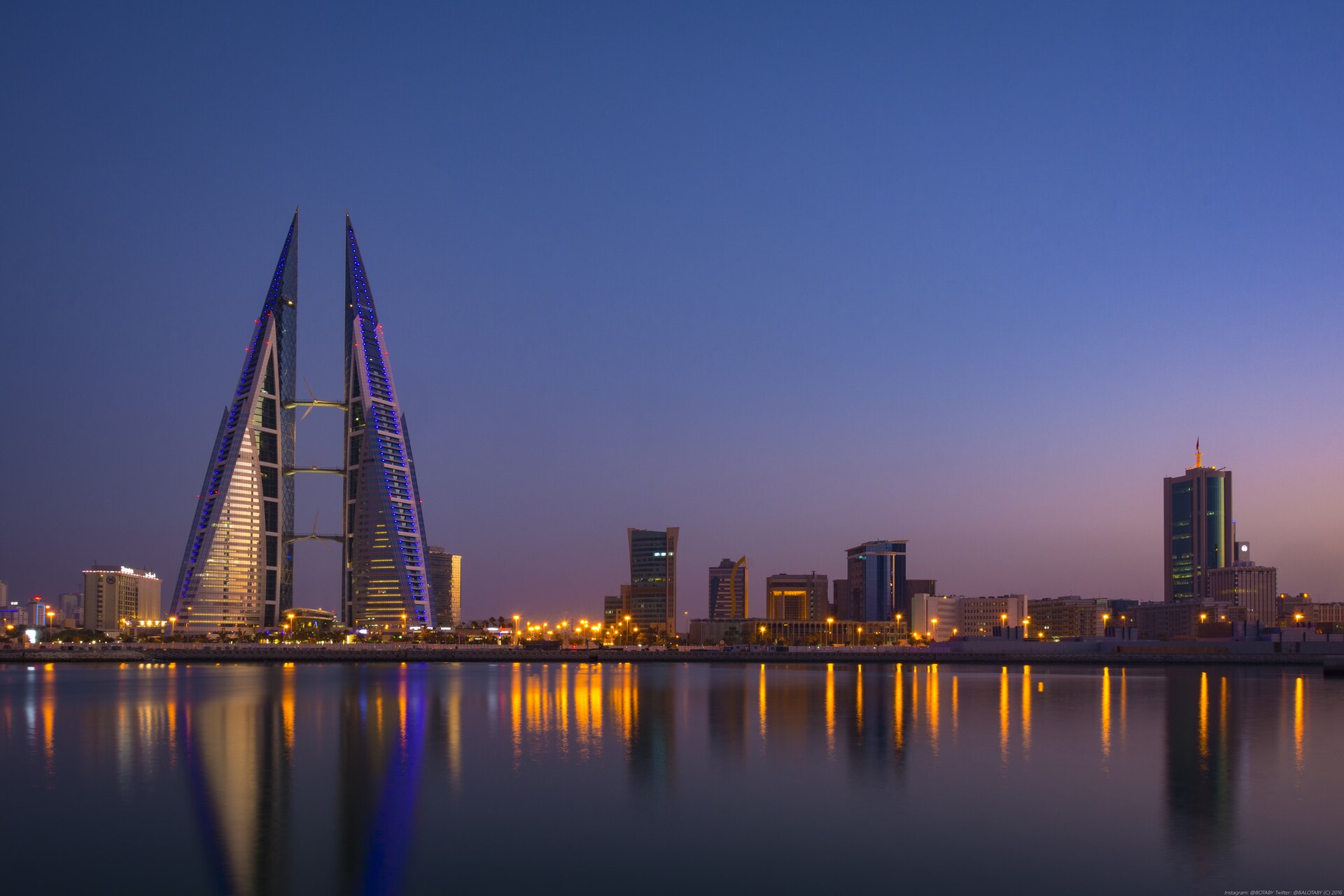
The Bahrain World Trade Center stands as one of Manama’s most recognizable landmarks, a striking example of how modern architecture can blend innovation with sustainability. Completed in 2008, the twin towers rise 240 meters above the city’s skyline, their sleek, sail-like design evoking the maritime heritage of the Gulf. What sets this building apart, however, isn’t just its appearance—it’s the three massive wind turbines suspended between the towers, a bold experiment in renewable energy that has become its defining feature.
The idea behind the turbines was simple yet ambitious: harness the strong winds that sweep across the Bahraini coastline to generate power for the building itself. Each turbine spans 29 meters in diameter and was strategically positioned to catch the prevailing winds, which are funneled through the gap between the towers, accelerating their speed. While the turbines don’t power the entire complex, they contribute a meaningful portion of its energy needs, making the Bahrain World Trade Center one of the first skyscrapers in the world to integrate wind power on such a scale. The project was a collaboration between architects and engineers who wanted to prove that large-scale urban developments could be both aesthetically compelling and environmentally responsible.
The towers themselves are a study in contemporary design, with their curved facades and glass exteriors reflecting the sunlight in shifting patterns throughout the day. The structure houses offices, retail spaces, and a five-star hotel, catering to the city’s growing business and tourism sectors. The lower levels feature a shopping mall, where visitors can browse international brands or grab a coffee while taking in the views of the Persian Gulf. The hotel, located in the upper floors of one of the towers, offers guests panoramic vistas of Manama and the surrounding waters, particularly striking at sunset when the sky turns shades of gold and pink.
Beyond its architectural and technological innovations, the Bahrain World Trade Center holds a symbolic place in the country’s development. Bahrain has long been a hub for trade and commerce in the Gulf, and the building reflects the nation’s ambition to position itself as a forward-thinking player on the global stage. The towers rise near the old Manama Souq, a reminder of the country’s deep-rooted trading traditions, yet their futuristic design signals a shift toward modernity. This juxtaposition is part of what makes the site interesting—it’s a bridge between Bahrain’s past and its future, where dhows once sailed into the harbor and now glass-and-steel towers stand as beacons of progress.
Visiting the Bahrain World Trade Center is less about grand attractions and more about experiencing a piece of living architecture. There’s no museum or guided tour, but the building’s public spaces are open to anyone who wants to wander through the mall or admire the structure from the outside. The best time to see it is during the late afternoon, when the turbines are often spinning—if the wind is right—and the light casts long shadows across the towers. The area around the building is also worth exploring, with the nearby waterfront offering a pleasant place to walk or sit by the sea.
The wind turbines, while impressive, aren’t always in motion. Their operation depends on wind conditions, and they’re designed to shut down during extreme weather to prevent damage. This means that on some days, they stand still, almost like sculptures. Yet even when they’re not generating power, their presence is a conversation starter, a reminder of the possibilities of sustainable design. The Bahrain World Trade Center may not be the tallest or most famous skyscraper in the world, but it’s one of the few that dares to ask what the future of urban development could look like.
For those interested in architecture, the building is a case study in how form and function can coexist. The towers’ design wasn’t just about aesthetics—it was about creating a structure that could maximize wind flow while maintaining stability. The architects, Atkins, worked closely with wind engineers to ensure that the shape of the towers would channel the wind effectively toward the turbines. The result is a building that feels dynamic, as if it’s in constant motion even when it’s standing still. It’s a rare example of a skyscraper that doesn’t just dominate the skyline but actively engages with its environment.
The Bahrain World Trade Center also reflects the broader changes taking place in Manama. The city has grown rapidly over the past few decades, transforming from a quiet trading port into a bustling metropolis. Skyscrapers like this one are a testament to that growth, but they also raise questions about how cities evolve. Can modern development honor tradition while embracing the future? The World Trade Center doesn’t provide all the answers, but it’s a compelling attempt to find a balance. It’s a building that invites you to look up, to think about where we’ve come from, and where we might be headed.