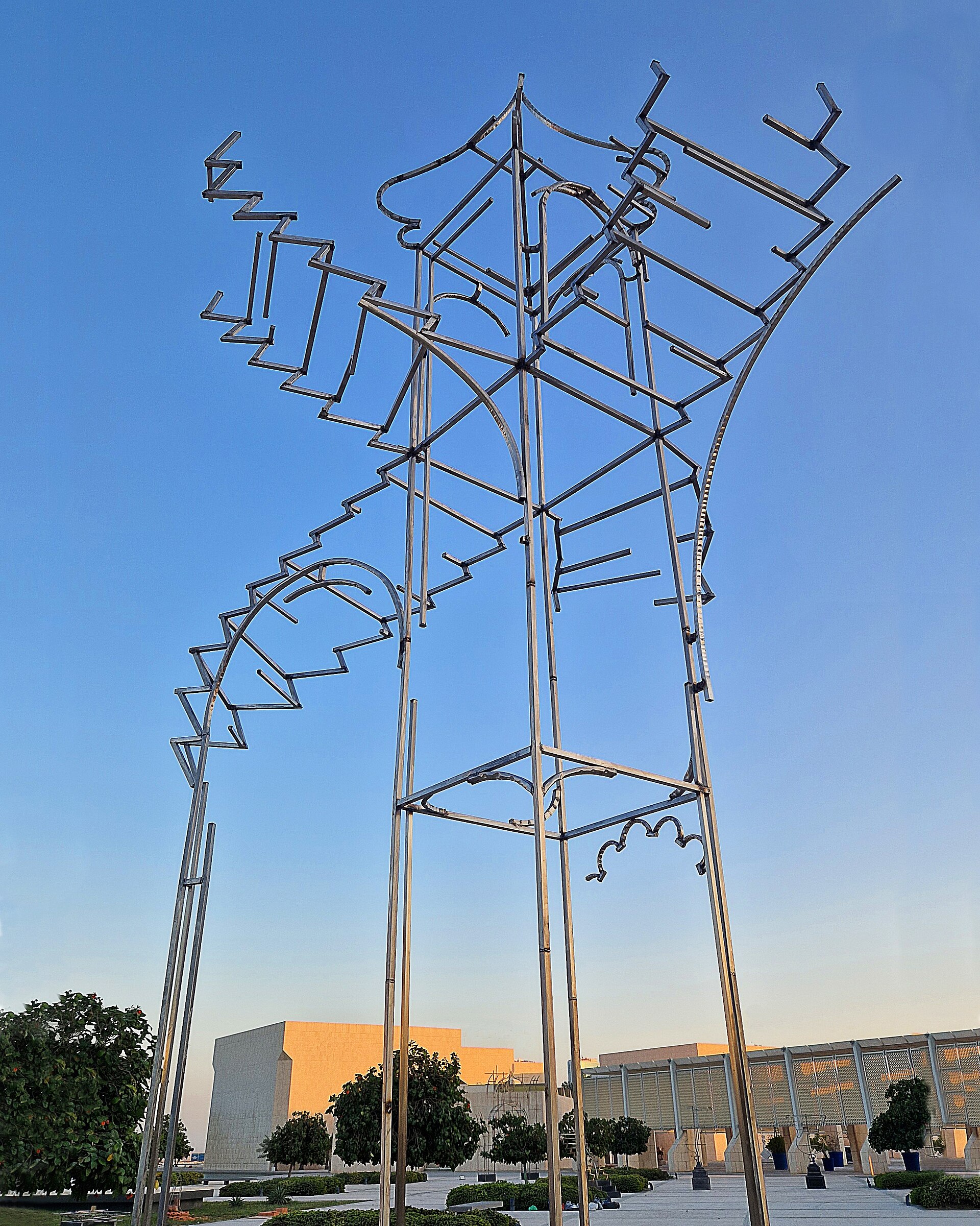
The Bahrain National Museum in Manama is a place where the country’s past feels alive—not through dry timelines or distant dates, but through the objects that once shaped daily life. The building itself is striking, its modern curves and airy galleries designed to bridge the gap between history and the present. Opened in 1988, it was the first museum of its kind in the Gulf region, and over the decades, its collections have grown to preserve not just Bahrain’s heritage, but that of the wider Arabian Peninsula.
Inside, time moves at its own pace. The exhibits begin with artifacts from ancient settlements, proof that these lands were inhabited as far back as the Bronze Age. But the real draw is the section dedicated to Dilmun, the enigmatic civilization that thrived here over four thousand years ago. Mentioned in Sumerian myths as a paradise free from sickness and death, Dilmun was a bustling trade hub, and the museum’s clay tablets, seals, and pottery offer a glimpse into the lives of people who believed in its legend. These objects aren’t just relics; they’re fragments of a world that once connected distant cultures.
A separate hall focuses on Bahrain’s Islamic era, where delicate Quranic manuscripts and intricately decorated household items reveal the rhythms of medieval life. The collection of coins is particularly telling, each piece a record of trade routes that linked Bahrain to Persia, India, and beyond. These weren’t just transactions—they were exchanges of ideas, technologies, and beliefs, a reminder that the island has always been a crossroads.
The museum also celebrates Bahrain’s craft traditions, from the construction of *dhows*—the wooden boats still used by local fishermen—to the weaving of textiles adorned with patterns unique to the region. The exhibits don’t just showcase skill; they trace how techniques evolved, how materials changed, and how tastes shifted over centuries. Nearby, contemporary works by Bahraini artists sit alongside these ancient tools, creating a sense of continuity rather than rupture.
For those curious about the natural world, the hall of natural history offers a different perspective. Here, you’ll find displays on Bahrain’s flora and fauna, skeletal remains of marine life, and perhaps most poignantly, the story of pearl diving. For generations, pearling was the backbone of the island’s economy, and the museum doesn’t shy away from the harsh realities of the trade. The tools and tales on display make it clear just how grueling the work was—and how deeply it shaped Bahraini identity.
The architecture of the museum is worth noting in its own right. The building is designed to let natural light filter gently through the galleries, casting a soft glow over the exhibits. The spacious halls encourage slow, thoughtful exploration, while the central courtyard, with its traditional Arab design elements, provides a quiet space to reflect. There’s no sense of clutter or overload; everything is arranged to let the objects speak for themselves.
The contemporary art section offers a counterpoint to the historical exhibits. Here, works by Bahraini artists grapple with the country’s rapid changes, blending tradition with modernity. Some pieces challenge conventions, others celebrate them, but all invite visitors to consider what it means to live in a place where the past and present are constantly in dialogue. It’s not just a gallery—it’s a conversation.
Visiting the Bahrain National Museum isn’t like ticking off a tourist attraction. It’s an opportunity to step into a story that has been unfolding for millennia, one where Bahrain has always been a meeting point between East and West. There’s no grandiosity here, just the quiet power of objects that have endured. The museum doesn’t try to impress with scale or spectacle; instead, it trusts visitors to find their own connections to the past. That’s why, years after its opening, it remains one of Manama’s most compelling places to visit.