Rogers Centre, once known as SkyDome, stands as one of Toronto’s most recognizable landmarks—a place where sport, entertainment, and urban life intersect in a way few structures can match. Built in the late 1980s, it was the world’s first stadium with a fully retractable roof, a feat of engineering that set a new standard for large-scale venues. The design wasn’t just about innovation; it was about reimagining what a stadium could be. Beyond baseball games, it was conceived as a flexible space for concerts, conventions, and even motor shows, adapting to the city’s ever-changing needs. Over the decades, it has become more than just a building—it’s a piece of Toronto’s identity, a backdrop to countless memories for locals and visitors alike.
From the outside, Rogers Centre is an imposing presence, its sleek glass and steel facade giving it a distinctly modern, almost futuristic look. The roof, made up of four massive panels, can open or close in about twenty minutes, a feature that still feels impressive even by today’s standards. Inside, the stadium holds over fifty thousand people, yet the design ensures that even during the loudest events, the space never feels cramped. The acoustics are carefully calibrated, and the sightlines are clear from nearly every seat. Over the years, it has hosted some of the biggest names in music, from the Rolling Stones to Beyoncé, as well as major sporting events like the World Series and even papal visits. These moments have turned the stadium into a gathering place for people from across North America, a stage where history unfolds in real time.
The story of Rogers Centre begins in the 1980s, a time when Toronto was rapidly growing into one of Canada’s most dynamic cities. The need for a modern, multi-purpose venue was clear—something that could rival the grand stadiums of the U.S. but with a distinctly Canadian twist. The project was ambitious from the start, with engineers and architects pushing boundaries to create a structure that was both functional and iconic. The retractable roof wasn’t just a practical solution to Toronto’s unpredictable weather; it was a statement, a way to put the city on the map. When it opened in 1989, SkyDome was the most expensive sports facility in the world, but its impact was immediate. It drew crowds not just for games but as a destination in itself, a place where people could experience something new.
Today, Rogers Centre remains a hub of activity, far beyond its role as the home of the Toronto Blue Jays. It’s a venue for international concerts, corporate events, and even private celebrations like weddings. The interior is a world of its own, with restaurants, bars, and shops catering to every taste. For those who want a different perspective, the upper levels offer observation decks with sweeping views of downtown Toronto and Lake Ontario. The panorama is especially striking at night, when the city’s lights reflect off the water and the skyline glows against the dark sky. It’s a reminder of how the stadium has shaped not just the skyline but the way people experience the city.
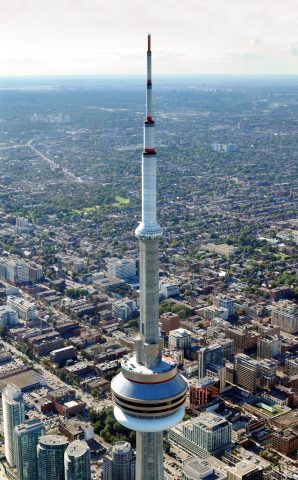
The architecture of Rogers Centre is as much about its surroundings as it is about the building itself. When it was constructed, the area along Toronto’s waterfront was largely industrial, a far cry from the vibrant district it is today. The stadium was one of the first major projects to transform this part of the city, paving the way for the CN Tower, Ripley’s Aquarium, and the Roundhouse shopping complex. Together, these landmarks have created a cohesive destination, a place where visitors can spend an entire day moving from one attraction to the next. The stadium’s design, with its clean lines and bold scale, complements the modern aesthetic of the area, making it a natural focal point.
For Torontonians, Rogers Centre is more than just a place to watch a game or a concert—it’s woven into the fabric of daily life. On game days, the energy spills out into the surrounding streets, with fans gathering in bars and restaurants, debating strategies and celebrating victories. But the stadium also plays host to community events, from food festivals to charity fundraisers, making it a space that belongs to everyone. Even those who aren’t sports fans find themselves drawn to the venue for its concerts or simply for the atmosphere, a place where the pulse of the city feels strongest.
The influence of Rogers Centre extends far beyond Toronto. Its retractable roof design inspired similar stadiums around the world, from Australia to Japan, proving that innovation can come from unexpected places. Yet, despite its global impact, the stadium has never lost its connection to the city. It continues to evolve, with regular upgrades to technology and infrastructure, ensuring it remains a cutting-edge venue. At the same time, it retains a sense of nostalgia, a nod to the era when it was first built. The blend of retro-futurism and modern functionality gives it a unique character, a place where the past and present coexist.
What makes Rogers Centre special is its ability to feel both grand and intimate. It’s a massive structure, yet the design ensures that every visitor, whether in the stands or at a restaurant overlooking the field, feels connected to the experience. For tourists, it offers a chance to engage with the history of Canadian sports and the energy of one of North America’s most vibrant cities. For locals, it’s a familiar landmark, a place where some of their most memorable moments have unfolded. Whether it’s the roar of the crowd during a playoff game, the spectacle of a world-class concert, or simply the quiet satisfaction of a meal with a view, Rogers Centre has a way of making every visit feel like part of something bigger.