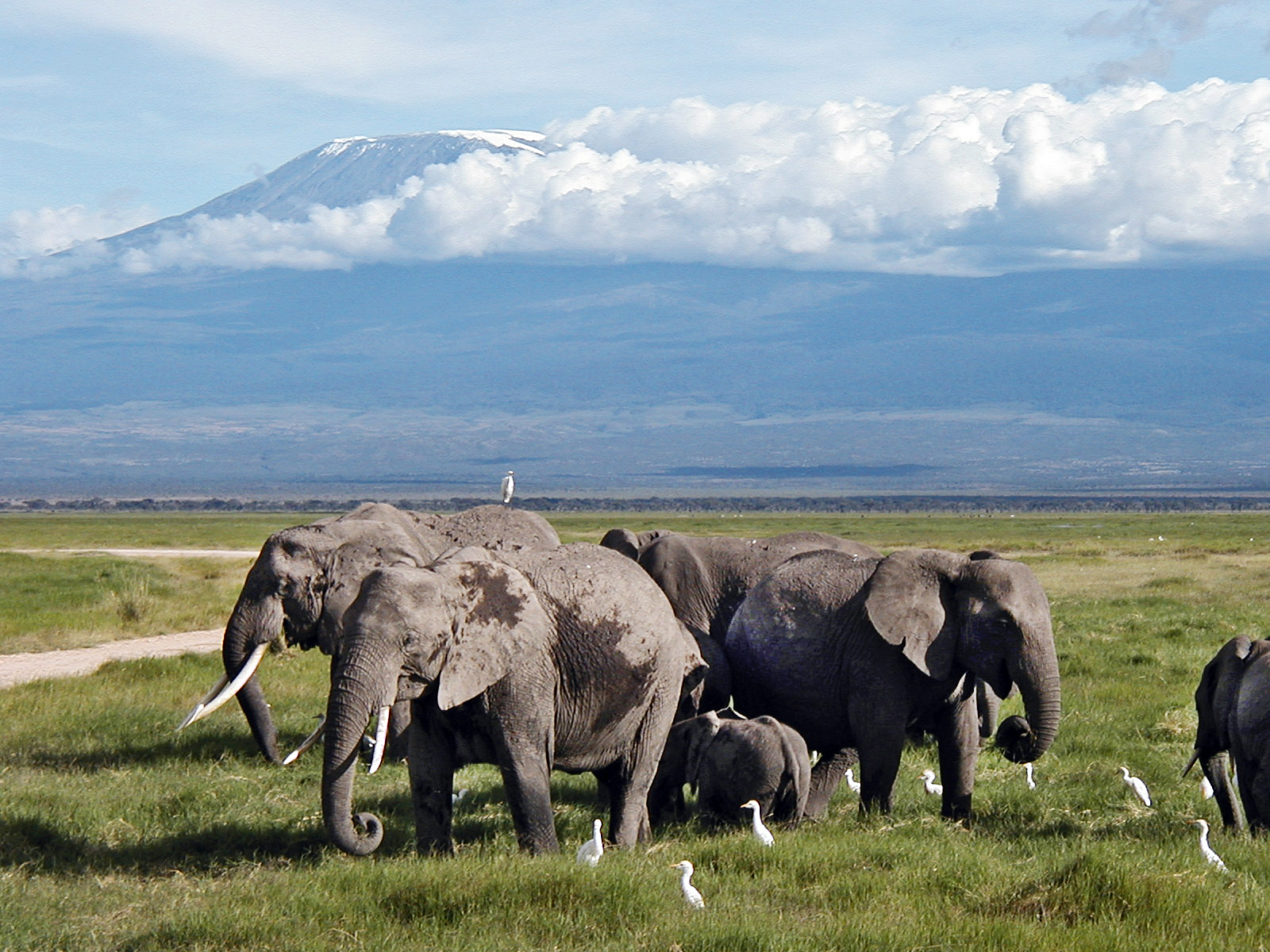
Amboseli is one of those rare places where the landscape feels almost deliberately designed to take your breath away. Stretching across southern Kenya, just a stone’s throw from the Tanzanian border, this national park is a masterclass in contrasts—endless savannahs giving way to dense acacia thickets, dusty plains framed by the towering presence of Mount Kilimanjaro. The mountain looms on the horizon like a mirage, its snow-capped peak defying the African heat, especially striking at dawn when the first light paints it in soft pinks and golds. But Amboseli is more than just a backdrop for Kilimanjaro. It’s a place where every element of the land tells a story: the cracked beds of ancient lakes, the scattered herds of elephants moving like shadows across the plains, the way the light shifts from harsh midday glare to the gentle glow of sunset.
At just under 400 square kilometers, Amboseli is modest in size compared to some of Africa’s larger reserves, yet it packs in everything that defines the continent’s wild heart. The seasons here dictate the rhythm of life. During the rains, the earth turns lush and green, a stark contrast to the parched golden hues of the dry months, when the savannah becomes a vast, sunbaked expanse. In these drier periods, wildlife congregates around the few remaining water sources, creating scenes of raw, unfiltered drama. Elephants dig for water with their tusks, herds of zebras and wildebeest jostle for space, and predators lurk in the tall grass, waiting. It’s a reminder of how fragile and interconnected life in the wild truly is.
The land wasn’t always a protected park. For generations, the Maasai people roamed these plains with their cattle, living in harmony with the ecosystem. In the early 20th century, the area was designated a hunting reserve, a status that lasted until 1974 when Amboseli became a national park. Even then, the Maasai retained grazing rights on the outskirts, and their presence remains woven into the fabric of the place. You’ll often see them walking the savannah in their vibrant shukas, spears in hand, their deep connection to the land evident in every step. They’re not just part of the scenery—they’re its custodians, their traditions as much a part of Amboseli as the wildlife itself.
Among the park’s most famous residents are its elephants. Amboseli is home to one of the most studied elephant populations in the world, their behaviors and social structures documented over decades. These aren’t just any elephants—they’re known for their massive tusks, which they use not only for defense but also to dig for water during the dry season. The holes they create become lifelines for other animals, a testament to their role as ecosystem engineers. Watching a herd move across the plains is mesmerizing. They walk with a quiet, deliberate grace, their presence commanding yet unassuming, as if they’ve always belonged here—and they have.
What sets Amboseli apart from other parks is its sense of untouched wildness. Unlike the crowded safari circuits of the Maasai Mara or Serengeti, Amboseli offers space and solitude. The roads are rough, unpaved tracks that demand a sturdy vehicle, especially during the rains when some routes become impassable. A safari here isn’t about ticking off a checklist of animals; it’s about slowing down, listening to the wind, and letting the landscape sink in. The best times to explore are early morning or late afternoon, when the light is soft and the animals are most active. There’s a rhythm to it, a quiet ritual that makes every sighting feel like a gift.
The climate in Amboseli is dry and warm, but the elevation—around 1,100 meters—keeps the heat from becoming oppressive. The best times to visit are during the dry seasons, from June to October and January to February, when the skies are clear and Kilimanjaro is visible almost daily. The air is crisp, the views unobstructed, and the wildlife concentrated around water sources. The wet seasons, from March to May and in November, transform the park into a different world—lush, green, and alive with the calls of migratory birds. But the rains also turn the roads to mud, making some areas difficult to reach.
Beyond the safari experience, Amboseli has a few vantage points that offer sweeping views of the park and its iconic mountain. One of the most popular is the Observation Hill, a small rise where you can watch wildlife from the comfort of your vehicle or simply sit and take in the panorama. Another highlight is the dried-up Lake Amboseli, which fills with water during the rains, attracting flocks of flamingos. When the lake is dry, its salt-encrusted bed glitters under the sun, and herds of zebras and antelopes wander across the cracked earth.
For those curious about the human side of Amboseli, nearby Maasai villages offer a glimpse into a way of life that has endured for centuries. The Maasai welcome visitors with warmth, sharing stories of their traditions, demonstrating their dances, and showing off their handmade crafts—beaded jewelry, wooden carvings, and brightly patterned fabrics. Each piece is made with care, a tangible connection to their culture. It’s a chance to see how the Maasai have adapted to the modern world while holding onto the customs that define them.
Amboseli is a place where nature and people coexist without pretense. There are no luxury lodges or crowded tourist hubs, just open skies, silence, and the feeling that you’ve stepped into a world that moves to its own pace. It’s not a park where you’ll see every animal in a single day, and that’s precisely why it feels so authentic. The elephants here have roamed these plains for generations, the Maasai have walked this land long before it was a park, and Kilimanjaro stands as a silent, enduring witness to it all. Amboseli doesn’t offer instant gratification—it leaves a quiet, lasting impression, as vast and deep as the African earth itself.