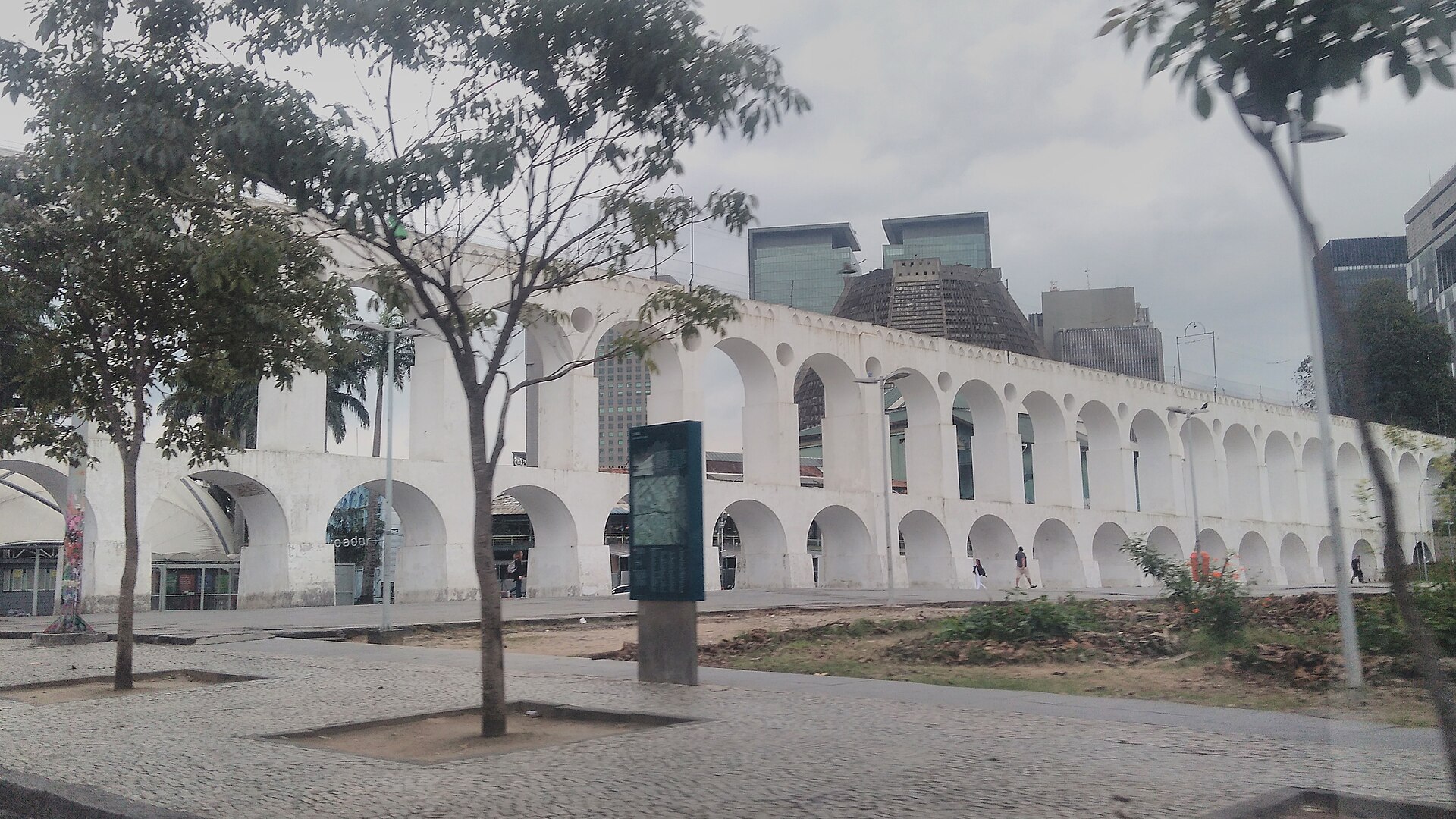
The Carioca Aqueduct is one of those rare places in Rio de Janeiro where the city’s colonial past lingers in plain sight. Built in the mid-18th century, it was an engineering marvel of its time, designed to channel fresh water from the Carioca River into the heart of a rapidly growing city. Today, it stands not just as a relic of history but as a living part of Rio’s urban fabric, where the old and new coexist in an easy, unforced way.
The structure itself is striking in its simplicity and scale. Stretching nearly 300 meters, its double arches of stone and brick once supported a channel that carried water from the hills down to the city center. The design reflects a pragmatic approach to colonial construction, blending European influences with local adaptations—thicker walls to withstand tropical rains, materials sourced from nearby quarries. The arches, in particular, have a quiet elegance, their proportions still pleasing to the eye after centuries of use. The masonry, though weathered, remains solid, a testament to the skill of the builders who constructed it without modern machinery.
What many visitors don’t realize is that the aqueduct wasn’t always the iconic structure it is today. Originally, it was little more than an open canal, vulnerable to contamination and evaporation. Later, the arches were added to protect the water, transforming it into the landmark we see now. By the 19th century, as Rio modernized its water supply, the aqueduct lost its original purpose. For decades, it stood neglected until the early 20th century, when it was repurposed as a viaduct for the city’s tram system. That tram line, known locally as the *bondinho*, became more than just a mode of transport—it evolved into a symbol of Rio, weaving through the city’s history and culture.
The *bondinho* still runs along the top of the aqueduct, its vintage cars creaking up the steep incline toward Santa Teresa. The ride is slow, almost leisurely, offering passengers a sweeping view of the old city and Guanabara Bay. It’s not just a way to get from one place to another; it’s a chance to step into the rhythm of Rio, to see the city as it was and as it is now. The tram has become a beloved fixture, a reminder of a time when public transport was as much about the journey as the destination.
Santa Teresa, the neighborhood at the end of the line, is one of Rio’s most atmospheric districts. Here, the city feels like it’s moving at a different pace. Narrow streets wind past pastel-colored houses adorned with wrought-iron balconies and azulejo tiles, while small cafés and artist studios spill onto the sidewalks. It’s easy to lose track of time in Santa Teresa, where every corner seems to reveal something unexpected—a hidden church, a sudden vista of the bay, or a gallery showcasing contemporary art. The neighborhood has a bohemian charm, a place where history and creativity intersect.
The aqueduct is more than just a bridge or a piece of infrastructure; it’s a link between Rio’s past and present. It tells the story of a city that grew around necessity, where engineering solutions became part of the cultural landscape. Today, its arches frame the everyday life of Rio—street musicians playing beneath them, artists setting up easels, locals and tourists alike pausing to take in the view. At dusk, when the streetlights flicker on, the aqueduct takes on a different character, its shadows stretching across the pavement like brushstrokes on a canvas.
For cariocas, the aqueduct is woven into the fabric of daily life. It’s a place to meet friends, take a stroll, or simply sit on a bench and watch the city go by. Throughout the year, it becomes a stage for festivals, markets, and impromptu performances, turning a historic structure into a hub of modern culture. In those moments, the aqueduct feels alive, a reminder that history isn’t just something that happened long ago—it’s happening right now, in the laughter of children playing nearby or the clatter of the *bondinho* making its way up the hill.
If you find yourself in Rio, the aqueduct is worth more than a passing glance. Walk along its base, take the tram up to Santa Teresa, and let the neighborhood unfold around you. This isn’t a place to rush through; it’s an invitation to spend a day soaking in the city’s atmosphere. Here, you’ll find a different side of Rio—not just the beaches and the carnival, but the layers of history, the quiet corners, and the spirit that makes the city feel like home to those who know it best.