Mbala Airport sits quietly on the northern edge of Zambia, just a short distance from the Tanzanian border. It’s a small, unassuming place, surrounded by rolling hills and savanna that stretch out into the distance, where the horizon blurs into the haze of far-off mountains. For most travelers, it’s little more than a stopover on the way to somewhere else—Lake Tanganyika, the national parks, or the waterfalls along the border. But the airport itself carries a quiet weight, a sense of history that lingers in the air, especially here, on the outskirts of the country.
Built in the mid-20th century, the airport began as a military outpost during the colonial era, when this region was still known as Northern Rhodesia. Back then, it was a vital link, handling supplies and personnel that connected remote areas to administrative hubs and, later, to an independent Zambia. Today, little remains of its military past—just a few weathered hangars, overgrown concrete pads, and the occasional faded sign. The terminal building, low and sturdy with wide windows and heavy doors, still hints at its original purpose, designed for function rather than form, a relic of a time when practicality mattered more than aesthetics.
Nowadays, the airport mostly serves domestic flights, shuttling passengers between Mbala and Lusaka or other major towns. There’s no rush here—just a handful of planes each week, small groups of tourists heading toward the lake or the parks, and locals returning with goods or on personal business. The waiting area is simple, with wooden benches and yellowed maps pinned to the walls, announcements written in English and Bemba, one of the region’s main languages. Occasionally, vendors appear with baskets of fruit or handmade crafts, but the most striking thing is the stillness, broken only by the distant hum of an engine or the rustle of wind through the grass outside.
For first-time visitors, Mbala Airport can feel unexpectedly welcoming. There’s no chaos of a major transit hub, no crowds dragging wheeled suitcases, no billboards pushing tours or services. Instead, there’s space—open views of the surrounding landscape and the sense that time moves differently here. In the rainy season, when the savanna turns lush and green and the air hangs thick and humid, the terminal feels even quieter, as if the world outside has paused. In the dry season, everything fades to gold, and dust settles on the windows and metal frames, carried by the wind.
Though modest, the airport plays a crucial role in the life of the region. It keeps Mbala connected to the rest of Zambia, delivering goods, medicine, and mail. For many locals, it’s the only way to reach Lusaka or other cities quickly, whether for education, work, or healthcare. There have been efforts to modernize in recent years, but so far, upgrades have focused on practical improvements—repairing the runway, installing better navigation equipment. The building itself remains much as it was decades ago, unchanged in its unassuming way.
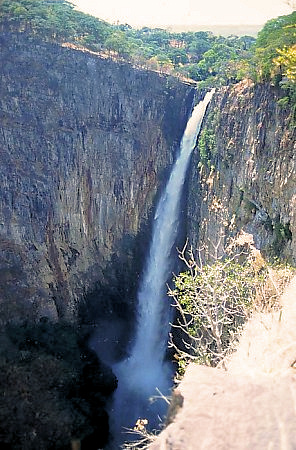
The area around Mbala is worth exploring for those willing to linger. The town sits on a plateau, offering views of Lake Tanganyika, one of the deepest and oldest lakes in the world. On clear days, you can even make out the distant Tanzanian shore. Locals often share stories of how, in the last century, this was a route for traders, explorers, and missionaries making their way to the lake. Today, visitors come for the natural beauty—the elephants and hippos of Nsumbu National Park, the Kalambo Falls on the Tanzanian border, or simply the chance to step away from the noise of modern life.
Mbala itself is a typical Zambian provincial town, where life moves at its own pace. There are no skyscrapers, shopping malls, or busy streets, just a market selling fresh fish from the lake, local produce, and traditional fabrics. In the evenings, people gather in the central square to talk or sit under the trees. For those used to the energy of big cities, it might feel too quiet, but that’s part of its charm—the unhurried rhythm of daily life.
Mbala Airport isn’t just a dot on a map. It’s a gateway to something else—a world of savannas, lakes, and mountains where history and the present coexist, and nature sets the rules. There’s no luxury here, no frills, just a sense of authenticity. Maybe that’s why those who pass through often find themselves returning, drawn back by the quiet, the space, and the feeling of stepping into a place where time moves just a little slower.