
Vologda
Russia · 19 places
Photo: Сергеев Павел, CC BY-SA 3.0
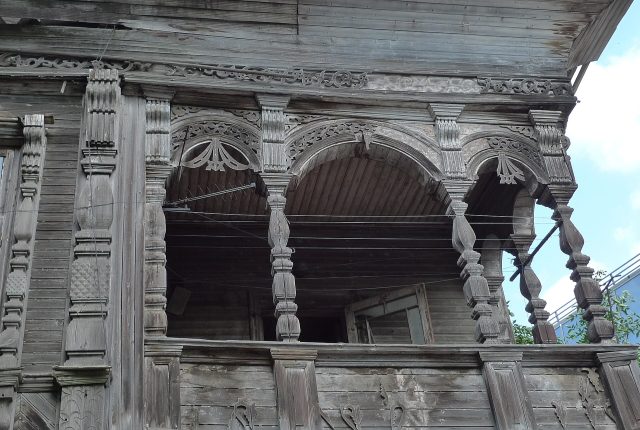
Vologda moves at its own pace. The streets unfold quietly, paved with cobblestones worn smooth by time, lined with wooden houses whose carved window frames seem lifted from an old painting. The Vologda River flows past, and the city breathes in time with it. Here, the past isn’t just preserved—it’s still alive, woven into daily life.
History in stone and silence
The city first appeared in chronicles in the 12th century. Ivan the Terrible once planned to make it his capital. The white-stone walls of St. Sophia Cathedral rise above the skyline, their interiors covered in frescoes that have watched over the city for centuries. The Archbishop’s Court and the Vologda Kremlin stand nearby. Walking through these places, you feel history’s weight in the air.
Crafts that outlast empires
Vologda lace is made by hand, threads twisting into patterns. For generations, women have worked by windows, their hands moving with practiced ease. Lace decorates facades, shop signs, and café menus. The city’s butter, made since the 19th century, is rich and creamy. Locals say it’s the only kind worth eating—once you taste it, you understand why.
Where poets found their words
Konstantin Batyushkov’s house, preserved as it was in the 1800s, shows how one of Russia’s most melancholic poets lived. The embankment along the Vologda River, with its willows and benches, feels like a place where verses might still be written. Nikolai Rubtsov, another poet tied to the Russian North, often visited. His words linger here, especially on misty autumn mornings.
Vologda doesn’t rush. A hidden chapel in a side street. A merchant’s house with a facade that tells of old wealth. A courtyard where laundry hangs between buildings, fluttering like a scene from another century. The city doesn’t demand attention—it lets you wander until you find your own connection to its quiet charm.
See & Do
19 places




Places on the map
Marker colour follows the categoryClimate and weather
Detailed weather: Vologda- Average temperature
- 4 °C
- Precipitation per year
- 633 mm
- Sunshine hours per day
- 4.4 h
Average air temperature
°C
-9
-7
-3
4
11
16
18
17
10
4
-2
-7
Jan
Feb
Mar
Apr
May
Jun
Jul
Aug
Sep
Oct
Nov
Dec


