Tokyo
Ukraine · 8 places
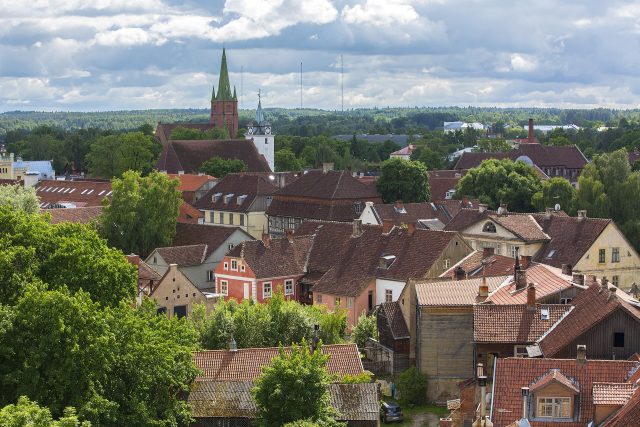
Photo: Andrii bondarenko, CC BY-SA 3.0
Toki is one of those quiet Ukrainian towns that most travelers pass by without a second thought, and that’s precisely what makes it worth slowing down for. Nestled in the western part of the country, it sits along the gentle curves of the Seret River, where wooden bridges arch over shallow waters and old houses with carved shutters line streets that feel untouched by time. There are no crowds here, no grand monuments competing for attention—just the kind of place where life unfolds at its own unhurried pace, as if the outside world hasn’t quite caught up.
The town’s history is woven into the fabric of Galicia, a region that has long been a crossroads of cultures. Over the centuries, it absorbed influences from the Austro-Hungarian Empire, Poland, and Ukraine, leaving behind a patchwork of architectural styles that tell their own stories. The center of Toki still holds traces of this layered past: Art Nouveau facades stand beside weathered synagogues and quiet churches, while the main street, named after Ukraine’s beloved poet Taras Shevchenko, is lined with buildings that have seen generations come and go. Some are crumbling, their peeling paint hinting at forgotten lives, while others have been carefully restored, their details preserved like relics of a different era.
Life here moves to a rhythm set by the seasons rather than the clock. Mornings begin with the scent of fresh bread and smoked cheese drifting from the market stalls, where vendors chat with regulars over cups of strong coffee. By afternoon, the square near the old town hall fills with retirees debating politics or sharing stories, their voices blending with the clatter of dominoes on wooden tables. Evenings belong to the younger crowd, who gather in dimly lit cafés where local musicians play folk tunes or old vinyl records spin on a turntable. There are no flashy nightclubs or chain restaurants—just small, family-run eateries serving hearty dishes like cherry dumplings, beetroot soup with garlic bread, and homemade herbal liqueurs that taste like summer in a glass. In the warmer months, the town comes alive with festivals celebrating traditional music and crafts, where artisans sell embroidered shirts, hand-thrown pottery, and wooden toys carved with the same techniques passed down for generations.
The landscape around Toki is just as compelling as the town itself. The Seret River, though narrow, winds through steep banks and hidden coves where locals swim on hot summer days. Beyond the river, forests stretch across rolling hills, dense with mushrooms and wild berries in the autumn, when the trees blaze with gold and crimson. Hiking trails lead to viewpoints where the entire valley unfolds below, a patchwork of fields and villages under a vast sky. Winter transforms the town into something out of a storybook—snow dusts the rooftops of old houses, and the woods become a quiet world of animal tracks and frozen streams. It’s the kind of place where you might stumble upon a deer’s hoofprints in the fresh powder or hear the distant call of a wolf on a still night.
Toki isn’t for those seeking luxury or nonstop entertainment. It’s for travelers who want to step off the well-trodden path and experience Ukraine as it’s lived by those who call it home—unpolished, authentic, and deeply connected to the land. There are no grand attractions here, just the quiet pleasure of wandering without a plan, watching life unfold in its simplest forms. If you ever find yourself in this part of the country, resist the urge to rush through. Stay awhile. Sit by the river, share a meal with locals, or simply listen to the wind in the trees. In a world that moves too fast, Toki offers something rare: the chance to slow down and remember what it means to simply be.
Eat & Drink
0 placesNothing in this category yet — the catalogue is still growing.
All placesPlaces on the map
Marker colour follows the categoryClimate and weather
Detailed weather: Tokyo- Average temperature
- 9 °C
- Precipitation per year
- 575 mm
Average air temperature
°C
-2
-0
3
9
14
19
20
20
15
9
3
-0
Jan
Feb
Mar
Apr
May
Jun
Jul
Aug
Sep
Oct
Nov
Dec