- Home
- Dominican Republic
- Santo Domingo

Santo Domingo
Dominican Republic · 9 places
Photo: Wikimedia Commons, CC BY-SA 4.0
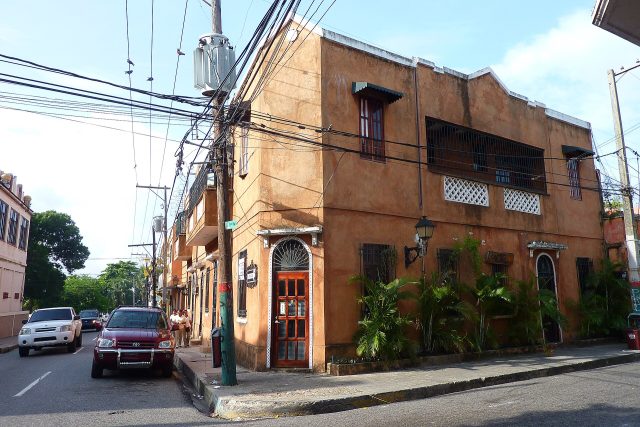
Santo Domingo is where the past lingers in the uneven cobblestones and the music pouring from open doorways. Founded in the late 15th century by Bartholomew Columbus, it was the first European settlement in the Americas. The Colonial Zone’s streets are narrow, flanked by pastel buildings with wooden balconies that sag under centuries of weight. Mornings bring the smell of coffee mixed with salt air from the harbor; evenings, the sound of merengue and bachata spills from windows, drawing you toward plazas where couples dance under strings of lights. History here isn’t locked away—it’s in the light slanting across the cathedral’s 500-year-old stones, in the stories locals still tell of pirates and conquistadors, and in the university founded in 1538, where students fill the courtyards.
The city moves to its own rhythm. Motorbikes weave through traffic, vendors shout over the crash of waves against the Malecón, the seaside boulevard. Start the day with a cortadito in the Colonial Zone, watching the city wake. By afternoon, the Mercado Modelo hums with artisans selling mahogany carvings and bottles of mamajuana. At night, rooftop bars glow as the heat fades into humid darkness. The food is simple and bold: grilled lobster, crisp tostones, sancocho—a stew thick with meat and roots. Music is everywhere, whether from a live band in a dim club or a street guitarist singing in a voice rough with salt and sun.
Dominicans don’t just welcome you—they pull you in. A taxi driver might point out a mural you’d miss. A shopkeeper could hand you a slice of mango, still warm from the tree. Friends playing dominoes in a park might deal you in. The city’s pride is tangible: in the debates over where to find the best mangú at dawn, in the insistence that you try rum with orange to taste the island’s spirit. Music is contagious. Walk down a street when merengue starts, and your feet will move before you realize it.
The sea is always close. The port, once vital to the Caribbean, still buzzes with fishing boats and cargo ships. Along the Malecón, waves crash as joggers and cyclists pass. Near the water, life slows: men play chess under almond trees, children kick soccer balls on the sand, fishermen mend nets. A few blocks inland, the city shifts. Shopping malls gleam, office towers mirror the sky, and traffic snarls to the beat of reggaeton. The contrast is sharp—old and new, quiet and loud—but it’s never dull.
Santo Domingo doesn’t pretend. It’s chaotic, vibrant, unpolished. A 16th-century cathedral stands blocks from a neon-lit club. A street vendor selling empanadas might know the city better than any guidebook. There are frustrations—traffic, uneven sidewalks, the occasional power outage—but they don’t dim the energy. This isn’t a place curated for tourists. It’s where life happens in the open, where every day feels like an invitation. Come for the history, the music, the food, or the pulse of the streets. Stay because it feels real.
See & Do
8 places




Places on the map
Marker colour follows the categoryClimate and weather
Detailed weather: Santo Domingo- Average temperature
- 25 °C
- Precipitation per year
- 1480 mm
Average air temperature
°C
24
24
24
24
26
26
26
27
27
26
25
24
Jan
Feb
Mar
Apr
May
Jun
Jul
Aug
Sep
Oct
Nov
Dec


