Santiago de Compostela
Spain · 3 places
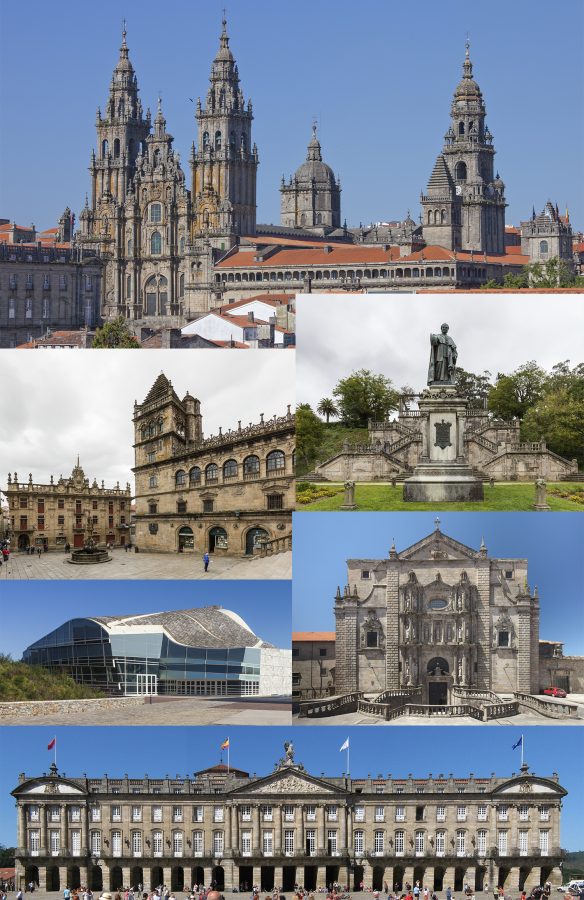
Photo: Alonso de Mendoza, CC BY-SA 4.0
Santiago de Compostela moves at its own pace. Time here feels ancient and alive. The city doesn’t demand attention—it exists, letting you notice the details. Cobblestone streets, quiet courtyards, the chime of cathedral bells over rooftops—these things speak without words. There’s no rush, no set path. Just the rhythm of a place that has welcomed travelers for centuries, not as tourists, but as temporary residents.
The city is the endpoint of the Camino de Santiago, a route walked for over a thousand years. But Santiago is more than a finish line. Gothic spires rise above narrow lanes where cafés serve tetilla cheese and ribeiro wine. Street musicians play in plazas where day fades into night. Pilgrims, students, locals, and visitors pass through, each leaving something behind. The city absorbs them all, unchanged yet always shifting.
The Cathedral of St. James stands at the center. Its carved façade shows scenes from the Bible and the life of Saint James. Inside, stained glass casts colored light across the stone. The Botafumeiro, an incense burner weighing 80 kilograms, swings during the Pilgrim’s Mass, filling the air with frankincense. People come here to pray, to sit, to listen.
Beyond the cathedral, the old quarter’s streets wind between houses with wooden balconies. The market sells octopus, empanadas, and local cheeses. Vendors call out prices while shoppers haggle over fresh produce. Parks offer shade, where the play of light through leaves slows the world down. There’s no need to fill every moment. The city doesn’t ask for your attention—it gives itself freely, imperfect and real.
Santiago doesn’t perform. It doesn’t need flashy attractions. It has spent centuries being itself—a place where history is lived. That’s why it stays with you. There’s no grand revelation, no neat answers. Just the chance to pause, to reflect, to arrive tired and leave feeling like you’ve touched something lasting.
Stay
0 placesNothing in this category yet — the catalogue is still growing.
All placesPlaces on the map
Marker colour follows the categoryClimate and weather
Detailed weather: Santiago de Compostela- Average temperature
- 13 °C
- Precipitation per year
- 1555 mm
- Sunshine hours per day
- 5.7 h
Average air temperature
°C
8
9
10
12
15
17
19
19
17
15
11
9
Jan
Feb
Mar
Apr
May
Jun
Jul
Aug
Sep
Oct
Nov
Dec