
Sanaa
Yemen · 6 places
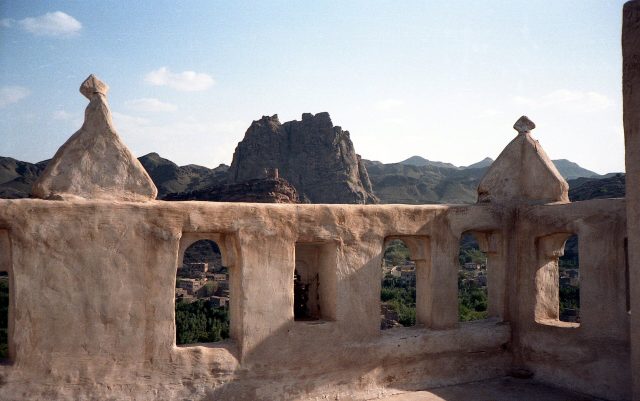
Photo: المصور أنس الحاج, CC BY-SA 2.0
Sana’a feels like a place where time has paused, though life here moves at its own unhurried pace. The old city, encircled by ancient walls, still carries the quiet energy of medieval merchants and craftsmen who once filled its narrow streets. Cobbled lanes wind between towering clay buildings, their facades adorned with delicate white gypsum patterns that have faded just enough to tell their age. Some of these houses have stood for centuries, their upper floors jutting out over the ones below, creating a sense of both intimacy and slight unease—like a puzzle that’s been stacked too high but never topples. At dawn, the city stirs to the call of the muezzin, the scent of fresh bread drifting from tiny bakeries where dough is still shaped by hand and baked in wood-fired ovens right on the street.
This isn’t just a city frozen in the past; it’s a living museum where every alleyway holds a story. You could wander for hours through the labyrinth of the old quarter and still stumble upon something unexpected—a hidden courtyard with a trickling fountain, a workshop where artisans hammer out traditional jambiya daggers, or a spice stall where the air is thick with the aroma of cardamom and freshly ground coffee brewed in front of you. The souks hum with activity from morning till night, and even if you’re not buying, it’s worth lingering to watch the rhythm of daily life. Vendors hawk everything from silver jewelry to stacks of flatbread, while shoppers haggle in slow, deliberate exchanges, moving from one stall to the next like they’ve done for generations.
Beyond the old walls, modern Sana’a sprawls outward, where wide boulevards and glass-fronted buildings stand alongside traditional architecture. Here, life moves faster—cafés serve steaming plates of fahsa, a spiced lamb stew, and sweet pastries drizzled with honey, while families gather in parks as the sun sets. Yet even in these newer districts, the city’s soul lingers. The National Museum holds relics of ancient kingdoms that once ruled this land, and the towering Al-Saleh Mosque, one of the largest in Yemen, offers a glimpse of the country’s Islamic heritage. The contrast between old and new isn’t jarring; it feels natural, as if the city has simply grown around its history rather than leaving it behind.
Perched over two thousand meters above sea level, Sana’a enjoys a climate that’s gentler than much of Yemen. Summers are warm but not oppressive, and while winter nights can be cool, the days remain sunny and bright. The air is crisp and dry, the sky almost always clear, making it easy to spend hours exploring on foot. The people of Sana’a, known for their warmth, take pride in their city and are quick to share its secrets—whether it’s a favorite café tucked away in a quiet corner or the best place to try qishr, a spiced coffee made with ginger and cardamom. There’s no rush here, no pressure to move on to the next attraction. Instead, there’s time to sit, to listen, to soak in the details that most places overlook.
What makes Sana’a special is the way it balances past and present without forcing a choice between them. The old city’s crumbling beauty exists alongside the energy of a capital that’s still very much alive. It’s a place where history isn’t just preserved in museums but woven into the fabric of everyday life—where a conversation with a shopkeeper might reveal as much about the city as any guidebook. There’s a quiet magic in the way Sana’a refuses to be hurried, in the way it invites you to slow down and notice the small things: the play of light on a carved wooden door, the laughter of children playing in a courtyard, the way the call to prayer echoes through the streets at dusk. For those who come looking for more than just a destination, Sana’a offers something rarer—a sense of belonging to a place that has endured, unchanged in spirit, for centuries.
See & Do
All of them


Places on the map
Marker colour follows the categoryClimate and weather
Detailed weather: Sanaa- Average temperature
- 19 °C
- Precipitation per year
- 0 mm
Average air temperature
°C
15
18
19
20
22
22
21
21
21
18
16
14
Jan
Feb
Mar
Apr
May
Jun
Jul
Aug
Sep
Oct
Nov
Dec


