Pampulha
Brazil · 6 places
Photo: Matthias Ripp, CC BY 2.0
Pampulha isn’t just another district of Belo Horizonte—it’s a world of its own, where modernist architecture and nature exist in quiet harmony, and life moves to the rhythm of palm-lined promenades and an artificial lake. Though the bustling heart of Minas Gerais’ capital is just a short drive away, Pampulha feels like a different universe. There are no skyscrapers or traffic jams here, just wide walkways, white domes reflected in the water, and parks where locals stroll with their dogs or spread out picnics on the grass. Conceived as an ideal garden city, it still carries that spirit today, even as it has grown into a cultural hub in its own right.
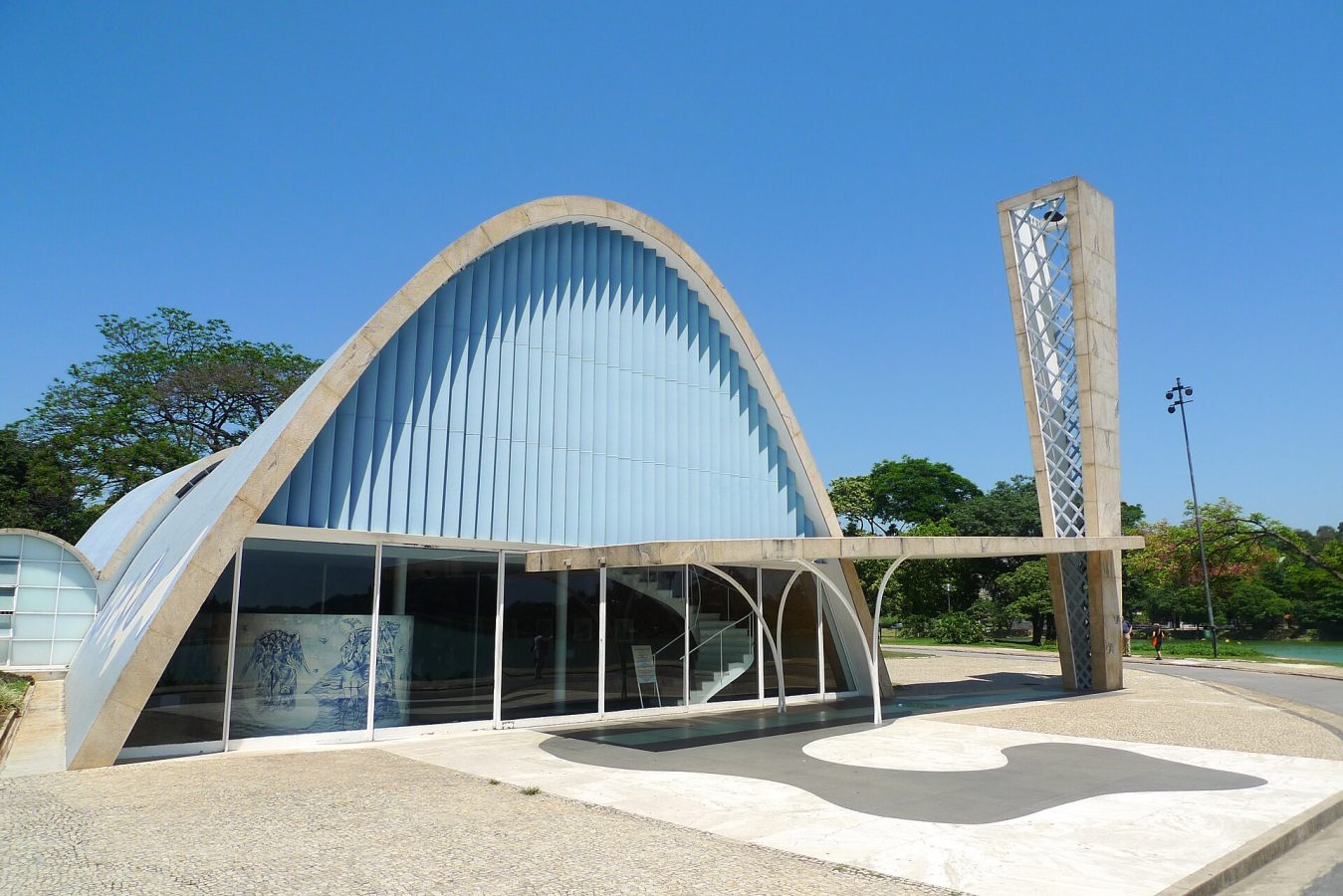
At the center of it all is Lake Pampulha, an ambitious project from the 1940s when the then-mayor, Juscelino Kubitschek, envisioned transforming a swampy area into a recreational oasis for the city. What was once an experiment is now a beloved landmark, a place for cycling, boating, and lazy afternoons by the water. The lake is encircled by some of the city’s most iconic sights: the wave-like Church of Saint Francis of Assisi, the futuristic Museum of Art, and the Mineirão Stadium, which hosted World Cup matches in 2014. The architecture here tells the story of mid-20th-century Brazil—Oscar Niemeyer’s bold curves, the clean lines of functionalism, and the playful spirit of a country reimagining itself.
Walking through Pampulha is like stepping through time. One block might reveal an Art Deco villa, the next a contemporary art space showcasing local talent. The district doesn’t feel like an open-air museum, nor does it hide its past behind glass and steel. History is woven into the fabric of everyday life, unpretentious and alive. Even the famous Niemeyer church, often called one of Brazil’s most beautiful, feels surprisingly intimate. Locals treat it as part of their routine—some come for mass, others just to sit on the steps and watch the water.
Life here moves at a gentle pace, but it’s far from sleepy. On weekends, the lakeside promenade turns into a lively market, with stalls selling fresh fruit, artisanal cheese, and handmade jewelry. Open-air cafés spill with music—bossa nova, samba, sometimes something more modern. As evening falls, the lake lights up, and the reflections of buildings on the water create the illusion of a second city floating just beneath the surface. Unlike Rio or Salvador, Pampulha isn’t overrun with tourists, yet it doesn’t feel isolated either. It’s a place where Brazilian culture reveals itself in small, unscripted moments: in the easy laughter of locals, in the way they spend their free time, in the architecture that doesn’t overwhelm but invites you to linger.
If Belo Horizonte is the business heart of Minas Gerais, Pampulha is its soul. There are no towering office buildings or endless traffic jams, just space to wander, meet friends, or simply think. The district doesn’t try to impress, yet it always has something new to offer—a hidden viewpoint over the lake, a tiny bistro serving the best pastel in town, an old cinema still screening Brazilian classics. Pampulha doesn’t shout for attention, and that’s precisely why it draws you back. It’s a place to experience the real Brazil, unfiltered and unhurried.
Stay
0 placesNothing in this category yet — the catalogue is still growing.
All placesPlaces on the map
Marker colour follows the categoryClimate and weather
Detailed weather: Pampulha- Average temperature
- 21 °C
- Precipitation per year
- 1203 mm
Average air temperature
°C
22
22
23
22
21
19
19
20
23
23
22
22
Jan
Feb
Mar
Apr
May
Jun
Jul
Aug
Sep
Oct
Nov
Dec