Paestum
Italy · 4 places
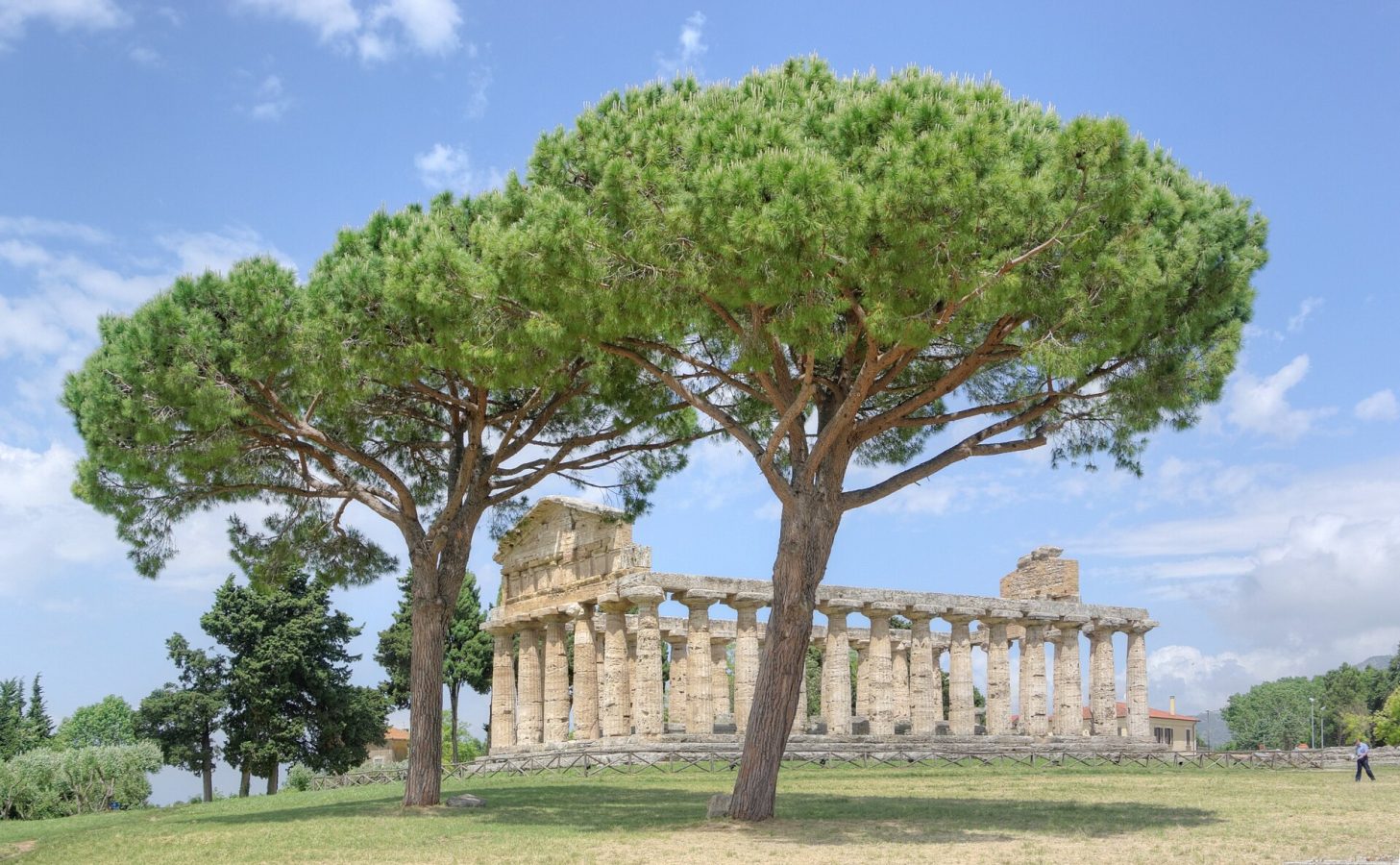
Photo: Berthold Werner, CC BY-SA 3.0
Paestum
Along the Tyrrhenian coast, an hour’s drive from Salerno, Paestum sits where Greek temples rise above quiet streets. The town doesn’t draw crowds like Rome or Florence. Instead, it lets the past speak for itself—through ruins, food, and the slow pace of daily life.
The ruins are three Doric temples from the 6th and 5th centuries BC. The oldest, the Basilica, honors Hera. Its columns stand thick and weathered, as if carved from the earth itself. The Temple of Neptune follows, its lines so balanced they seem to float. The Temple of Athena, smaller but just as striking, offers a lighter contrast with its slender columns. Between them, you can almost hear the voices of the city that once thrived here—merchants bargaining, priests chanting, the hum of life that filled these spaces.
Paestum isn’t just ruins. The land around it feeds Italy: artichokes, San Marzano tomatoes, mozzarella made fresh in local dairies. In summer, the sea is clear and inviting. In winter, the town grows quieter, the trattorias serving dishes that haven’t changed in generations—pasta with seafood, wine from nearby vineyards, bread still warm from the oven. The food tastes like the place itself: straightforward, unpretentious, alive.
The town doesn’t try to impress. There are no souvenir stalls, no neon signs, no lines for photos. Instead, there are evenings by the water, the sound of waves mixing with the clatter of espresso cups. There are small shops selling olive oil, honey, and bread that smells like it was baked an hour ago. Paestum doesn’t ask for your attention. It lets you wander, breathe in the salt air, and feel the weight of centuries pressing lightly against your shoulders.
That’s why people return—not just for the temples, but for the way time slows here.
Stay
0 placesNothing in this category yet — the catalogue is still growing.
All placesPlaces on the map
Marker colour follows the categoryClimate and weather
Detailed weather: Paestum- Average temperature
- 18 °C
- Precipitation per year
- 1233 mm
- Sunshine hours per day
- 7.2 h
Average air temperature
°C
10
11
12
15
18
23
26
26
23
20
16
13
Jan
Feb
Mar
Apr
May
Jun
Jul
Aug
Sep
Oct
Nov
Dec