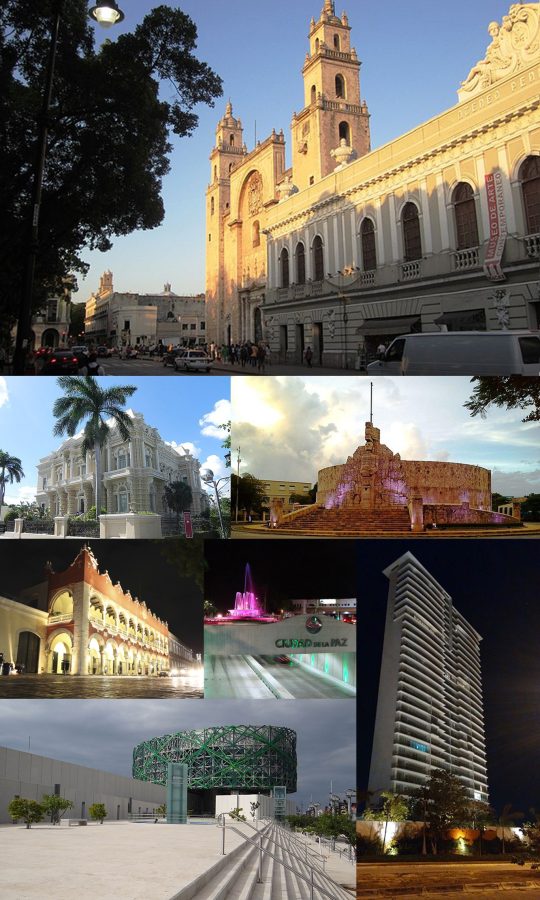
Mérida
Mexico · 8 places
Photo: the above mentioned, CC BY-SA 4.0
Merida
Sunlight lingers on whitewashed walls, and palm fronds sway over cobblestone streets. The city moves at its own pace—no neon signs, no crowds. Founded by Spanish conquistadors in the 1500s atop a Maya settlement, it carries both histories in its bones. Colonial plazas and arched doorways stand alongside indigenous traditions, not as opposites but as layers of the same place.
Midday in the center: families gather under laurel trees, the scent of panuchos drifts from market stalls, and the air holds a warmth that stretches time.
The Zócalo
This plaza has watched centuries unfold. By day, elderly men play dominoes under ceiba trees while vendors sell horchata in clay cups. By evening, couples stroll under strings of lights, mariachi bands tune their guitars, and the cathedral of San Ildefonso stands in the background. Its 16th-century stone facade holds echoes of conquest and endurance.
Calle 60 hums nearby. Artists display work on sidewalks, musicians strum guitars, and the line between public and private space blurs. The city feels like a living room where everyone is invited to stay.
Maya traces
Merida is a gateway to the Maya world, but you don’t need to leave the city to find it. The Museum of Anthropology holds carved jade, painted pottery, and tools from the surrounding jungle. Small pyramids rise between modern neighborhoods, their steps worn by rain and wind.
The food carries the past: cochinita pibil slow-cooked in banana leaves, dulce de papaya with cinnamon. Recipes passed down through generations. The past isn’t preserved behind glass—it’s alive in the way people cook and speak.
A quiet revival
Artists and musicians have opened galleries in repurposed colonial buildings. New cafés and bookshops appear in quieter neighborhoods, where the only urgency is choosing a hammock for a nap. On weekends, festivals fill the streets with dancers in embroidered dresses, the scent of grilled carne asada, and the sound of drums.
There’s no need to keep up with a bigger city’s rhythm. The vitality here rewards those who notice.
Slipping into the rhythm
You might spend an afternoon on a park bench, watching children chase pigeons while an accordion plays nearby. Or wander down a side street where a shopkeeper shows you handwoven textiles or a potter shapes clay in the corner.
Merida reveals itself slowly. The white walls, the warm breeze, the softening light at sunset—it lingers because some places don’t just exist. They become part of you.
Stay
0 placesNothing in this category yet — the catalogue is still growing.
All placesPlaces on the map
Marker colour follows the categoryClimate and weather
Detailed weather: Mérida- Average temperature
- 27 °C
- Precipitation per year
- 1201 mm
- Sunshine hours per day
- 8.3 h
Average air temperature
°C
24
26
28
30
30
29
29
29
28
27
26
24
Jan
Feb
Mar
Apr
May
Jun
Jul
Aug
Sep
Oct
Nov
Dec


