Lublin
Poland · 7 places
Photo: Lfranz68, CC BY-SA 3.0
Lublin moves to its own quiet rhythm, a city where history and the present coexist without fanfare. There’s no metropolitan rush here, nor the sleepy stillness of a backwater town. The streets of the Old Town wind upward from the castle hill, lined with houses whose colorful facades have witnessed centuries of merchants, students, and craftsmen. Lublin has always been a crossroads—of trade routes, cultures, and faiths—and that legacy lingers in the air. There’s something distinctly old-world about the place, though it hasn’t fossilized into a museum piece. The city evolves while holding onto its identity, a balance that feels effortless.
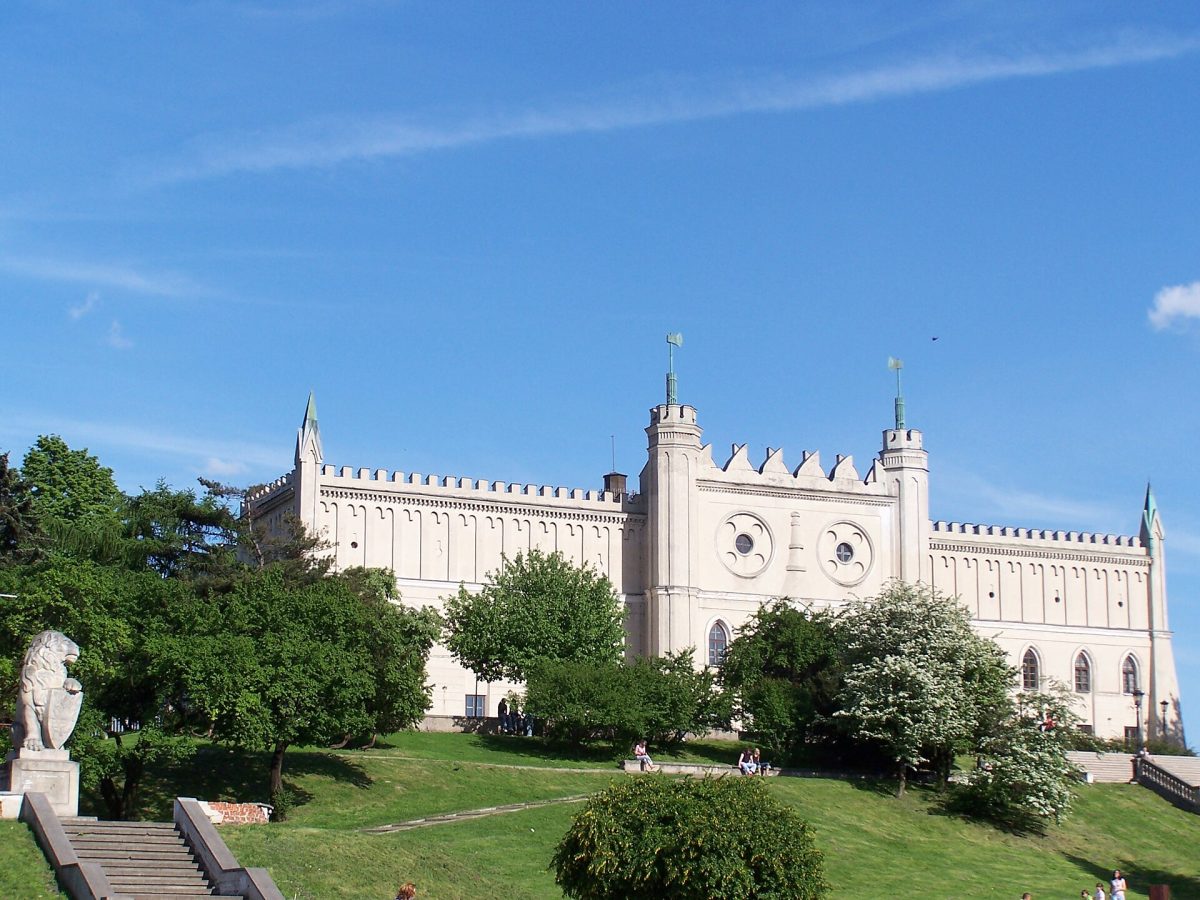
The heart of Lublin is its Old Town, where cobblestone streets lead to the Market Square, alive with open-air cafés in summer and a towering Christmas tree in winter. The Trinity Tower rises above it all, offering views of red-tiled roofs and the rolling green hills beyond. Nearby stands Lublin Castle, once a royal residence, later a notorious prison, and now a museum. Even without stepping inside, the castle commands attention with its imposing presence. Beside it, the small Chapel of the Holy Trinity holds frescoes considered among the finest examples of Eastern European Gothic art. These walls have seen kings, prisoners, and artists, their stories embedded in the stone.
Lublin is a student city, and the energy is palpable. Several universities call it home, including Poland’s oldest Catholic university, named after John Paul II. The youthful crowd keeps the streets lively—Polish and English mix in the daytime, while bars and cafés fill up as evening falls. But Lublin’s student culture isn’t just about nightlife. The city thrives on festivals, particularly theater and music. Every summer, the Street Theater Carnival draws performers from across Europe, while autumn brings jazz concerts that spill into the streets. Here, culture isn’t a checkbox; it’s woven into daily life.
Beyond the center, Lublin reveals another side. Neighborhoods once home to workers and artisans are now hubs for young families and creatives, dotted with cozy cafés, small galleries, and local design studios. The city also serves as a gateway to the Lublin region, where history and nature intertwine at every turn. Kazimierz Dolny, one of Poland’s most picturesque towns, is just an hour away, while the Ukrainian border lies close enough to feel within reach. Lublin doesn’t just invite you to explore itself—it encourages you to venture deeper into the countryside, where old estates, forests, and rivers tell their own stories.
What makes Lublin special is its lack of pretense. There are no crowds chasing Instagram moments, no forced charm. The city simply exists, with its own pace, traditions, and character. You could spend a day here or a week, each visit uncovering something new—a quiet courtyard bursting with hydrangeas, an unexpected view of the Bystrzyca River valley, or a conversation with a local who shares a story not found in any guidebook. Lublin doesn’t hand you experiences; it lets you discover them for yourself.
Stay
0 placesNothing in this category yet — the catalogue is still growing.
All placesPlaces on the map
Marker colour follows the categoryClimate and weather
Detailed weather: Lublin- Average temperature
- 9 °C
- Precipitation per year
- 620 mm
- Sunshine hours per day
- 5.8 h
Average air temperature
°C
-1
0
3
9
14
19
20
20
15
10
4
1
Jan
Feb
Mar
Apr
May
Jun
Jul
Aug
Sep
Oct
Nov
Dec