- Home
- South Korea
- Gyeongju
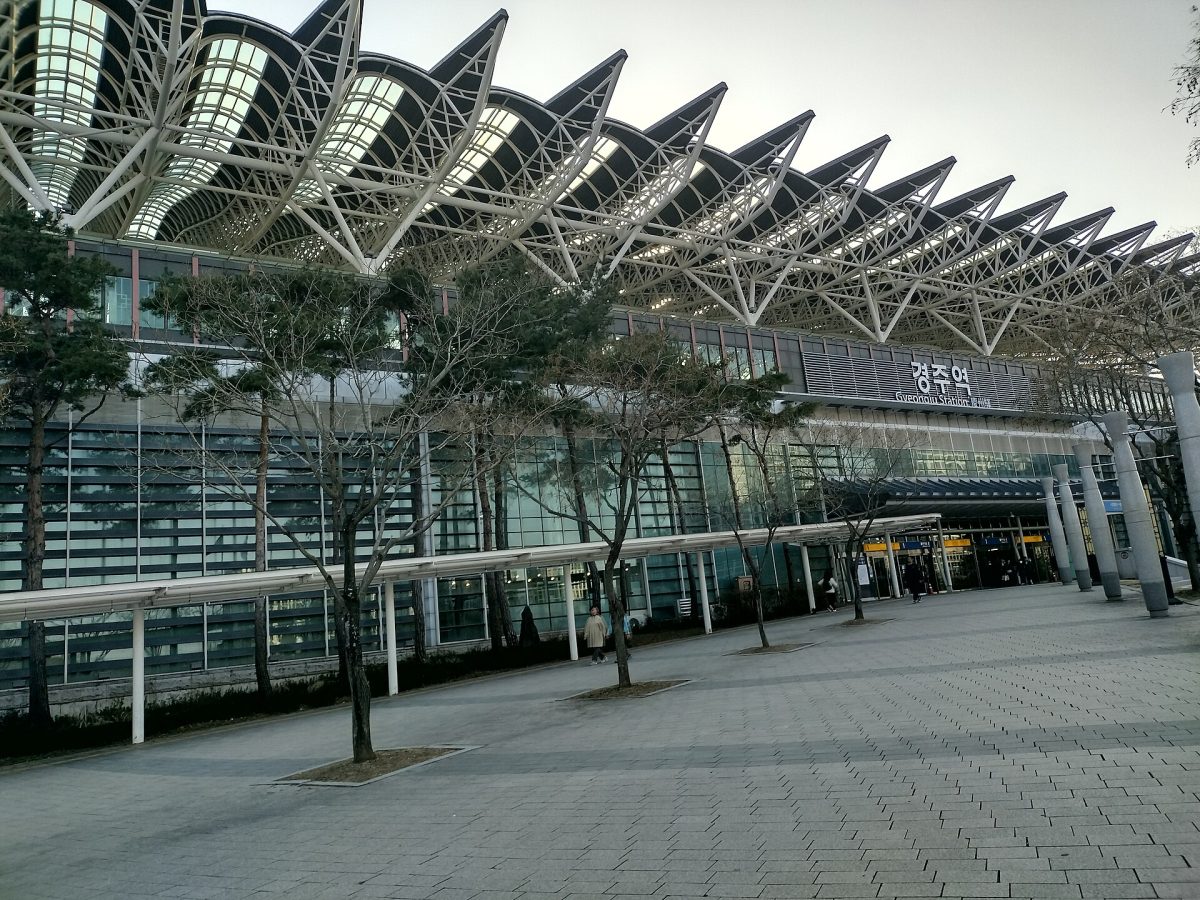
Gyeongju
South Korea · 8 places
Photo: にのへ, CC0
Gyeongju moves at its own pace, a quiet rhythm that hasn’t changed in centuries. There are no towering skyscrapers here, no rush of commuters or neon-lit streets—just the gentle weight of history settling into every corner. The city was once the heart of the Silla Kingdom, one of Korea’s most powerful dynasties, and its past lingers in the low hills dotted with ancient tombs, in the weathered stone of pagodas, and in the hush of temples where monks once chanted sutras. Walk down any side street, and you might catch the echo of hooves from royal processions or the murmur of merchants haggling over silk and spices in long-gone marketplaces.
At the center of it all is Gyeongju National Park, a sprawling green space where time feels suspended. The park is home to the tumuli of Silla kings and queens, their grassy mounds rising like soft waves from the earth. Nearby, the Seokguram Grotto shelters a serene Buddha carved into the rock over a thousand years ago, its face still touched by the light filtering through the entrance. Then there’s Cheomseongdae, one of East Asia’s oldest surviving observatories, where astronomers once tracked the stars with nothing but stone and patience. As evening falls, the park transforms—the glow of lanterns ripples across ponds, and the shadows of trees stretch long over moss-covered steles, as if the past itself is breathing.
But Gyeongju isn’t just a relic. It’s a living city, even if its pulse is slower than Seoul’s. Small cafés and family-run restaurants serve up dishes that have been perfected over generations: *hwe*, raw fish brightened with chili and vinegar, or *samgyeopsal*, thick slices of pork sizzling over a grill. In the Wolseong district, artisans shape clay into pottery using techniques passed down for centuries. The city changes with the seasons—cherry blossoms dust the streets in spring, while autumn turns the maples into flames, their leaves crunching underfoot like embers.
What makes Gyeongju special is how effortlessly the old and the new coexist. Unlike other historic Korean cities, it doesn’t feel like a museum. There are no crowds jostling for photos, no tour guides shouting over one another. Instead, the city invites you to slow down: to listen to the wind rustling through the trees above royal tombs, to watch the mist curl around temple eaves, or to pause when the distant toll of a temple bell drifts through the air. It’s a place where history isn’t just preserved—it’s still alive, waiting to be noticed.
Stay
0 placesNothing in this category yet — the catalogue is still growing.
All placesPlaces on the map
Marker colour follows the categoryClimate and weather
Detailed weather: Gyeongju- Average temperature
- 14 °C
- Precipitation per year
- 1241 mm
Average air temperature
°C
1
3
9
14
17
23
27
26
22
16
10
2
Jan
Feb
Mar
Apr
May
Jun
Jul
Aug
Sep
Oct
Nov
Dec


