- Home
- Mesopotamia
- Al-Kifl

Al-Kifl
Mesopotamia · 7 places
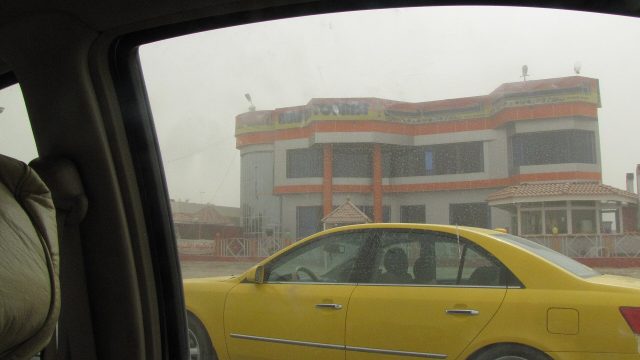
Photo: Thedrewid314 (talk) (Uploads), Public domain
El-Kifl
El-Kifl sits quietly along the Euphrates. The streets, narrow and paved with worn stone, wind past old mosques and madrasas. Their walls hold echoes of a time when this region was a center of Islamic scholarship.
The city is known as a pilgrimage site. Here stands the tomb believed to belong to the prophet Ezekiel, revered in Judaism, Christianity, and Islam. This shared veneration gives the place a quiet atmosphere—faithful and curious walk the same paths, drawn by history.
The architecture is a patchwork of eras. Low-slung clay houses with flat roofs stand beside newer buildings. Slender minarets rise above the skyline. The mausoleum of Ezekiel, with its domed roof and high arches, is visible from a distance. Inside, the marble floor is worn smooth by centuries of footsteps. Pilgrims leave folded notes with prayers in the walls.
Outside, vendors sell dates and spices. Old men debate over tiny cups of tea. Children dart between dusty squares.
The Euphrates flows nearby. Fishermen cast nets for carp and catfish along its muddy banks. Palm groves line the waterfront, offering shade. At dusk, the river turns golden, reflecting the fading light. Locals gather on the shore, grilling fresh fish over charcoal fires.
Life in El-Kifl moves to the beat of tradition. Mornings begin with the call to prayer. Streets empty as the sun climbs, then fill again in the evening. There are no grand hotels or crowded markets. Instead, there’s stillness—a chance to step into a world where history feels close.
The city doesn’t offer distractions. It offers a place where cultures and beliefs have intertwined for centuries. For those who come seeking authenticity, El-Kifl is a quiet revelation.
See & Do
7 places
Places on the map
Marker colour follows the categoryClimate and weather
Detailed weather: Al-Kifl- Average temperature
- 26 °C
- Precipitation per year
- 97 mm
Average air temperature
°C
13
14
19
27
32
37
39
39
35
28
20
15
Jan
Feb
Mar
Apr
May
Jun
Jul
Aug
Sep
Oct
Nov
Dec


