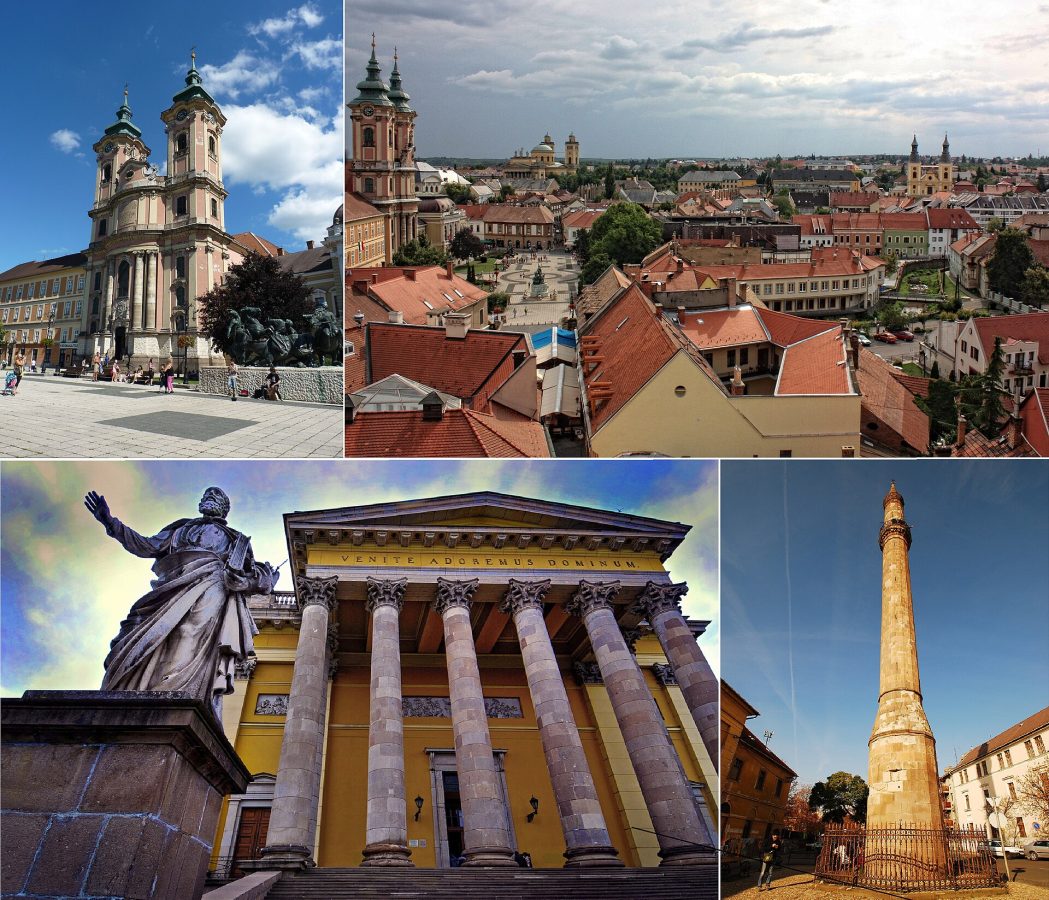
Eger
Hungary · 4 places
Photo: Imoti95, CC BY-SA 4.0
Eger is the kind of place that quietly wins you over. It doesn’t demand attention like Budapest or carry the polished charm of Lake Balaton, and that’s exactly why it feels so genuine. The old town’s narrow streets wind past Baroque buildings, their pastel facades softened by time, while the main square hums with the scent of fresh pastries and coffee. In summer, the air is warm but never stifling, carried by a breeze that rustles through the leafy squares and open-air cafés. There’s no rush here—just the easy rhythm of a town that’s comfortable in its own skin.
The castle is what most people come to see, perched above the rooftops like a silent guardian. Its walls have witnessed centuries of conflict, standing firm as a frontier between Christian Europe and the Ottoman Empire. Climbing to the top rewards you with a view that stretches over red-tiled roofs, church spires, and the rolling hills beyond. Inside, the museum displays armor, weapons, and everyday objects from the past, but the real draw is the atmosphere—thick with stories of battles and resilience. It’s not just a monument; it’s a place where history feels alive.
Wine is woven into Eger’s identity. The region is famous for Egri Bikavér, or Bull’s Blood, a robust red that legend says fortified Turkish soldiers in battle. The local cellars, carved into volcanic tuff, offer tastings where you can sample its deep, spicy notes alongside hearty Hungarian dishes like goulash or lecsó. The wine has a weight to it, a richness that lingers, and sharing a glass in one of those cool, dimly lit cellars is as much a part of the experience as the drink itself.
Life in Eger moves at its own pace. Mornings start at the market, where stalls brim with fresh vegetables, homemade cheeses, and smoked meats. By evening, the riverfront comes alive—not with crowds, but with people strolling, licking ice cream cones, or pausing to watch the sunset over the old bridge. The river divides the town, but it also connects everything, its gentle flow mirroring the unhurried way things happen here. There’s no need to fill every moment; sometimes, just sitting on a bench with a coffee is enough.
Beyond the town, thermal baths offer a different kind of relaxation. Places like Egerszalók and Demjén draw visitors with their mineral-rich waters, said to soothe aches and calm the mind. Locals and travelers alike spend hours floating in the warm pools, letting the day dissolve into the steam. If the weather’s right, you can pair a soak with a walk through the surrounding forests, where the air smells of pine and damp earth. It’s a simple pleasure, but one that lingers long after you’ve left.
Eger doesn’t try to impress. It doesn’t need to. The town exists as it always has—rooted in history, shaped by tradition, and content with its quiet pace. You might come for a weekend and find yourself staying longer, lulled by the way life here unfolds without hurry. It’s not the Hungary of postcards or guidebooks, but the one that feels real: unassuming, warm, and full of small, enduring joys.
Stay
0 placesNothing in this category yet — the catalogue is still growing.
All placesPlaces on the map
Marker colour follows the categoryClimate and weather
Detailed weather: Eger- Average temperature
- 11 °C
- Precipitation per year
- 755 mm
Average air temperature
°C
-0
3
7
12
16
21
23
22
17
11
5
1
Jan
Feb
Mar
Apr
May
Jun
Jul
Aug
Sep
Oct
Nov
Dec


