- Home
- United Kingdom
- Durham
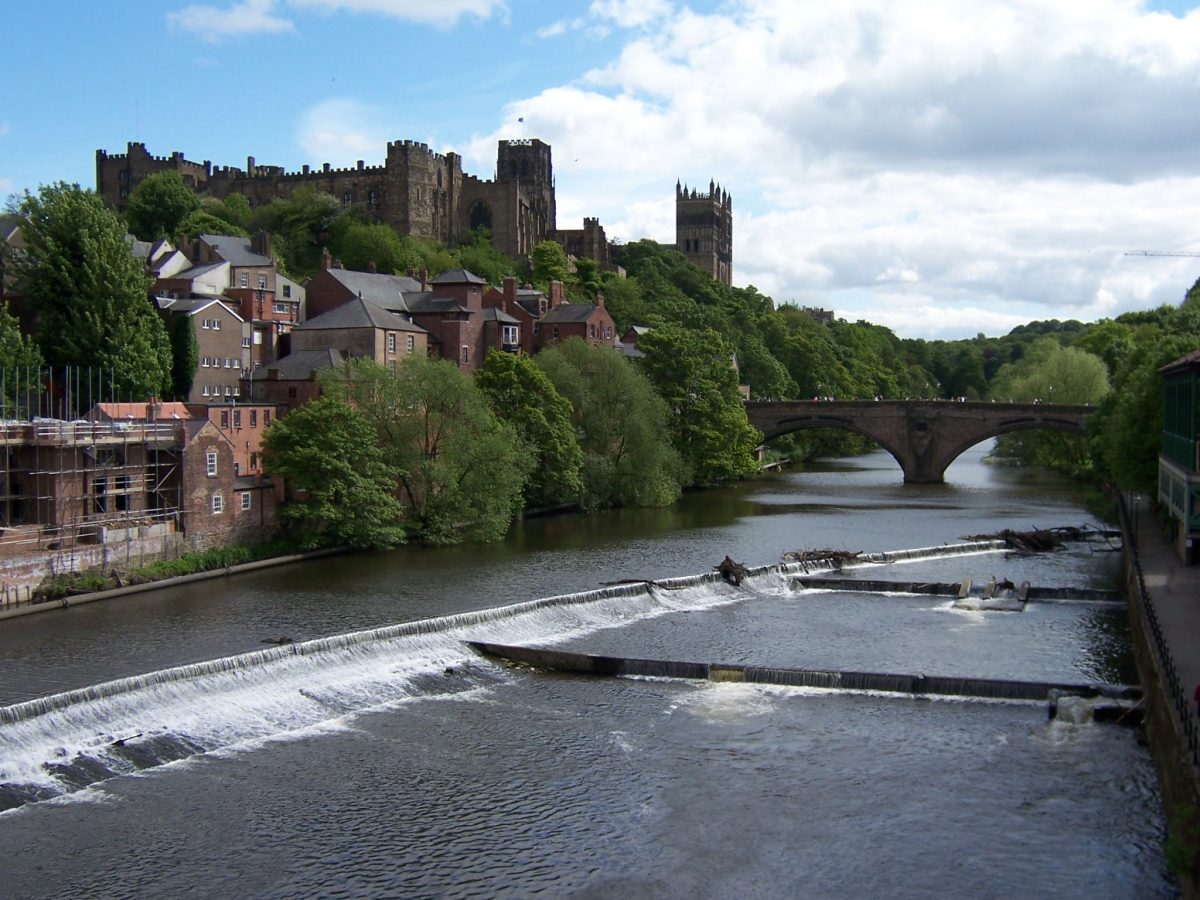
Durham
United Kingdom · 4 places
Photo: Jungpionier, CC BY-SA 3.0
Durham is a place where the past lingers in the stones beneath your feet and the air you breathe. The city feels like a living relic, its narrow lanes winding between centuries-old buildings, their weathered facades telling stories without words. Above it all rises the cathedral, its silhouette unmistakable against the sky, while below, the River Wear curves around the city like a protective embrace. There’s no rush here, no clamour of modern life—just a quiet, enduring presence that makes it easy to slow down and simply be.
At the heart of Durham stands its cathedral, a masterpiece of Norman architecture that has watched over the city for nearly a thousand years. Its towering walls, built in the 11th century, still command awe, their solidity a reminder of the skill and ambition of those who raised them. Inside, the light filters through stained glass, casting shifting patterns across the stone floor, while the hush of footsteps echoes beneath the vaulted ceilings. The cathedral holds the relics of St Cuthbert, and its library preserves ancient manuscripts, including one of the oldest surviving copies of the Bible. Beside it, the castle—once the seat of Durham’s powerful bishops—now belongs to the university, its halls filled with the murmur of students rather than the clink of armour. Together, they form a UNESCO World Heritage Site, not because of some bureaucratic designation, but because they are places where history feels tangible, almost within reach.
Walking through Durham is like stepping through time. Cross the Elvet Bridge, which has spanned the Wear since the 12th century, and you’ll find yourself in a neighbourhood where Tudor-era houses still stand, their timber frames sagging slightly with age. Along the riverbank, old mills hint at the city’s past as a hub of trade and industry, their waterwheels long still but their presence undeniable. Climb the hill behind the cathedral, and the view explains why Durham was once an impregnable fortress—the river wraps around the city on three sides, a natural moat, while beyond it, the rolling countryside stretches into the distance. From here, it’s easy to imagine the city as it once was: a stronghold, a place of refuge, a centre of power.
Durham’s university gives the city its pulse, a blend of youthful energy and scholarly tradition. Students in gowns drift between ancient colleges, their laughter mixing with the quiet rustle of leaves in the courtyards. The university’s buildings are scattered throughout the city, some so old they seem to have grown from the ground itself. St John’s College, with its cloisters and chapels, is a place where time moves differently, where the weight of centuries is balanced by the lightness of student life. In summer, the city comes alive with festivals and open-air concerts, while winter brings a softer kind of magic—strings of lights, the scent of mulled wine, the warmth of pubs where locals gather to talk and unwind.
Yet Durham is more than just a museum piece. It’s a place where people live, work, and go about their days. There are cosy cafés serving tea with scones, their windows steamed from the warmth inside, and small shops selling handmade crafts, their wares a testament to the city’s enduring creativity. The pubs, some of them centuries old, still draw crowds, their wooden beams and crackling fires offering a refuge from the outside world. As evening falls, the cathedral is lit from below, its stone glowing against the darkening sky, and the river reflects the lights of the city like a mirror. There’s no need to hurry here—no grand sights demanding attention, no itinerary to follow. Durham doesn’t try to impress; it simply exists, and that’s enough.
Stay
0 placesNothing in this category yet — the catalogue is still growing.
All placesPlaces on the map
Marker colour follows the categoryClimate and weather
Detailed weather: Durham- Average temperature
- 10 °C
- Precipitation per year
- 951 mm
- Average humidity
- 82 %
- Sunshine hours per day
- 7.1 h
- Time zone
- UTC+1 (GMT+1)
Average air temperature
°C
4
6
6
8
12
14
15
15
13
10
6
6
Jan
Feb
Mar
Apr
May
Jun
Jul
Aug
Sep
Oct
Nov
Dec


