- Home
- Costa Rica
- Buenos Aires

Buenos Aires
Costa Rica · 4 places
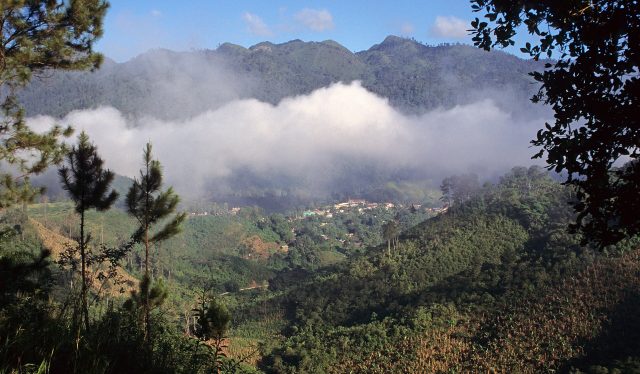
Photo: Central Intelligence Agency, Public domain
Buenos Aires
Buenos Aires in Costa Rica is the kind of place most travelers overlook—not because it lacks charm, but because it doesn’t announce itself. There are no crowded beaches or neon-lit resorts here, no tour buses idling at the curb. Instead, the town sits quietly in the foothills of the Cordillera, where the air carries the scent of damp earth and coffee leaves. The locals call it *Buenos*, a name that feels like an invitation to slow down, to notice the way the light slants through the trees in the late afternoon or how the mist lingers over the hills at dawn. This isn’t the Costa Rica of postcards; it’s the one that exists just beyond them, where life moves at the pace of the seasons rather than the clock.
The town’s story is written in the soil. In the early 1900s, settlers arrived drawn by the rich volcanic earth, planting coffee on the slopes that still surround Buenos Aires today. The industry shaped the town—its rhythms, its architecture, even its people. Old wooden houses with wide verandas stand alongside newer buildings, their paint faded by decades of sun and rain. The coffee farms nearby are small, family-run affairs where the harvest is still picked by hand. The streets come alive in the evenings, when the heat eases and neighbors gather to talk under the glow of streetlights.
The heart of Buenos Aires is its central square, a simple space anchored by a whitewashed church with a red-tiled roof. On weekends, the square fills with life. Children chase pigeons across the pavement while vendors sell fresh fruit, warm empanadas, and rounds of local cheese. A marimba band might start up in the corner, their music drifting through the laughter and chatter. Nearby, a small market offers sweet plantains, thick corn tortillas, and coffee so fresh it still carries the warmth of the roaster. The food tastes like it was made by someone’s grandmother.
Beyond the town, the landscape opens up. A short drive away, the jungle begins, dense and humming with life. Trails wind through the trees, leading to hidden waterfalls like Naranjo, where water plunges over a rocky ledge into a pool below. For those who prefer stillness, there are rivers to fish in or quiet clearings for a picnic. The locals know these places well—the secluded swimming hole, the old coffee farm where you can watch the beans being roasted over an open fire—and they’re usually happy to share them.
Buenos Aires doesn’t try to be anything it’s not. There are no souvenir shops or touts selling experiences. What you’ll find instead are empty streets in the midday heat, the occasional stray dog napping in the shade, and people who greet you with a smile. It’s a place that exists on its own terms. If you’re looking for the Costa Rica beyond the brochures—where life is measured in cups of coffee and conversations that last until the stars come out—then Buenos Aires might be the kind of place that lingers long after you’ve left. It’s not so much a destination as a pause, a reminder that sometimes the best way to see a place is to let it unfold at its own pace.
Eat & Drink
0 placesNothing in this category yet — the catalogue is still growing.
All placesPlaces on the map
Marker colour follows the categoryClimate and weather
Detailed weather: Buenos Aires- Average temperature
- 23 °C
- Precipitation per year
- 5203 mm
- Average humidity
- 87 %
- Sunshine hours per day
- 8.6 h
- Time zone
- UTC-6 (GMT-6)
Average air temperature
°C
22
24
24
24
23
23
23
22
22
22
22
22
Jan
Feb
Mar
Apr
May
Jun
Jul
Aug
Sep
Oct
Nov
Dec