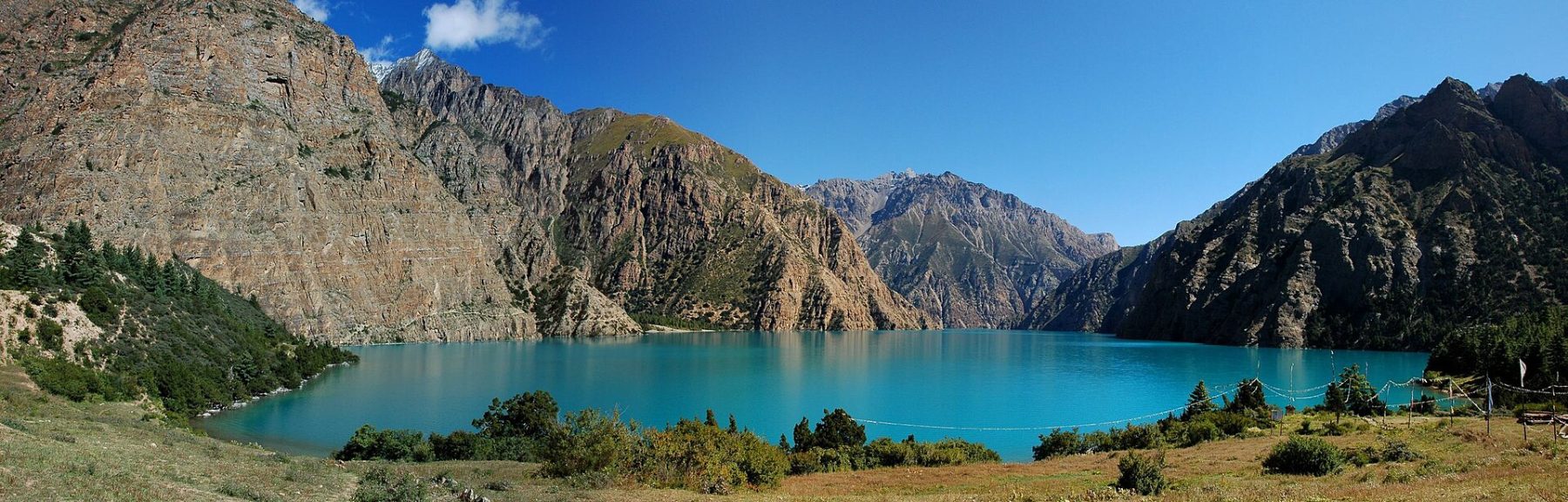
Weather overview
Bowang sits in the Himalayas, where the weather shifts dramatically with the seasons. From November to March, the air stays crisp and dry, with daytime highs barely rising above 0 °C and nights often dropping below -7 °C. This is the coldest stretch, but also the sunniest, with nearly 10 hours of daylight in January and February.
The landscape changes in April, as temperatures climb toward +7 °C and the first greenery appears. By June, the monsoon arrives, bringing heavy rain that peaks in July with nearly 500 mm of precipitation. The wet season lasts through September, making trails slippery and travel more challenging. October marks the return of dry, stable weather, with clear skies and a gradual cooldown.
Temperature
Winter in Bowang is harsh but predictable. January and February see average highs of just +1.9 °C and +2 °C, while nighttime lows plunge to -7.5 °C and -8 °C. Even in December, temperatures hover around -1.4 °C, so layers are essential. The cold eases slightly in March, with highs reaching +3.3 °C and nights warming to -7.4 °C.
Spring arrives late in Bowang, with April and May offering the first mild days. Highs rise to +7.1 °C in April and +9.3 °C in May, though nights can still dip near freezing. Summer is brief but noticeable: June brings +12.3 °C highs, while July and August stay just under +12 °C. By September, temperatures start to drop again, settling around +11.4 °C before the sharp autumn cooldown.
Autumn in Bowang is short but pleasant. October sees highs of +7.9 °C and lows near 0 °C, while November cools rapidly to +5.4 °C during the day and -3.4 °C at night. The transition to winter is swift, with December bringing subzero averages and the return of frosty mornings.
| Month | Minimum | Maximum |
|---|---|---|
| January | -7.5 | 1.9 |
| February | -8 | 2 |
| March | -7.4 | 3.3 |
| April | -3.1 | 7.1 |
| May | 0.3 | 9.3 |
| June | 4.7 | 12.3 |
| July | 7.5 | 12.4 |
| August | 7 | 11.9 |
| September | 5.3 | 11.4 |
| October | 0.3 | 7.9 |
| November | -3.4 | 5.4 |
| December | -6 | 4 |
Precipitation
Bowang has two distinct seasons when it comes to rain and snow. From November to March, precipitation is rare, with January and December seeing just 13 mm and 12 mm, respectively. The little moisture that falls often arrives as light snow, which melts quickly in the dry air. March marks the start of the wetter period, with 57 mm of rain, but the real shift comes in May, when monsoon rains begin in earnest.
The monsoon dominates Bowang from June to September, with July being the wettest month at 473 mm. Rainfall is frequent and heavy, often lasting for days, which can disrupt travel plans. August follows closely with 357 mm, while June and September see around 226 mm and 229 mm, respectively. The humidity climbs during this time, peaking at 90% in July, making the air feel damp and cool even when temperatures are mild.
By October, the rains taper off, with just 81 mm of precipitation, and the dry season returns. November sees a sharp drop to 11 mm, signaling the start of the long, stable winter period. If you prefer dry conditions, plan your visit to Bowang between October and April, when clear skies and minimal rain are the norm.
| Month | Precipitation |
|---|---|
| January | 13 |
| February | 25 |
| March | 57 |
| April | 55 |
| May | 115 |
| June | 226 |
| July | 473 |
| August | 357 |
| September | 229 |
| October | 81 |
| November | 11 |
| December | 12 |
What to pack
For a winter trip to Bowang, pack for extreme cold. Thermal layers, a down jacket, and insulated gloves are essential, as temperatures often drop below -7 °C at night. Waterproof boots will help navigate any light snow, while sunglasses and sunscreen are useful against the bright winter sun. A warm hat and scarf are non-negotiable for mornings and evenings.
Spring and autumn in Bowang require versatile layers. In April and May, daytime highs reach +7...+9 °C, but nights can still be near freezing, so a mix of sweaters, fleece, and a windproof jacket is ideal. For October and November, add a warmer coat as temperatures drop, and consider waterproof gear for occasional rain. Sturdy hiking shoes are a must for exploring the trails in these transitional seasons.
The monsoon season in Bowang demands rain-ready clothing. A high-quality waterproof jacket and pants are critical for June through September, along with quick-drying layers and moisture-wicking socks. Waterproof hiking boots with good grip will help on slippery paths, and a compact umbrella can be useful for lighter rain. Pack a light sweater for cooler evenings, as temperatures rarely rise above +12 °C even in the warmest months.
| Month | Wind speed | Direction |
|---|---|---|
| January | 1.9 | 326 |
| February | 2.3 | 323 |
| March | 1.7 | 322 |
| April | 1.6 | 301 |
| May | 1.4 | 290 |
| June | 1.1 | 276 |
| July | 0.5 | 181 |
| August | 0.6 | 166 |
| September | 0.5 | 145 |
| October | 0.3 | 286 |
| November | 1 | 317 |
| December | 1.6 | 327 |
