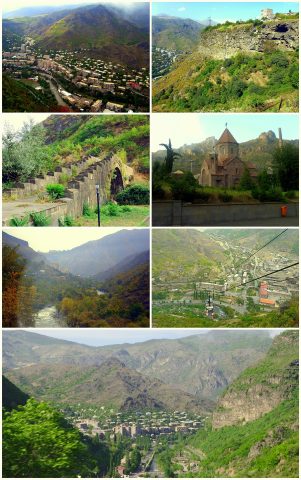
Bati
Ethiopia · 6 places
Photo: Jlorenz1, CC BY-SA 3.0
Bati sits quietly in northern Ethiopia, a place most travelers overlook. It’s caught between the rugged highlands and the arid plains of Afar, where the air carries the scent of dust and woodsmoke, and the horizon often blurs with haze from distant fires or sandstorms. The town itself is small, but its pulse is set by the market—one of the largest in the country.
Mornings here belong to the market. The streets fill with people moving toward it, where stalls offer camel milk, hand-forged knives, spices in woven sacks, and bolts of fabric in bold, clashing patterns. Bargaining is unhurried, punctuated by long conversations and tiny cups of tea, sipped slowly while crouched beside the goods. By midday, the heat becomes oppressive, and the town stills. Shops close, people retreat into the shade of clay houses or under palm-frond awnings. Only as the sun dips does life stir again—children kicking a worn football, women balancing clay jars of water on their shoulders, old men debating the day’s news over the crackle of transistor radios.
Beyond the town, the land stretches into Afar territory. The Afar people move with their herds across vast distances, their lives shaped by camels and goats. Occasionally, traders from these nomadic groups appear in Bati, selling hides, wild honey, or salt harvested from remote lakes. Their visits are fleeting; they prefer the quiet of the open land to the town’s noise.
There are no grand ruins or palaces here. The buildings are made of sun-baked clay and stone, thrown up without fuss, as if the town grew from the earth itself. Yet there’s a quiet charm in this simplicity—the call of the muezzin at dawn, the braying of donkeys in narrow alleys, the smell of fresh bread from roadside bakeries, the laughter of women drawing water from the well.
For those who come, Bati offers Ethiopia stripped of pretense. No crowds, no souvenir stalls, no guides pressing their services. Just the road, the dust, the people, and the endless sky. You can wander the market, listening to the haggling in low voices, or walk to the edge of town where the savanna begins. Or you can do nothing at all—sit on a doorstep, drink coffee, and let the stories of the place find you. Time moves differently here. It doesn’t rush, and neither do you.
Stay
0 placesNothing in this category yet — the catalogue is still growing.
All placesPlaces on the map
Marker colour follows the categoryClimate and weather
Detailed weather: Bati- Average temperature
- 20 °C
- Precipitation per year
- 1062 mm
Average air temperature
°C
17
18
20
21
22
24
22
20
20
19
18
17
Jan
Feb
Mar
Apr
May
Jun
Jul
Aug
Sep
Oct
Nov
Dec