Bamberg
Germany · 7 places
Photo: Immanuel Giel, Public domain
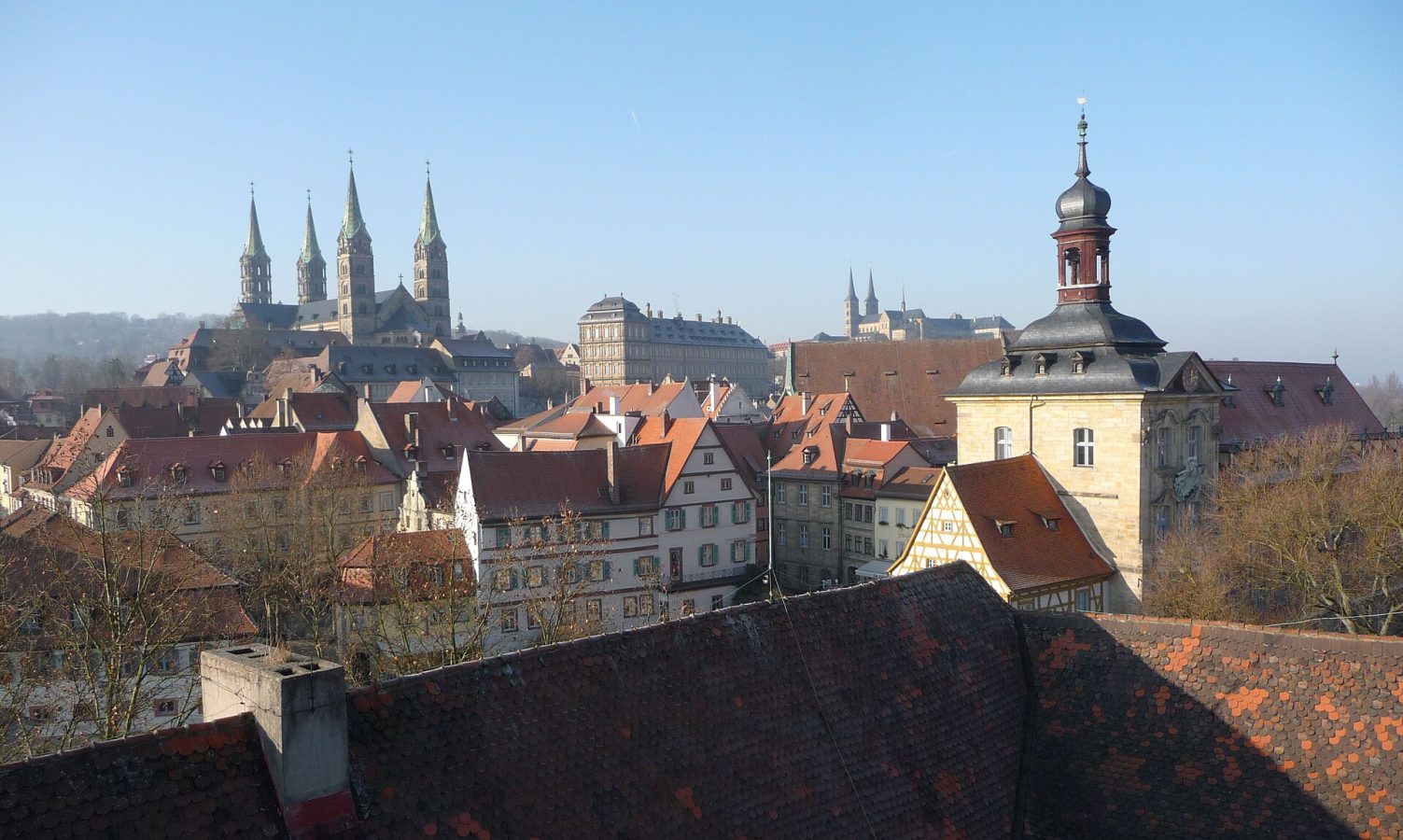
Bamberg feels like a place where the Middle Ages never quite ended, yet it moves to the rhythm of modern life all the same. Spread across seven gentle hills along the Regnitz River, the city unfolds in a quiet, unhurried way—narrow lanes winding past half-timbered houses, sudden glimpses of red-tiled roofs, and church spires rising against the sky. There’s no rush here, no grand spectacle, just the quiet confidence of a place that has always been exactly as it should be.
The heart of Bamberg is its architecture, remarkably preserved and recognized as a UNESCO World Heritage site. The Imperial Cathedral, with its four towering spires, stands as a testament to centuries of craftsmanship, blending Romanesque solidity with Gothic elegance. Nearby, the Old Town Hall perches on a tiny island in the river, as if the city once decided it would answer to no one, not even the water. Then there’s the New Residence, where prince-bishops once lived, its halls now filled with intricate tapestries and antique furniture that whisper of a different era.
But Bamberg isn’t just about stone and history—it’s a city of beer. For over a thousand years, brewing has been part of its identity, and in 2006, the local smoked beer was honored as an intangible cultural treasure. Nine breweries still operate here, each with its own take on the tradition, though all share that distinctive smoky, malty depth. The best way to experience it is in one of the old taverns, where locals and visitors alike gather over foaming steins, paired with hearty Franconian fare—roasted pork knuckle, sausages, or smoked fish pulled from the Regnitz.
Beyond the beer and the buildings, Bamberg has a life of its own. Small cafés serve excellent coffee, bookshops hide rare editions, and artisans keep ancient crafts alive. In summer, musicians play in the streets, and evenings bring quiet walks along the river, where lights shimmer on the water. Winter transforms the city into something even more magical—Christmas markets fill the air with the scent of roasted chestnuts and mulled wine, while snow dusts the rooftops, softening the edges of time.
What makes Bamberg special is its refusal to perform for tourists. There are no crowds racing from one landmark to the next, just the easy pace of a small German city. You can stop by a bakery where bread is still made the old way, pick up local cheese at a market that’s been running for centuries, or simply sit on a park bench watching children play by a fountain while old men debate over a chessboard. Time doesn’t hurry here, and that might be the greatest gift Bamberg has to offer.
Stay
0 placesNothing in this category yet — the catalogue is still growing.
All placesPlaces on the map
Marker colour follows the categoryClimate and weather
Detailed weather: Bamberg- Average temperature
- 10 °C
- Precipitation per year
- 621 mm
- Sunshine hours per day
- 4.8 h
Average air temperature
°C
2
3
6
9
14
19
19
19
15
10
5
3
Jan
Feb
Mar
Apr
May
Jun
Jul
Aug
Sep
Oct
Nov
Dec