Weather overview
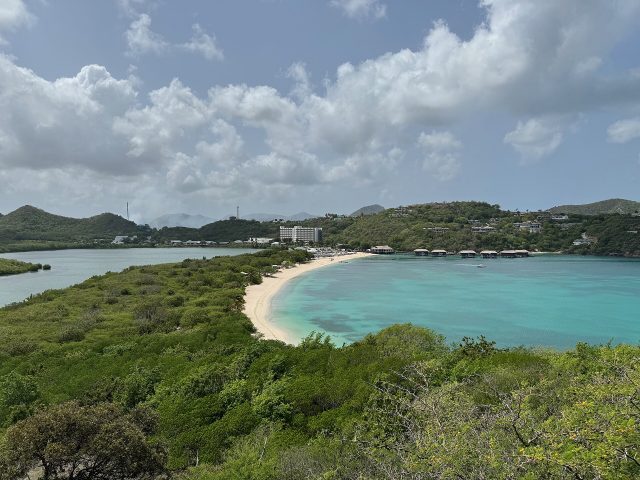
All Saints enjoys a warm tropical climate year-round, with only subtle shifts in temperature and conditions. The weather in All Saints remains consistently pleasant, making it a reliable destination for those seeking sunshine and warmth without extreme variations.
From January to December, All Saints maintains daytime temperatures around +26...+31 °C, with nights rarely dropping below +24 °C. The sea stays inviting, warming up to +30 °C in September and cooling slightly to +26.6 °C in February.
While the climate in All Saints doesn’t have distinct seasons, travelers may notice slightly warmer months from June to September, when temperatures peak and the sea reaches its warmest.
Temperature
In All Saints, the air temperature varies little throughout the year, staying within a comfortable range. The coolest months, January and February, see averages of +25.7...+25.8 °C, while the warmest, August and September, reach +28.7 °C.
Nighttime temperatures in All Saints remain mild, with lows of +23.7 °C in February and +26.8 °C in July and August. The difference between day and night is rarely more than a few degrees, ensuring a steady, warm climate.
The sea temperature in All Saints follows a similar pattern, peaking at +30 °C in September and dipping to +26.6 °C in February. Even in the cooler months, the water stays warm enough for swimming and water activities.
| Month | Minimum | Maximum |
|---|---|---|
| January | 23.8 | 28 |
| February | 23.7 | 27.9 |
| March | 23.9 | 28.3 |
| April | 24.5 | 28.7 |
| May | 26 | 29.9 |
| June | 26.7 | 30.6 |
| July | 26.8 | 30.8 |
| August | 26.8 | 30.9 |
| September | 26.7 | 31.1 |
| October | 26 | 30.6 |
| November | 25.4 | 29.5 |
| December | 24.6 | 28.6 |
Precipitation
All Saints experiences minimal rainfall, with no significant wet or dry seasons. While specific monthly precipitation data isn’t available, the climate is generally dry, making it a great destination for those who prefer consistent, rain-free weather.
Travelers to All Saints can expect mostly sunny days year-round, with occasional brief showers that don’t disrupt plans. The lack of heavy rainfall means outdoor activities and beach time remain enjoyable in any month.
Since All Saints doesn’t have a pronounced rainy season, visitors can comfortably explore the area without worrying about prolonged downpours or humidity-related discomfort.
What to pack
When visiting All Saints, lightweight and breathable clothing is ideal for the warm climate. Pack shorts, T-shirts, sundresses, and swimwear, as temperatures rarely drop below +24 °C, even at night.
For the warmest months, June through September, bring sun protection like hats, sunglasses, and high-SPF sunscreen. The sea reaches +29...+30 °C, so reef-safe sunscreen is a good choice for water activities.
Since All Saints stays warm year-round, a light jacket or shawl may be useful for breezy evenings, though it’s rarely needed. Comfortable sandals and water shoes are practical for beach walks and exploring.
| Month | Wind speed |
|---|---|
| January | 4 |
| February | 4.7 |
| March | 4.6 |
| April | 4.3 |
| May | 4.3 |
| June | 4.6 |
| July | 5.2 |
| August | 4.4 |
| September | 3.2 |
| October | 3.2 |
| November | 3.4 |
| December | 3.9 |