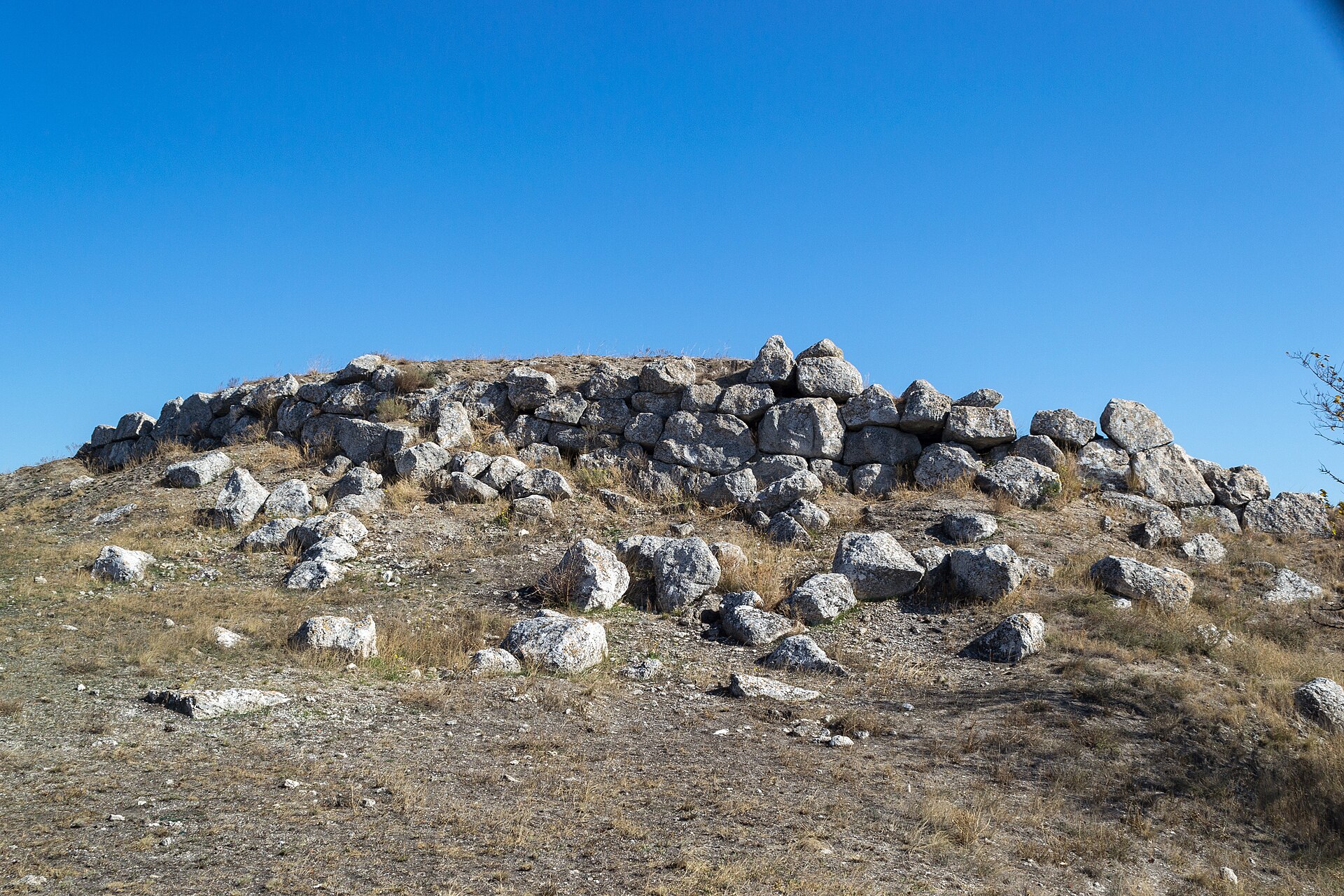
Golden Mound is one of those rare places in Kerch where the past doesn’t just linger in textbooks—it presses against your feet with every step. Rising on the outskirts of the city, this ancient burial site dates back to the 4th century BC, a relic of the Bosporan Kingdom, when this corner of the world was a thriving part of the Hellenistic sphere. The name isn’t just poetic license; over the centuries, the mound has yielded gold ornaments and luxury goods buried alongside the elite, a testament to the wealth and status of those interred here. Today, it looks like nothing more than a grassy hill, unassuming among the low ridges that dot the landscape, but its archaeological and historical weight is impossible to ignore.
The structure beneath the earthen mound is a marvel of ancient engineering, typical of Bosporan tombs yet striking in its precision. A stone vault, built from carefully fitted limestone blocks, lies hidden beneath the surface. The entrance is marked by a dromos—a long, narrow corridor once sealed with massive slabs. The burial chamber itself is square, crowned with a false vault, a design that reflects the architectural trends of the Hellenistic world. Though the tomb has been looted repeatedly over the millennia, enough remains to suggest the opulence that once filled it. The craftsmanship of the stonework alone hints at the resources and skill invested in its construction.
In its time, the Golden Mound was more than a grave; it was a statement. The Bosporan Kingdom, a fusion of Greek colonies and local tribes, used such burial sites to assert power and prestige. Rulers, military leaders, and nobility were laid to rest in these mounds, their memory preserved in earth and stone. Some were encircled by low walls, others topped with stelae or statues, though little of that survives today. What does remain is the mound itself, standing solitary against the horizon, a silent witness to the ambitions of those who built it.
Visiting the Golden Mound is a quiet experience, far removed from the bustle of Kerch’s more frequented sites. There are no flashy signs or guided tours, just the wind sweeping across the hill and the distant cry of gulls. From the top, the view stretches over the city—old quarries where stone was once hewn for Kerch’s buildings, modern neighborhoods sprawling toward the coast, and the sea, ever-present, shaping the land as it has for thousands of years. On clear days, the Kerch Strait comes into view, the narrow passage linking the Black and Azov Seas, a route that has carried traders, warriors, and explorers since antiquity.
The mound’s history as an archaeological site began in the 19th century, when the region was part of the Russian Empire. Early excavations were often haphazard, driven by local curiosity rather than scientific rigor. Later, professional teams from Moscow, Leningrad, and beyond took over, uncovering artifacts that found their way into museums, including the Hermitage. Gold jewelry, pottery, and weapons were among the discoveries, though many pieces were lost or scattered into private collections—a common fate in those days. Today, the site is protected, but it remains open to anyone willing to make the short trek from the city.
For those who take the time to visit, the Golden Mound offers a glimpse into a time when Kerch was not just a provincial town but the heart of a powerful kingdom. The Bosporan state was a cultural and economic hub, its rulers maintaining ties with Athens, Egypt, and other centers of the ancient world. Trade flourished here, as did art and craftsmanship, leaving behind a legacy that the mound embodies. It’s a reminder that this land was once part of a vast, interconnected world, where Greek, Scythian, and local traditions blended into something unique.
The artifacts recovered from the mound tell a story of cultural exchange. The gold wreaths, earrings, and rings found in the tomb bear the hallmarks of Hellenistic design, yet they also incorporate elements of Scythian style. This fusion is one of the most intriguing aspects of the Bosporan Kingdom—a society that borrowed from others while retaining its own identity. The mound itself, with its Greek-inspired architecture and local burial customs, reflects that same duality.
What makes the Golden Mound special today is its unassuming nature. Unlike the grand ruins of Rome or Athens, it doesn’t demand attention. There are no crowds, no souvenir stalls, just the quiet hum of history beneath your feet. For those who seek it out, the experience is more personal, a chance to stand where ancient rulers once stood and imagine the world as it was. The city of Kerch stretches out below, a patchwork of eras—ancient, medieval, Soviet—each layer built upon the last. The mound, though, is a thread connecting them all, a reminder that this land has always been a crossroads.
Kerch has seen empires rise and fall, wars come and go, yet the Golden Mound endures, a silent sentinel over the strait. It’s not just a monument to the past but a part of the city’s living history. For travelers who look beyond the obvious, it offers something rare: a moment of reflection on how much has changed, and how much remains the same. The sea still laps at the shore, the wind still sweeps across the hills, and the earth holds its secrets, waiting for those willing to listen.