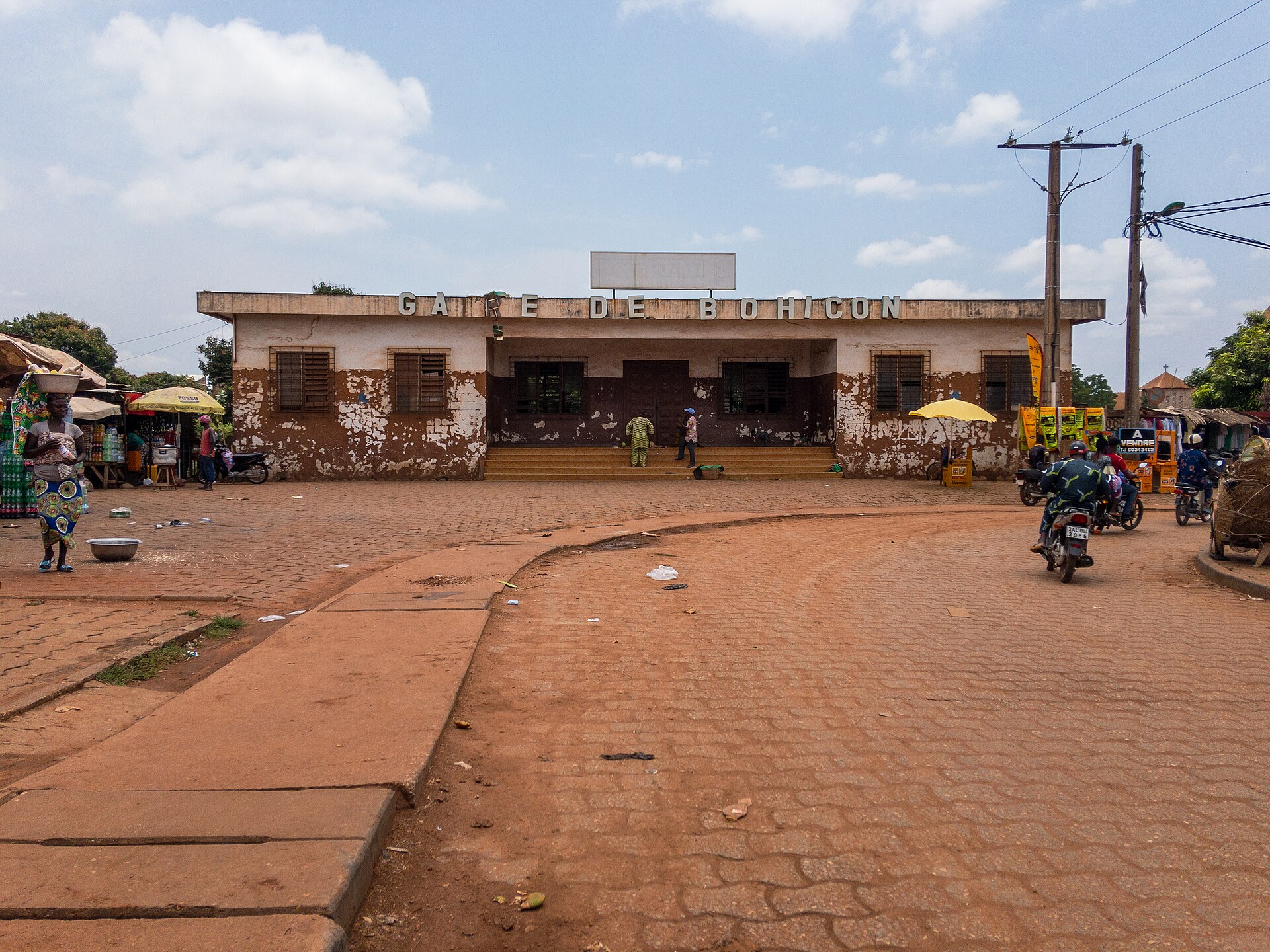
Bohicon’s railway station is one of those places that feels like a quiet witness to history, a spot where the past lingers just beneath the surface. Built during the colonial era, it was part of the Dahomey-Niger Railway, a network that once connected the inland regions of West Africa to the coast. The station itself is modest—low-slung buildings with weathered walls, arched windows, and a platform that stretches just enough to accommodate the occasional train. It’s not grand like some of the colonial-era stations in larger cities, but that’s part of its charm. There’s a sense of authenticity here, a place that hasn’t been polished for tourists or dressed up for Instagram.
The railway line that passes through Bohicon was originally constructed in the early 20th century, primarily to transport goods—palm oil, cotton, and later, minerals—from the interior to the port of Cotonou. For decades, it was a lifeline for the region, a slow but steady connection to the wider world. The trains that rumbled through Bohicon weren’t just carrying cargo; they carried stories, too. Traders, workers, and families relied on them, and the station became a natural gathering point, a place where people waited, chatted, and sometimes said their goodbyes.
Today, the station is quieter than it once was. The railway network in Benin has seen better days, and while there are still trains that pass through Bohicon, they’re less frequent than they used to be. The tracks, though, remain a reminder of a time when rail travel was the backbone of regional commerce. If you stand on the platform long enough, you might catch a glimpse of a train in the distance, its whistle cutting through the humid air. It’s a fleeting moment, but one that connects you to the rhythms of a different era.
The architecture of the station is simple but telling. The buildings are made of concrete and brick, with high ceilings that were likely designed to keep the interior cool in the heat of the day. The paint is faded in places, and the wooden benches on the platform show signs of wear, but there’s a certain dignity to the place. It wasn’t built to impress; it was built to last. The station’s design reflects the practical needs of its time—functional, unadorned, but sturdy enough to withstand the test of decades.
Bohicon itself is a town that doesn’t often make it onto tourist itineraries, and that’s part of what makes the station interesting. It’s not a place you visit for spectacle, but for a sense of everyday life. The station is still used by locals, and if you spend time there, you’ll see people coming and going—vendors selling snacks, travelers waiting for the next train, or just groups of friends sitting in the shade, passing the time. There’s a rhythm to it, a slow, unhurried pace that feels far removed from the hustle of bigger cities.
The railway’s decline in Benin mirrors broader changes in the region. As roads improved and trucking became more common, the trains lost some of their importance. Yet, there’s something enduring about the station in Bohicon. It’s not just a relic; it’s a living part of the town’s identity. Even if the trains don’t come as often as they used to, the station remains a symbol of connection—between Bohicon and the rest of the country, between the past and the present.
For travelers who do find their way to Bohicon, the station offers a quiet kind of insight. It’s a place to pause and reflect on how infrastructure shapes lives, how a single railway line can become a thread in the fabric of a community. There are no grand monuments here, no guided tours or souvenir stands. Just a platform, a few buildings, and the occasional rumble of a train in the distance. It’s the kind of place that doesn’t demand attention but rewards those who take the time to notice it.