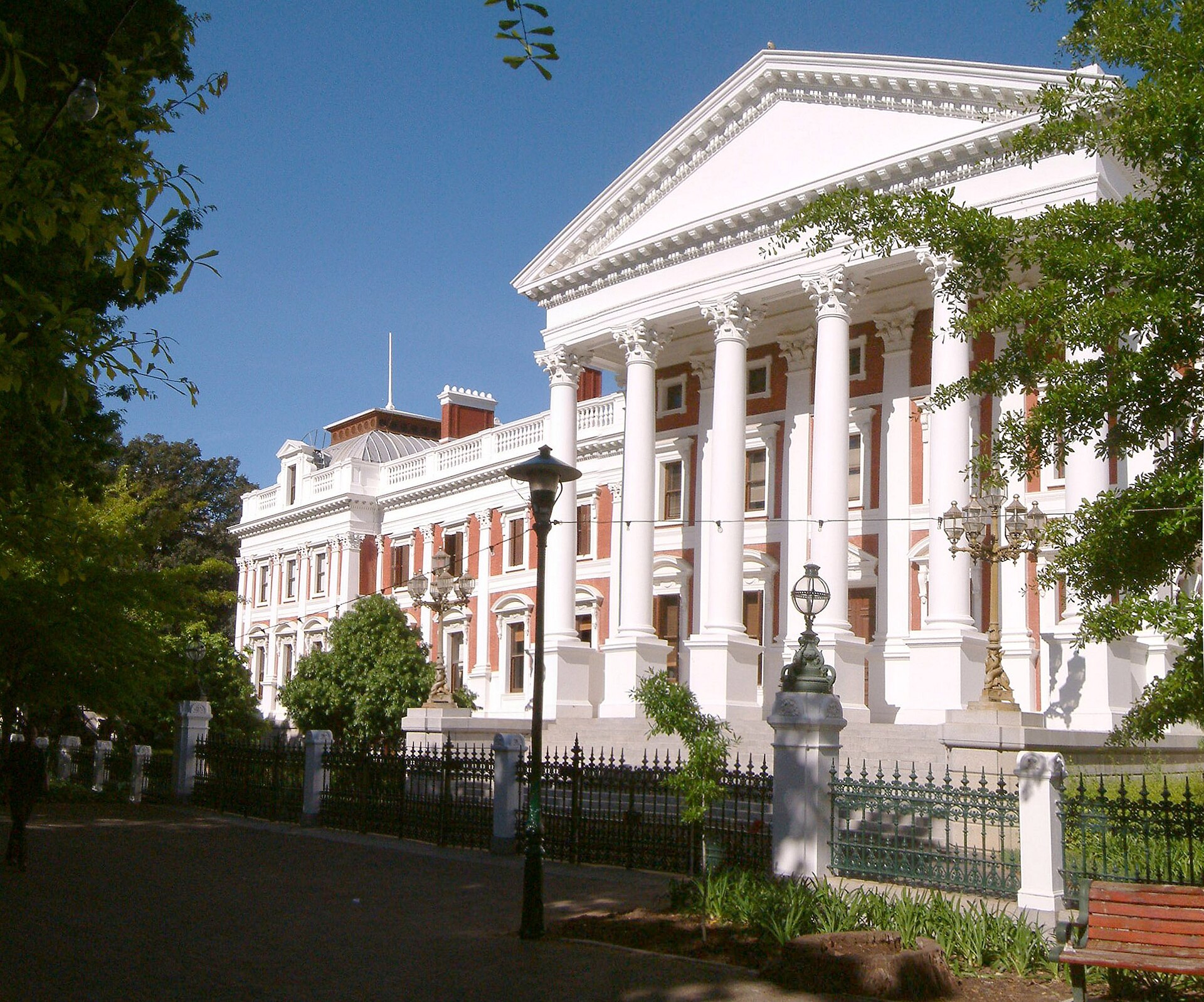
The Parliament of South Africa in Cape Town is one of those rare places where the nation’s history feels tangible. For over a century, this building has stood at the heart of the country’s political and cultural life, its walls bearing witness to the debates, decisions, and turning points that have shaped South Africa. Walking through its halls, you sense the weight of the past—not just in the grand architecture, but in the quiet echoes of speeches that once changed the course of a nation.
Construction began in the late 1800s, when Cape Town was still the capital of the British Cape Colony. The original design was by architect Charles Freeman, though the project quickly ran into trouble. The foundation proved unstable, forcing a near-complete rebuild. The building finally opened in 1884, only to be expanded in the early 20th century with new wings in a neoclassical style. Today, the complex is a blend of architectural eras—from the restrained elegance of its columns to the more ornate details added later, each reflecting the tastes and ambitions of its time.
The main chamber, where lawmakers once gathered under the Cape Parliament and later the Union of South Africa, still carries an air of solemnity. High ceilings, dark wood paneling, and heavy chandeliers give the space a timeless feel, as if the debates of the past might resume at any moment. While the South African Parliament now splits its sessions between Cape Town and Pretoria, this remains the seat of the legislative branch, a place where laws are still drafted and history continues to unfold.
The building’s role during apartheid is impossible to ignore. It was here that laws enforcing racial segregation were passed, and here, too, that the first steps toward democracy were taken after the regime’s collapse. In 1990, Nelson Mandela delivered his first speech after his release from prison within these walls, calling for reconciliation and unity. A permanent exhibition inside the building documents the struggle for human rights and democracy, serving as a reminder of how fragile progress can be.
Beyond the main structure, the parliamentary gardens offer a quiet contrast to the formality inside. Paths wind past statues of historical figures, and a modest memorial honors the women who fought against apartheid. On weekends, locals often come here to escape the city’s bustle, sitting on benches beneath the trees. The gardens feel like a public square, a place where the weight of history meets the rhythms of everyday life.
Guided tours provide a rare glimpse behind the scenes. Visitors can see the lawmakers’ offices, the library with its rare books, and the chamber where the National Council of Provinces meets. The guides don’t just explain the architecture—they break down how South Africa’s legislative system works, what issues are being debated today, and the challenges the country faces. It’s a chance to understand the mechanics of democracy, not as an abstract concept, but as something lived and contested.
For many, the Parliament is more than just a government building. It’s a place where the past and present intersect, where the ideals of a nation are both celebrated and questioned. The architecture tells one story—of colonial ambitions, of later expansions, of the desire to project stability and power. But the real story lies in the people who have walked these halls: the lawmakers, the activists, the citizens who have shaped South Africa’s journey.
Even if you’re not particularly interested in politics, the building commands attention. Its grand facades and imposing presence make it hard to pass by without pausing. You might find yourself wondering about the decisions made here, the voices that have filled these chambers, and the quiet moments when history turned on a single vote. In a city known for its natural beauty, the Parliament stands as a reminder that some of South Africa’s most defining moments happened not in the wild, but in the quiet spaces where people gathered to decide what kind of country they wanted to build.