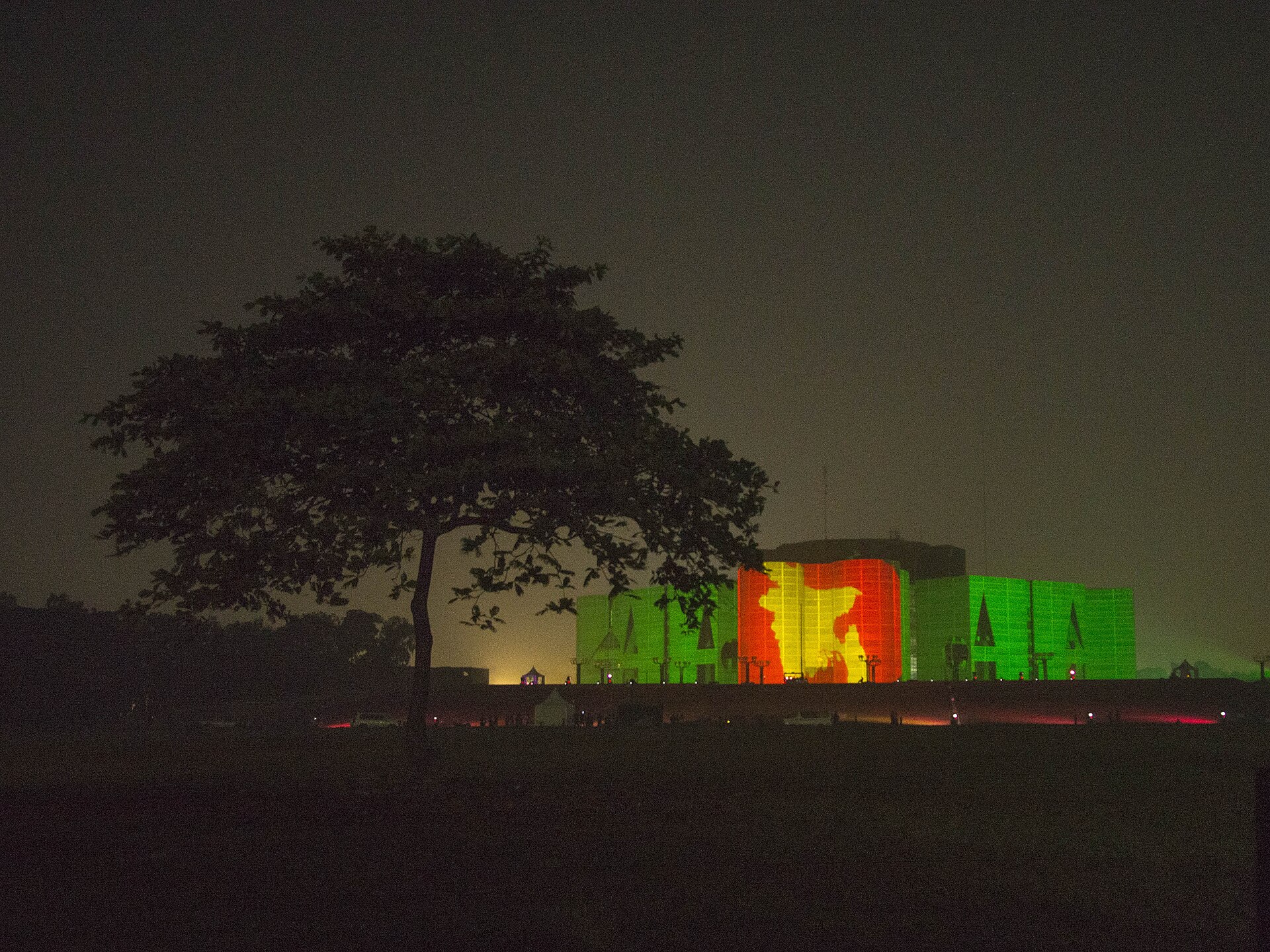
The National Assembly Building of Bangladesh in Shahbag is one of those places that doesn’t immediately reveal itself to travelers. It lacks the flashy signs and crowds of typical tourist spots, and there are no souvenir stalls or cafes offering views of the architectural marvel. Yet this very restraint makes it special. The building exists not to impress visitors but to serve as a symbol of the nation—its history, struggles, and aspirations.
Designed by Louis Kahn, an American architect of Lithuanian descent, the complex was conceived in the late 1960s when Bangladesh was still East Pakistan. Kahn never lived to see its completion; he passed away in 1974, and the building was inaugurated in 1982, long after Bangladesh had gained independence. Today, it stands as a powerful emblem of national identity, though it was originally intended for a different country altogether.
The architecture of the National Assembly is striking in its monumentality, yet it carries an unexpected lightness. The structure seems to rise naturally from the surrounding park, framed by water features and lush greenery. Its forms are geometric and austere—massive concrete blocks, circular porthole-like windows, and clean, unadorned lines. Kahn used local materials like marble and granite but avoided ornamentation, prioritizing functionality and symbolism. The central assembly hall, for instance, evokes the grandeur of an ancient temple or fortress, while the play of light through narrow openings creates shifting shadows that transform the space throughout the day.
Inside, the building exudes a sense of solemn quiet. The vast halls, high ceilings, and minimalist interiors emphasize the gravity of the place. There are no unnecessary details—just essential elements like staircases, corridors, and meeting chambers. The main parliamentary hall, where the nation’s most critical debates unfold, is particularly impressive. Its acoustics are so precise that even a whisper carries clearly across the room. However, access for visitors is limited, and entry is usually granted only by prior arrangement.
The area around the building is equally worth exploring. The park surrounding the National Assembly offers one of the few tranquil spaces in Dhaka, a city often overwhelmed by noise and activity. Here, the air feels cleaner, and the green lawns and trees provide a sense of calm. Locals come to stroll, take photographs against the backdrop of the building, or simply relax on benches. On weekends, the park fills with families, students, and elderly visitors, each finding their own way to enjoy the space.
The National Assembly Building is deeply intertwined with Bangladesh’s history. It has witnessed pivotal moments—laws that shaped the young nation, speeches that defined its future. During the 1971 War of Independence, the complex was still under construction, yet even then, it was seen as a symbol of hope for a better tomorrow. Today, it remains not just a working parliament but a monument to those who fought for Bangladesh’s freedom.
For architecture enthusiasts, the building is a true gem. It stands as one of the most significant examples of modernism in South Asia, and its influence on global architecture is profound. Kahn managed to create something timeless, transcending its specific era and location. Even decades after its completion, the building feels contemporary, inspiring architects worldwide. Its forms have echoed in projects far beyond Bangladesh, a testament to Kahn’s vision.
Visiting the National Assembly is less about following a tourist itinerary and more about immersing oneself in the essence of the country. There are no guided paths or crowds here, making the experience deeply personal. You can spend hours wandering the park, observing the building from different angles, or sitting by the artificial lake, watching how light dances across the concrete surfaces. Time seems to slow down, as if the city’s relentless energy has been left behind.
This isn’t a place for entertainment. There are no flashy displays or interactive exhibits. But that’s precisely what makes it meaningful. It’s a space for those who want to understand Bangladesh beyond its landmarks—to feel its pulse, its drive for progress, and its reverence for history. In that sense, the National Assembly Building remains one of the most enduring symbols of the nation.