Konaev doesn’t reveal itself at first glance. It isn’t one of Kazakhstan’s cities with skyscrapers beside ancient mausoleums, nor does it aim to be a tourist hotspot. There are no crowds, no souvenir stalls, no festivals—just the steppe, the reflection of mountains in the waters of Kapshagay Reservoir, and a way of life where modernity and tradition meet. The city’s administrative buildings reflect this: understated, but dignified.
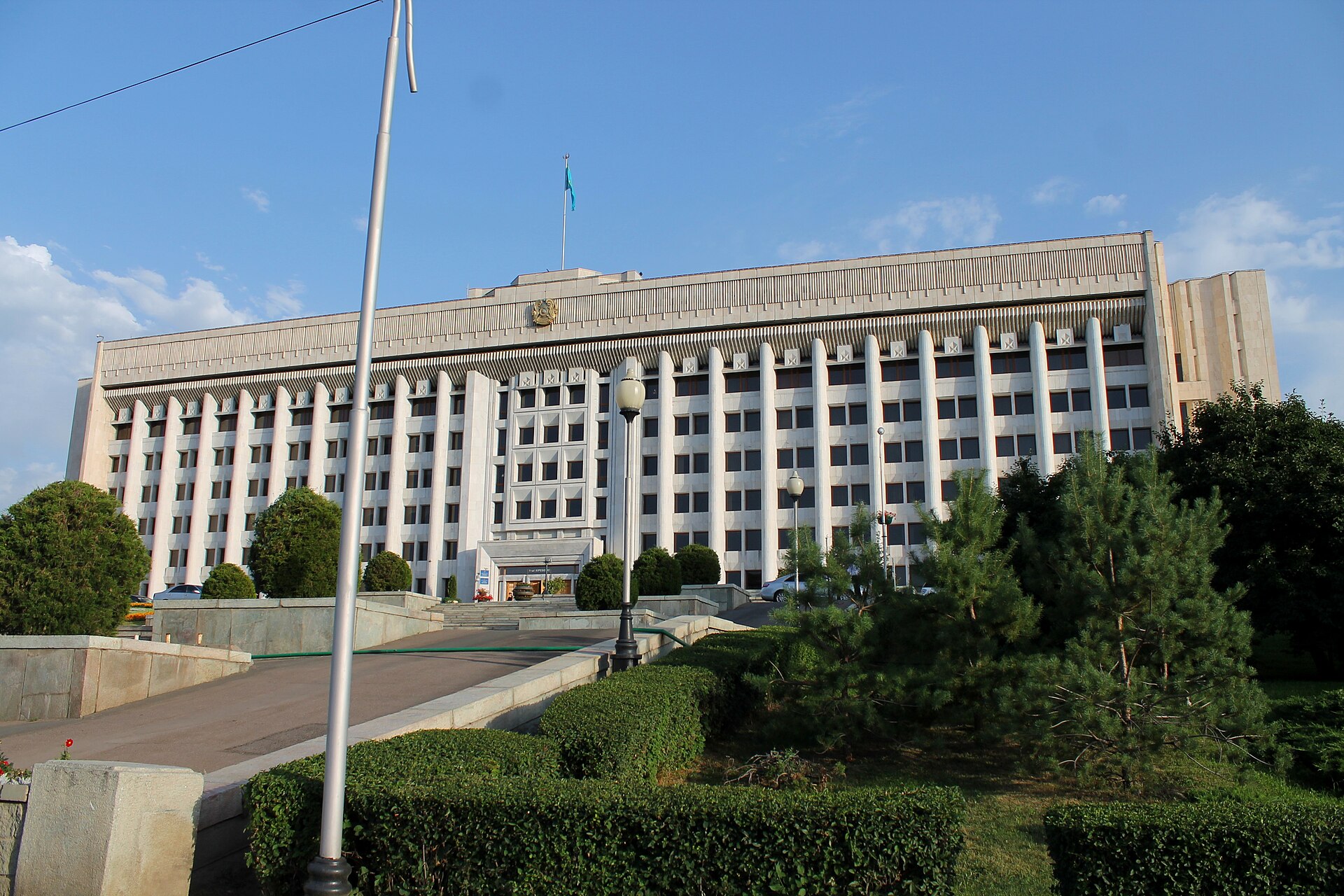
The city akimat building stands where the main streets intersect. It draws the eye not because of grand design, but because it mirrors the straightforward simplicity of many Kazakhstani towns shaped by Soviet-era planning. Clean lines, symmetry, and a light-colored facade create an impression of order.
A small square surrounds it. Locals gather here in warmer months—some hurrying to appointments, others walking slowly, enjoying the greenery in this dry region. There’s no grandeur, just a quiet, practical atmosphere.
Konaev’s history is tied to water. The city grew along the shores of Kapshagay Reservoir, created in the 1960s for energy and agriculture. That was the era of industrialization, when the first administrative buildings appeared, including the one that now houses the akimat. Back then, Konaev was a workers’ settlement for the hydroelectric station. Its architecture was functional, built to last.
The settlement became a city. The akimat building became a symbol—not ceremonial, but working. Renovations haven’t changed its purpose: behind its doors, decisions shape the lives of thousands. The work inside keeps the city running.
The design is classic Soviet-era: strict forms, minimal decoration, practical. The facade is light stone or tile, and large windows let in sunlight. The entrance is modest, with just a small awning for shelter. It’s part of the city’s fabric.
For residents, the akimat is where they seek help or resolve issues. There are no long queues like in the capital. Officials feel more approachable because the city is small. This closeness between authority and citizens is part of provincial life.
A small park surrounds the building. In summer, mothers with strollers, elderly people on benches, and children playing under trees gather here. In winter, a New Year’s tree is erected for celebrations. The park is a threshold between official business and daily life. Beyond it are shops, cafes, and apartment blocks.
Konaev doesn’t try to impress. There are no world-class museums or ancient monuments, just its own quiet history. The akimat building is one of its symbols. It won’t tell you about legendary battles or famous figures, but it shows how life was built in an ordinary Kazakhstani town, how times changed, and how people adapted.