The Sverdlovsk District Administration building in Bishkek is one of those unassuming yet essential structures that shape the city’s character. Tucked away in the heart of Kyrgyzstan’s capital, it stands at the intersection of busy streets where the rhythm of modern life blends with echoes of the Soviet past. This isn’t just another government office—it’s a quiet witness to the changes the country has undergone over the decades, a place where history and daily routine intersect.
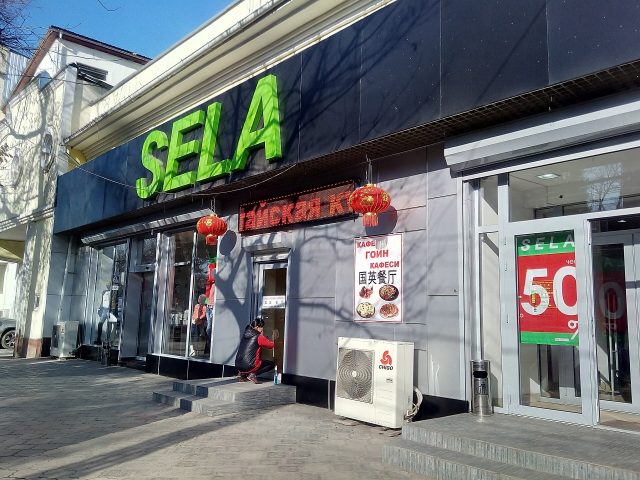
The building’s architecture is a textbook example of mid-20th-century Soviet public design. Clean lines, functionality, and an absence of ornamentation define its style, reflecting the era’s emphasis on practicality over aesthetics. The facade is understated, with muted tones and subtle details that give it a sense of solemnity. Large windows dominate the exterior, a nod to the importance of natural light in workspaces, while the entrance is marked by a modest portico that reinforces its official purpose. There’s nothing flashy about it, yet its simplicity carries a certain dignity.
Sverdlovsk District itself is one of Bishkek’s oldest, established in the 1930s when the city—then known as Frunze—was rapidly expanding as an industrial and administrative hub of the Kyrgyz SSR. Named after the Bolshevik revolutionary Yakov Sverdlov, the district still bears traces of its Soviet origins, though today it hums with a very different energy. The administration building serves as more than just a workplace for officials; it’s a focal point for residents who come here to handle paperwork, social services, or local infrastructure issues. For many, it’s a familiar landmark, a place where bureaucracy meets everyday life.
Inside, the building retains the unmistakable atmosphere of a Soviet-era institution. Long corridors, offices marked by nameplates, and the kind of utilitarian furniture found in government buildings everywhere create a sense of order and permanence. There’s no luxury here, just the quiet efficiency of a space designed to serve a purpose. Yet for all its austerity, the building has a certain presence—it’s where decisions are made that shape the district’s future, where people come seeking solutions to their problems.
The area around the administration has evolved into a small but active community hub. Nearby, you’ll find shops, cafes, and bus stops, while the sidewalks fill with people in the mornings—some rushing to work, others waiting in line for documents. Sverdlovsk District isn’t a tourist hotspot, but that’s precisely what makes it interesting. This is where you can feel the real pulse of the city, away from the polished facades of more famous landmarks. There are no crowds of visitors here, just locals going about their daily routines, for whom this building is a familiar and necessary part of life.
Historically, the administration building has stood through decades of upheaval. It survived the collapse of the Soviet Union, the birth of an independent Kyrgyzstan, economic crises, and political reforms. Over the years, it has housed officials whose decisions shaped the lives of the district’s residents. Today, it continues to function much as it always has, though the world outside has changed dramatically. It’s possible that one day the building will be renovated or even demolished, but for now, it remains a tangible link between the past and the present.
For those with an interest in Bishkek’s history or Soviet-era architecture, the Sverdlovsk District Administration offers a subtle but revealing glimpse into the city’s development. It’s not a monument, nor does it aspire to be one. Its value lies in its unpretentiousness, in the way it embodies the practical spirit of its time. This isn’t a place for tourists; it’s a working space where the business of governance unfolds day after day. And perhaps that’s what makes it worth noticing—it’s a reminder that history isn’t just found in grand buildings or famous landmarks, but in the quiet, functional places where people’s lives are quietly shaped.