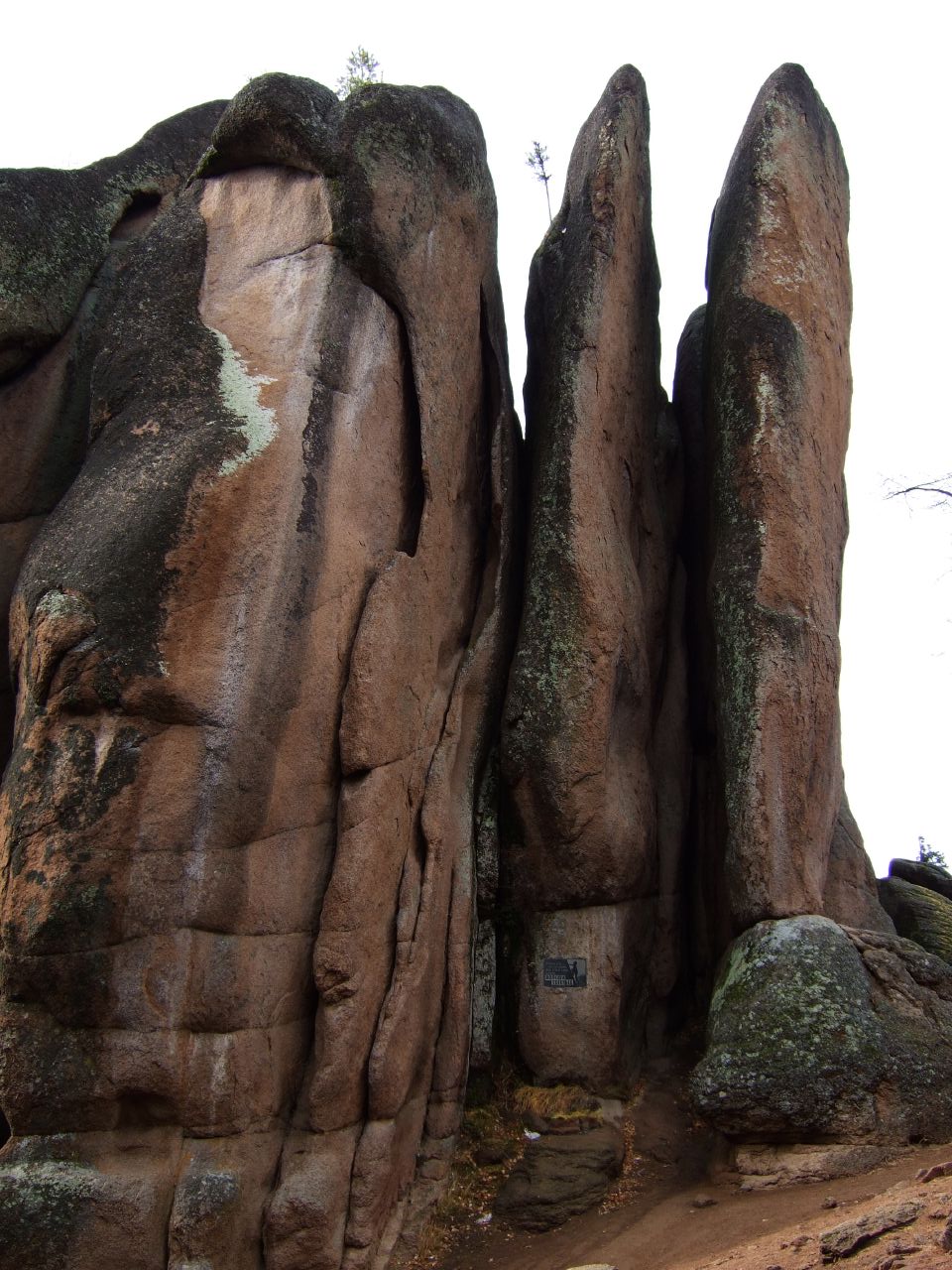
Krasnoyarsk Stolby is a place where the city meets the wilderness. Just beyond the edge of Krasnoyarsk, where the last apartment blocks give way to taiga, the land rises into the foothills of the Eastern Sayan Mountains. Here, the earth has been sculpted over millions of years into a landscape of towering rock formations—monoliths of syenite that stand like silent sentinels above the forest. Some reach nearly a hundred meters high, their sheer faces weathered into shapes that have earned them names like Grandfather, Feathers, and Lion’s Gate. These are the Stolby, and they give the reserve its name.
The area became a protected territory in 1925, not by decree from above, but through the persistence of the city’s own residents. It was a rare moment in history when conservation was driven by public demand rather than government initiative. Decades later, in 2019, Stolby was designated a national park, formalizing its status as a place of natural and cultural significance. The reserve now spans over 47,000 hectares, though most visitors stick to the central area where the most famous rock formations are concentrated.
What makes Stolby unique isn’t just its geology, but the way people have interacted with it for generations. Since the late 19th century, locals have been climbing these rocks without ropes or harnesses, a tradition known as *stolbism*. It’s a practice that exists nowhere else in the world. Climbers follow established routes, each with its own name and reputation, and adhere to an unspoken code of conduct. Some paths are straightforward, while others demand strength, balance, and a willingness to take risks. Even today, you’ll see people scaling the rocks, though the activity isn’t without danger—falls happen every year, and the syenite, while grippy in dry conditions, can become treacherously slick when wet.
The main entrance to Stolby is about seven kilometers from the city center, accessible by a short bus ride followed by a walk through the forest. The trail from the entrance winds uphill for roughly the same distance, passing through dense pine and fir woods before reaching the first of the major rock formations. The path is well-trodden and marked, with occasional benches and shelters where hikers can rest. Beyond the central area, the reserve extends into more remote zones where access is restricted to protect the fragile ecosystem. These areas are left to the wildlife—marals, a type of Siberian deer, roam here, along with musk deer and squirrels. Feeding the animals is discouraged, as it disrupts their natural behavior.
Spring and early summer bring another consideration: ticks. From April to July, they’re active in the tall grass and underbrush, and while most are harmless, some carry diseases. Vaccinations or travel insurance that covers medical treatment is a sensible precaution for anyone planning to spend time in the forest. The rest of the year, the trails remain open, though winter transforms the landscape. Snow blankets the ground, and the rocks take on a stark, almost otherworldly appearance. The paths are still walkable, packed down by the steady stream of visitors who come year-round.
For those who prefer to skip the uphill trek, there’s an alternative route through Bobrovy Log, a recreational park on the opposite side of the reserve. A cable car runs from the park up to the ridge, cutting the journey to the rocks by more than half. It’s a popular option, especially for families or those short on time, though purists argue that the real experience of Stolby begins with the walk from the main entrance.
There’s no fee to enter the reserve, and no registration is required. What you won’t find here are shops or cafes—visitors are expected to bring their own food and water. A few basic facilities exist along the trails, including toilets and wooden gazebos where people gather to eat or simply take in the view. The lack of commercialization is part of Stolby’s charm, though it also means you’ll need to plan ahead. The rocks themselves are deceptively challenging. While some formations look approachable, the syenite can be slippery, and descending is often harder than climbing up. Even experienced hikers are advised to proceed with caution.
The reserve is more than just a climbing destination or a scenic hike. It’s a place where the rhythms of nature and human activity have coexisted for over a century. On weekends, the trails are lively with locals and visitors alike, some here to climb, others to walk, picnic, or simply enjoy the quiet of the forest. The air smells of pine and damp earth, and the only sounds are the rustle of leaves, the occasional birdcall, and the distant laughter of climbers. In winter, the crowds thin, but the place never feels deserted. The snow muffles the noise, and the rocks stand out even more starkly against the white landscape.
Getting to Stolby is straightforward. From Krasnoyarsk, a city bus runs to the main entrance, dropping passengers at the start of the trail. The walk from there is part of the experience—a gradual ascent through the forest, with the first glimpses of the rocks appearing through the trees. For those coming from Bobrovy Log, the cable car offers a different perspective, rising above the treetops before depositing riders near the ridge. Either way, the journey is as much a part of the visit as the destination itself.
Stolby isn’t a place you conquer. It’s a place you meet on its own terms. The rocks have been here for millennia, shaped by wind, water, and time. The people who climb them, who walk among them, are just passing through. The reserve doesn’t offer grand vistas or dramatic waterfalls, but something quieter—a sense of connection to a landscape that has been lived in, loved, and preserved by generations. Whether you come to climb, to hike, or simply to stand at the base of these ancient formations and look up, Stolby leaves an impression that lingers long after you’ve left.