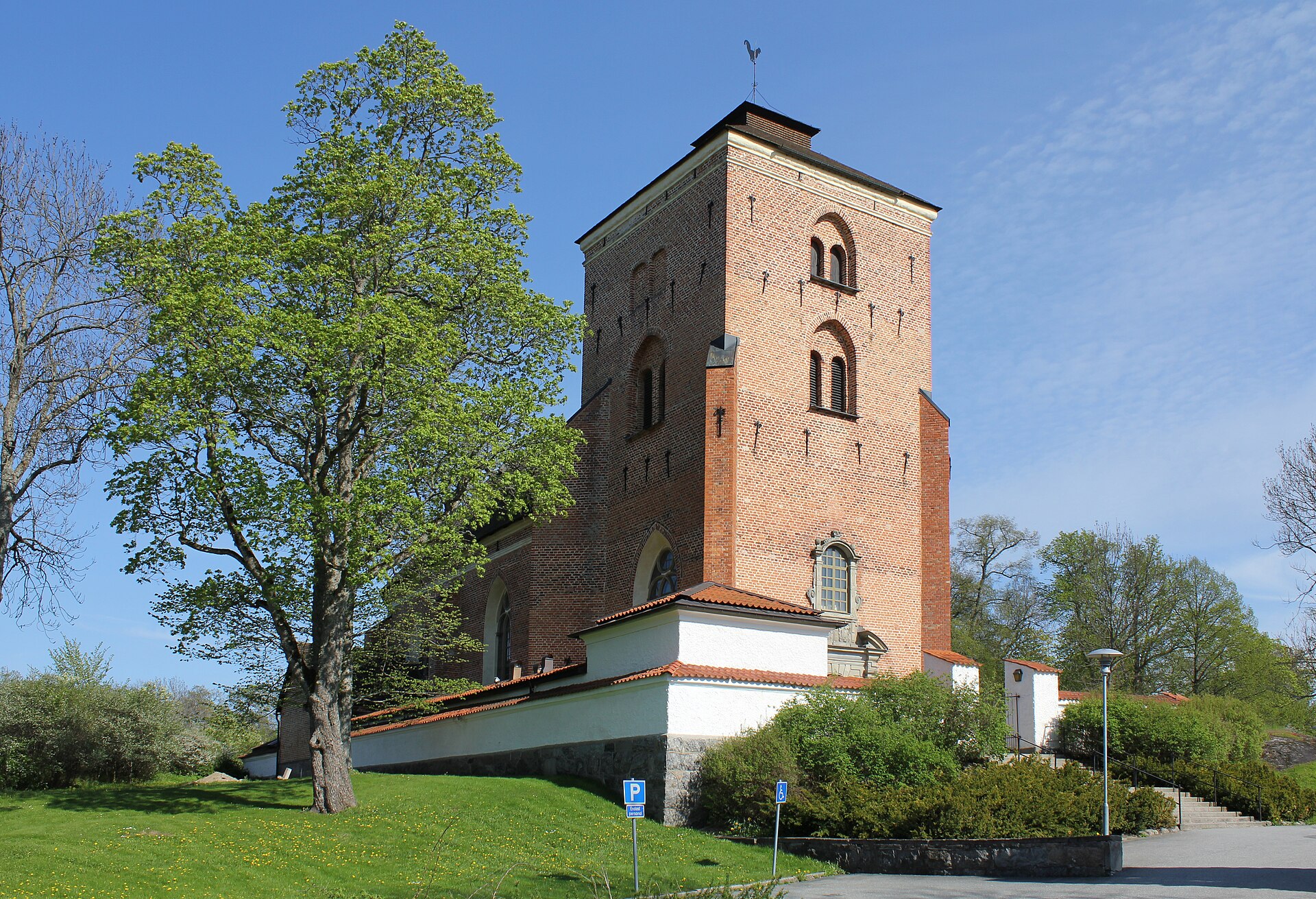
Tyresö Slott sits quietly on the edge of the Stockholm archipelago, where the forest meets the water and the past lingers in the air. Built in the early 17th century, the castle was originally the vision of Gabriel Oxenstierna, a nobleman close to King Gustav II Adolf. Oxenstierna wanted a grand estate that would reflect both his status and the ambitions of Sweden’s golden age, a time when the country was expanding its influence across Europe. The result was a stately manor house in the Dutch Renaissance style, with steep gables, ornate brickwork, and a sense of symmetry that feels both imposing and elegant. Over the centuries, the castle changed hands several times, each owner leaving their mark—some through renovations, others through neglect—until it eventually became the property of the state in the 20th century.
The architecture of Tyresö Slott is a blend of grandeur and practicality, a reflection of the era in which it was built. The main building, with its red brick facade and white stone details, stands out against the surrounding greenery, while the wings extend like arms toward the water. Inside, the rooms are spacious and high-ceilinged, with large windows that let in the soft Nordic light. The interiors have been restored to reflect different periods of the castle’s history, from the opulence of the 17th century to the more restrained elegance of the 19th. One of the most striking features is the great hall, where the original wooden beams still stretch across the ceiling, a reminder of the craftsmanship that went into building the estate.
Beyond the main castle, the grounds tell their own story. The formal gardens, laid out in the 17th century, were designed to impress visitors with their geometric precision, though today they feel more relaxed, softened by time and nature. Nearby, the old stables and outbuildings hint at the estate’s agricultural past, when the castle was not just a residence but the center of a working farm. The surrounding forest and shoreline add to the sense of seclusion, making it easy to imagine how life here might have unfolded centuries ago—quiet, self-sufficient, and removed from the bustle of the city.
Tyresö Slott has always been more than just a private residence. During the 17th century, it served as a gathering place for Sweden’s elite, a retreat where nobles could escape Stockholm’s political intrigues and enjoy the countryside. Later, in the 19th century, the castle became a symbol of Sweden’s romanticized past, a place where artists and writers sought inspiration. Today, it functions as a museum, offering visitors a glimpse into the lives of those who lived here, from the servants who kept the estate running to the aristocrats who hosted lavish banquets in the great hall.
The castle’s location is part of its charm. Situated on the outskirts of Stockholm, it feels worlds away from the city’s modern pace. The nearby archipelago, with its rocky islands and calm waters, provides a stunning backdrop, especially in the summer when the light lingers late into the evening. In winter, the landscape transforms, with snow blanketing the grounds and the forest taking on a quiet, almost magical quality. The estate is accessible year-round, though each season offers a different experience—whether it’s the vibrant greens of spring, the golden hues of autumn, or the stillness of a winter’s day.
Visiting Tyresö Slott is less about ticking off a tourist attraction and more about stepping into a different time. The castle doesn’t overwhelm with grandeur like some of Europe’s more famous palaces; instead, it feels intimate, as if the walls themselves could whisper stories of the past. The guided tours, often led by knowledgeable staff, bring the history to life without overloading visitors with dates and names. For those who prefer to explore on their own, the grounds are open to wander, with plenty of benches to sit and soak in the atmosphere.
One of the most interesting aspects of Tyresö Slott is how it has adapted over the centuries. Unlike many historic estates that have been frozen in time, this castle has evolved, reflecting the changing tastes and needs of its inhabitants. The 19th-century renovations, for example, introduced more comfortable living spaces, while the 20th-century restorations aimed to preserve the estate’s historical integrity. This balance between preservation and adaptation is what makes Tyresö Slott feel alive, rather than like a relic of the past.
For those who appreciate history, architecture, or simply the quiet beauty of a well-preserved estate, Tyresö Slott offers a rewarding experience. It’s a place where the past and present coexist, where the grandeur of Sweden’s golden age meets the understated elegance of modern conservation. Whether you’re drawn by the stories of the people who lived here, the craftsmanship of the buildings, or the natural beauty of the surroundings, the castle has a way of leaving a lasting impression—one that lingers long after you’ve left its grounds.