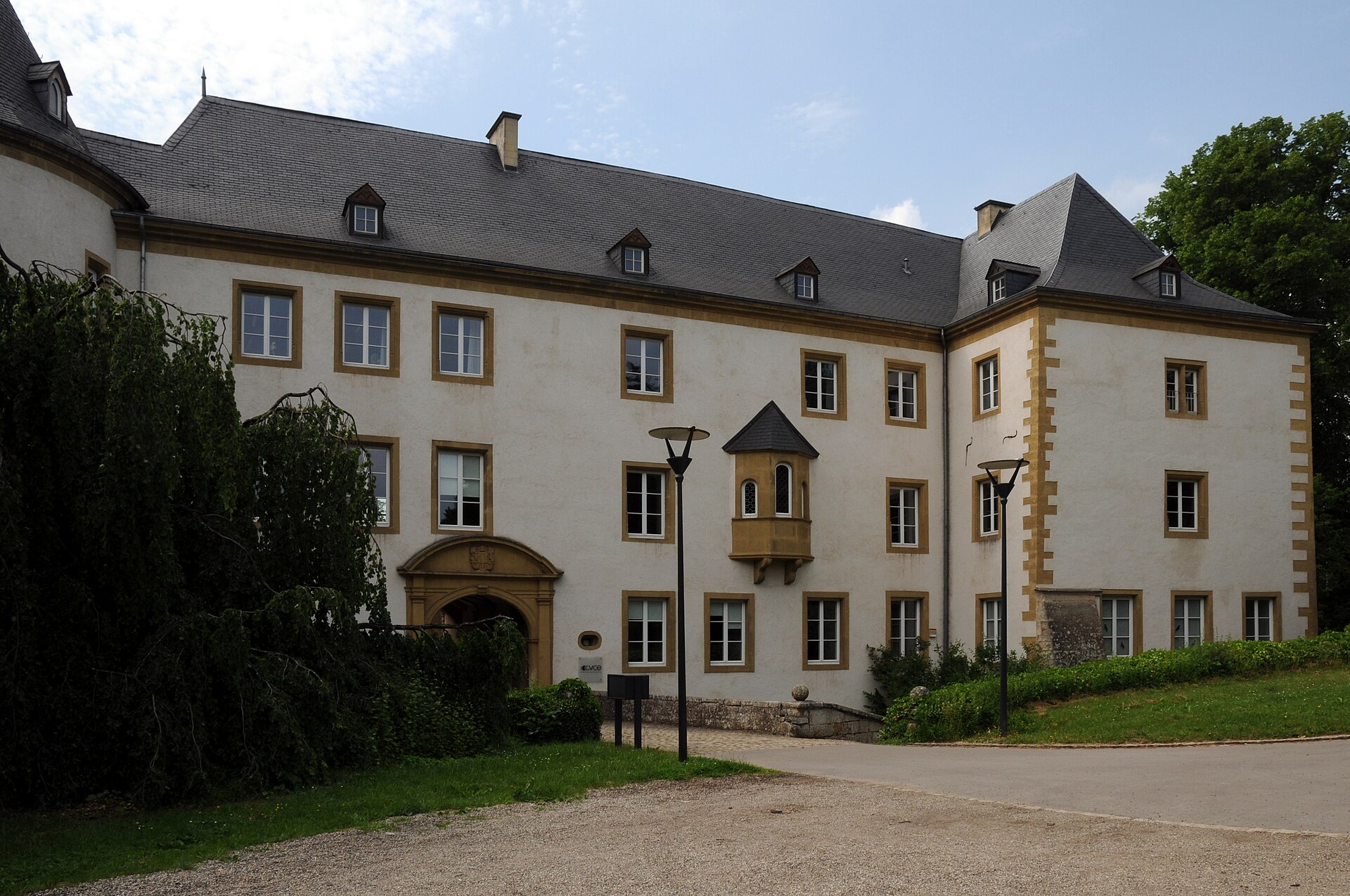
The Château de Sanem stands quietly on the outskirts of Soleuvre, a small town in southern Luxembourg that most travelers pass by without a second thought. Yet this unassuming castle carries layers of history that stretch back to the Middle Ages, when the region was a patchwork of feudal territories caught between the ambitions of larger European powers. Built in the 13th century, the château originally served as a fortified residence for local nobility, its thick stone walls and strategic position offering protection in an era of frequent conflict. Over the centuries, it changed hands multiple times, reflecting the shifting political landscape of Luxembourg—from the rule of the Counts of Luxembourg to the Burgundian dukes and later the Habsburgs.
Unlike the grand, fairy-tale castles that dot the Rhine or the Loire, Sanem’s architecture is understated, almost austere. The current structure is largely a product of 18th-century renovations, when the medieval fortress was softened into a more comfortable residence. The main building is a long, rectangular structure with a steeply pitched roof, its pale stone façade punctuated by tall, narrow windows that hint at the original defensive purpose. The most striking feature is the round tower at one corner, a remnant of the earlier fortifications, which now feels more like a quirk of history than a necessity. Inside, the rooms are spacious but unadorned, with high ceilings and simple moldings that speak to a time when practicality outweighed ornamentation.
The château’s surroundings are just as telling as its walls. It sits on a gentle rise, surrounded by a mix of open fields and scattered woodland, a landscape that has changed little over the centuries. The nearby village of Sanem, with its modest houses and quiet streets, feels like a place where time moves at its own pace. There’s no grand entrance or manicured gardens here—just a gravel path leading up to the castle, flanked by old trees that have likely witnessed generations of inhabitants coming and going. In the warmer months, the air is filled with the scent of cut grass and wildflowers, while in winter, the bare branches of the trees frame the château in stark, skeletal lines.
For much of its history, the Château de Sanem was a working estate, tied to the land and the people who lived on it. The nobility who called it home were not just figures of power but also landowners, overseeing farms, vineyards, and forests that sustained the local economy. Even today, the castle remains privately owned, which means it isn’t open to the public in the way that more famous landmarks are. There are no guided tours or gift shops, no crowds of tourists snapping photos. Instead, it exists as a living part of the community, a place that still feels connected to the rhythms of daily life in Soleuvre. Occasionally, the owners allow visits by appointment, offering a rare glimpse into a world that has otherwise faded into history.
What makes the Château de Sanem intriguing is not just its age or its architecture, but the way it embodies the quieter, less celebrated side of Luxembourg’s past. This is not a place of royal intrigue or dramatic battles, but rather a testament to the steady, unglamorous work of governance and land management that shaped the country over centuries. The castle has survived wars, revolutions, and economic upheavals, yet it has never been a symbol of power in the way that, say, Luxembourg City’s fortifications were. Instead, it represents the resilience of local institutions—the kind of place that might have been overlooked in grand historical narratives but was essential to the lives of those who lived under its shadow.
Visiting Sanem today is less about ticking off a landmark and more about stepping into a different pace of life. The journey there takes you through the industrial outskirts of Esch-sur-Alzette, where the remnants of Luxembourg’s steel-producing past are still visible in the form of old factories and smokestacks. But as you approach Soleuvre, the landscape shifts, giving way to rolling hills and small farms. The château itself is easy to miss if you’re not looking for it—there are no signs pointing the way, no grand gates announcing its presence. It’s the kind of place that rewards those who take the time to seek it out, offering a sense of discovery that feels increasingly rare in an age of over-touristed destinations.
For those who do make the effort, the reward is a sense of connection to a Luxembourg that exists beyond the capital’s financial district and the tourist-friendly vineyards of the Moselle. This is a country of small towns and rural landscapes, where history is not always grand but is deeply rooted in the land. The Château de Sanem may not have the fame of Vianden Castle or the dramatic setting of Bourscheid, but it offers something just as valuable: a quiet reminder of the people and places that have shaped Luxembourg in ways that are often invisible to outsiders. It’s a place where the past feels tangible, not because of any particular artifact or story, but because of the way it has endured, unchanged in so many ways, while the world around it has moved on.