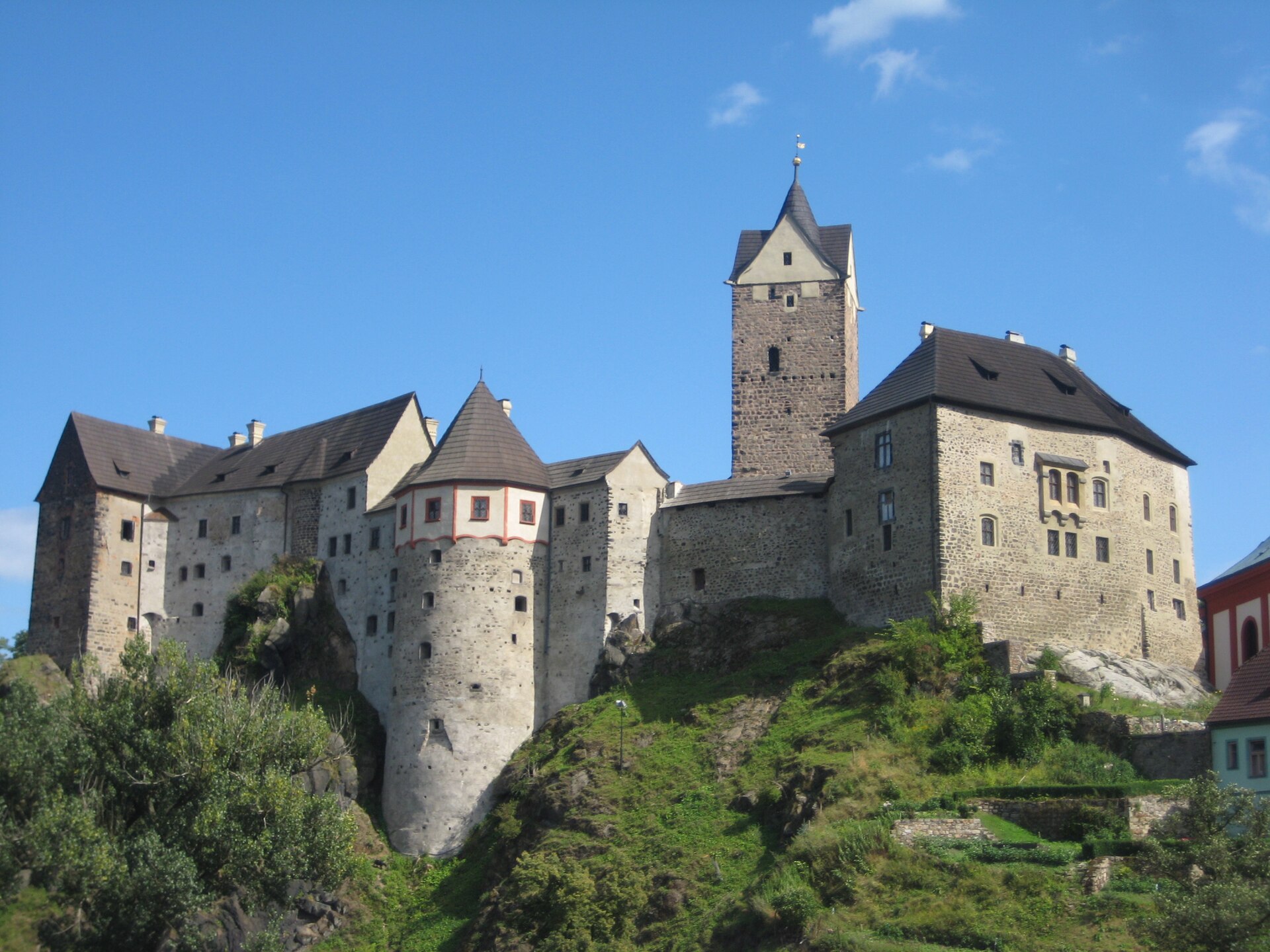
Perched on a rocky outcrop where the Ohře River bends sharply around the town, Loket Castle feels less like a man-made structure and more like a natural extension of the landscape. Its stone walls rise abruptly from the cliffside, their weathered surfaces blending seamlessly with the rugged terrain. For nearly a thousand years, this fortress has watched over the valley—first as a military stronghold guarding trade routes and the borders of the Bohemian kingdom, then as one of the most feared prisons in the region. Today, the castle stands as a tangible piece of history, its courtyards and towers offering a direct connection to the past for anyone willing to climb its worn steps.
The architecture of Loket is a patchwork of eras, each layer revealing something about the time that shaped it. The oldest sections, built from rough-hewn stone, date back to the Romanesque period when the castle was little more than a fortified outpost. Later, Gothic additions transformed it into a formidable stronghold: thick walls punctuated by arrow slits, a massive gatehouse, and a keep that still dominates the skyline. By the Renaissance, the castle had taken on a more refined character—arcaded galleries softened its harsh lines, and interiors were redesigned to let in more light. Walking through its corridors, you can almost trace the evolution of Central European architecture, from the stark functionality of medieval fortresses to the decorative elegance of later centuries.
Loket has always been more than just a military installation. In the 14th century, Emperor Charles IV, the founder of nearby Karlovy Vary, is said to have stayed here while hunting in the surrounding forests. The castle later became a favored retreat for Bohemian royalty and noble families, though its fortunes waned in the 17th century when it was mortgaged to cover the debts of Emperor Rudolf II. By the 1800s, Loket had captured the imagination of Romantics, who saw in its crumbling walls and shadowy dungeons the essence of a heroic, if brutal, past. Poets and painters flocked here, drawn by the same melancholic beauty that still lingers in its courtyards.
These days, the castle is far from a silent relic. Locals and visitors alike gather in its inner courtyard for summer concerts, where the strains of classical music drift through the ancient stone arches. In warmer months, the grounds come alive with medieval festivals and reenactments of knightly tournaments, their clanking armor and colorful banners a stark contrast to the quiet dignity of the castle’s usual atmosphere. The main tower, accessible via a narrow spiral staircase, offers one of the best views in the region—a sweeping panorama of the river’s bend and the rolling hills beyond. It’s easy to imagine the sentries who once stood here, scanning the horizon for approaching enemies or messengers from distant lands.
Below ground, the castle’s dungeons tell a darker story. The cells where prisoners were once held have been preserved, their low ceilings and thick walls a reminder of the harsh justice of the past. The most infamous of these is the so-called "hunger tower," where inmates were left to starve—a grim fate that, according to legend, befell more than one unfortunate soul. Today, the dungeons house a collection of medieval torture devices, their cold metal and rusted mechanisms a sobering counterpoint to the castle’s more picturesque features. It’s not an easy exhibit to visit, but it offers a necessary glimpse into the realities of life within these walls centuries ago.
The town of Loket itself feels like an extension of the castle, its narrow cobblestone streets and red-tiled roofs preserving the atmosphere of a bygone era. Small shops sell handmade crafts and local ceramics, while cafés tucked into centuries-old buildings serve coffee to visitors taking a break from exploring. From here, it’s easy to set off on walks along the river or into the nearby forests, where remnants of old fortifications and watchtowers still peek through the trees. The town isn’t just a stop on a tourist itinerary; it’s a place where history feels immediate, as if the past is still unfolding in the quiet corners of its streets.
In recent years, Loket Castle has expanded its role beyond that of a historical monument. The castle now hosts contemporary art exhibitions, theatrical performances, and even weddings, its grand halls providing a dramatic backdrop for modern celebrations. One of the permanent exhibits focuses on the region’s porcelain-making tradition, showcasing delicate pieces that highlight the craftsmanship that has defined this area for generations. Visitors can see how the art of porcelain has evolved, from early utilitarian designs to the intricate, decorative works that later became a hallmark of Bohemian culture.
What makes Loket special is the way its history isn’t confined to plaques or glass display cases. The castle’s walls seem to absorb the stories of everyone who has passed through them—kings and prisoners, soldiers and artists—and the Ohře River carries those echoes downstream, as if reluctant to let them fade. There’s no need to rush when visiting. Sometimes, the best way to experience Loket is to sit on a bench at the foot of the castle, listen to the rustling leaves and the murmur of the water, and let the weight of centuries settle around you. In moments like these, it’s possible to feel the pulse of a place that has been, and still is, the heart of this corner of Bohemia.