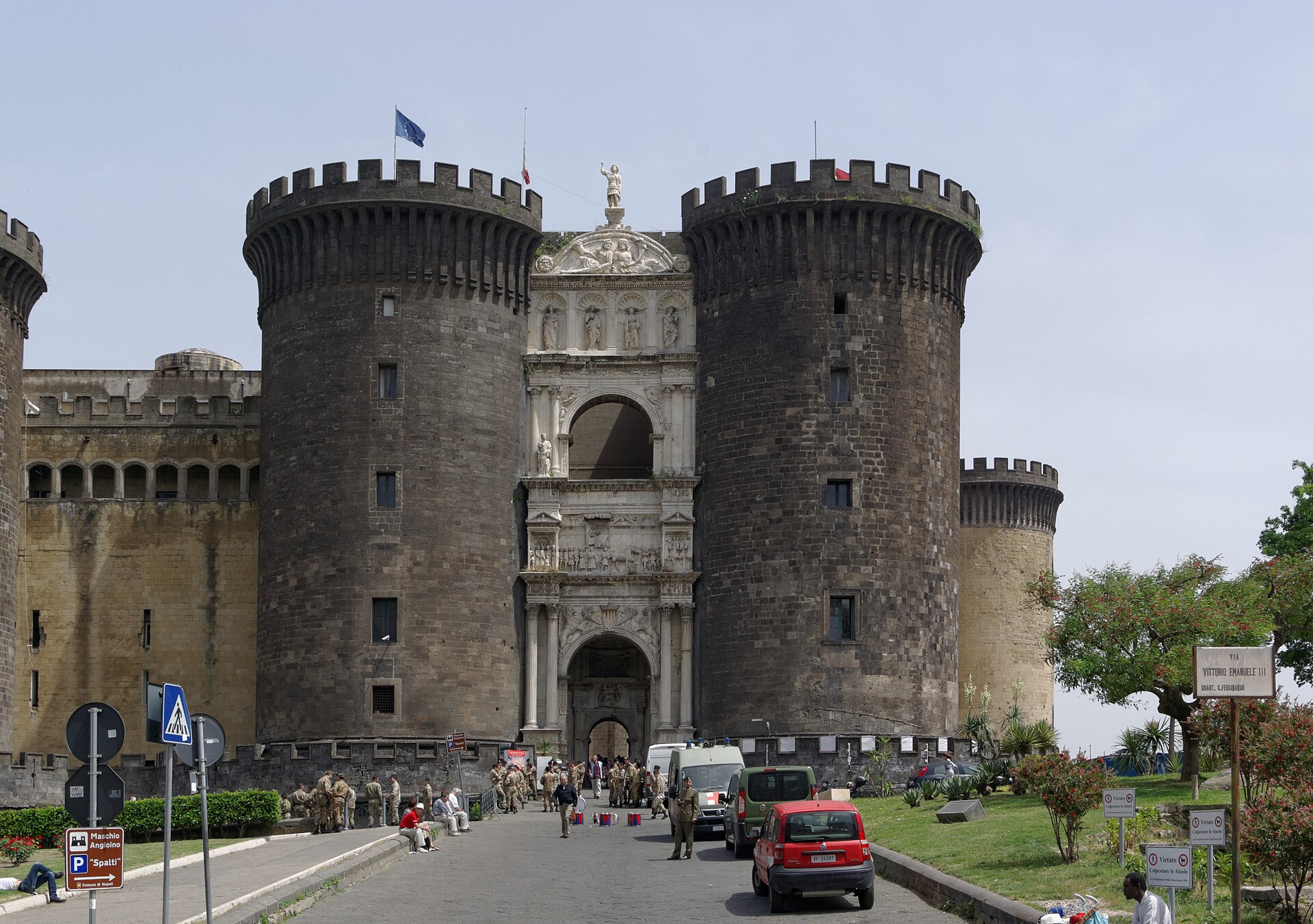
Castel Nuovo
Castel Nuovo looms over the waterfront, its five round towers of volcanic tuff the first sight when arriving in Naples by sea. Built in 1279 under Charles of Anjou, the fortress shifted the city’s power center from older castles to this new stronghold—its name means "New Castle." The Aragonese rebuilt it in the 15th century after a siege that tested its defenses. The thick walls and sturdy towers were made to last.
The white marble triumphal arch between the two front towers stands out. Alfonso of Aragon commissioned it, blending early Renaissance style with southern Italy’s traditions. The arch’s two tiers of columns and reliefs show the king’s entry into Naples. Statues of virtues flank the scene, their marble catching the light against the fortress’s dark stone.
Inside, the Sala dei Baroni tells a story. In 1486, nobles plotting against the king were arrested here during a wedding feast. The hall’s octagonal vault, shaped like a star, once hosted the city council. Its size reflects the power it held.
The Civic Museum fills the rest of the castle. Paintings, sculptures, and frescoes trace Naples’ artistic past. The Palatine Chapel, the only surviving part of the original Angevin structure, offers a quiet contrast to the fortress’s imposing exterior.
From the upper galleries, the view stretches across the port to Vesuvius. It’s a reminder of the city’s history—both human and natural.
Castel Nuovo sits between the port and Piazza Municipio. It’s a short walk from the metro and ferry terminals. No need to plan a separate trip; it fits easily into a waterfront visit. The entrance fee is modest, and entry is free on Sunday afternoons. An hour covers the highlights, mostly spent in the Sala dei Baroni and the galleries.
The courtyard hosts exhibitions and markets. The atmosphere changes daily—sometimes lively, sometimes crowded. The towers and walkways require stairs. There’s no elevator, but the views from the top make the climb worthwhile.
The worn stones of the courtyard and the echoes in the Sala dei Baroni make history feel close. The port’s hum adds to the sense of continuity. The fortress has seen sieges, betrayals, and celebrations. Today, it stands as part of Naples’ daily life. Whether you come for the architecture, the views, or a quiet moment, the castle offers something real.