Perched on a gentle hill overlooking the Rhine Valley, Gutenberg Castle feels like a quiet guardian of Liechtenstein’s past. Unlike the more famous Vaduz Castle, which looms over the capital as a private residence, Gutenberg is open to the public, offering a rare chance to step into the country’s medieval history without the crowds. The ruins, though partially restored, still carry the weight of centuries, their stone walls whispering stories of knights, nobles, and the slow march of time.
The castle’s origins trace back to the early Middle Ages, though the exact date of its construction remains uncertain. Some records suggest it was built in the 12th century, while others point to the 13th, when the Lords of Schellenberg ruled the land. What is clear is that Gutenberg was strategically important, sitting along trade routes that connected the Swiss Alps to the Rhine. Its position allowed it to control movement through the valley, making it a key stronghold in an era when power was measured in land and fortresses.
By the 15th century, Gutenberg had passed into the hands of the Habsburgs, who expanded and reinforced it. The castle’s most striking feature today—the tall, square keep—dates from this period, a testament to the military architecture of the time. The Habsburgs, however, were more interested in Vaduz, and Gutenberg gradually fell into disuse. By the 18th century, it was already a ruin, its stones repurposed by locals for other buildings, a common fate for abandoned fortresses across Europe.
What remains of Gutenberg is a mix of original and reconstructed elements. The keep, the chapel, and parts of the outer walls have been stabilized, allowing visitors to wander through the ruins without fear of collapse. The chapel, dedicated to Saint John the Baptist, is one of the oldest parts of the castle, its simple Romanesque arches hinting at the religious life that once thrived here. Inside, the air is cool and still, the silence broken only by the occasional rustle of wind through the ivy clinging to the stones.
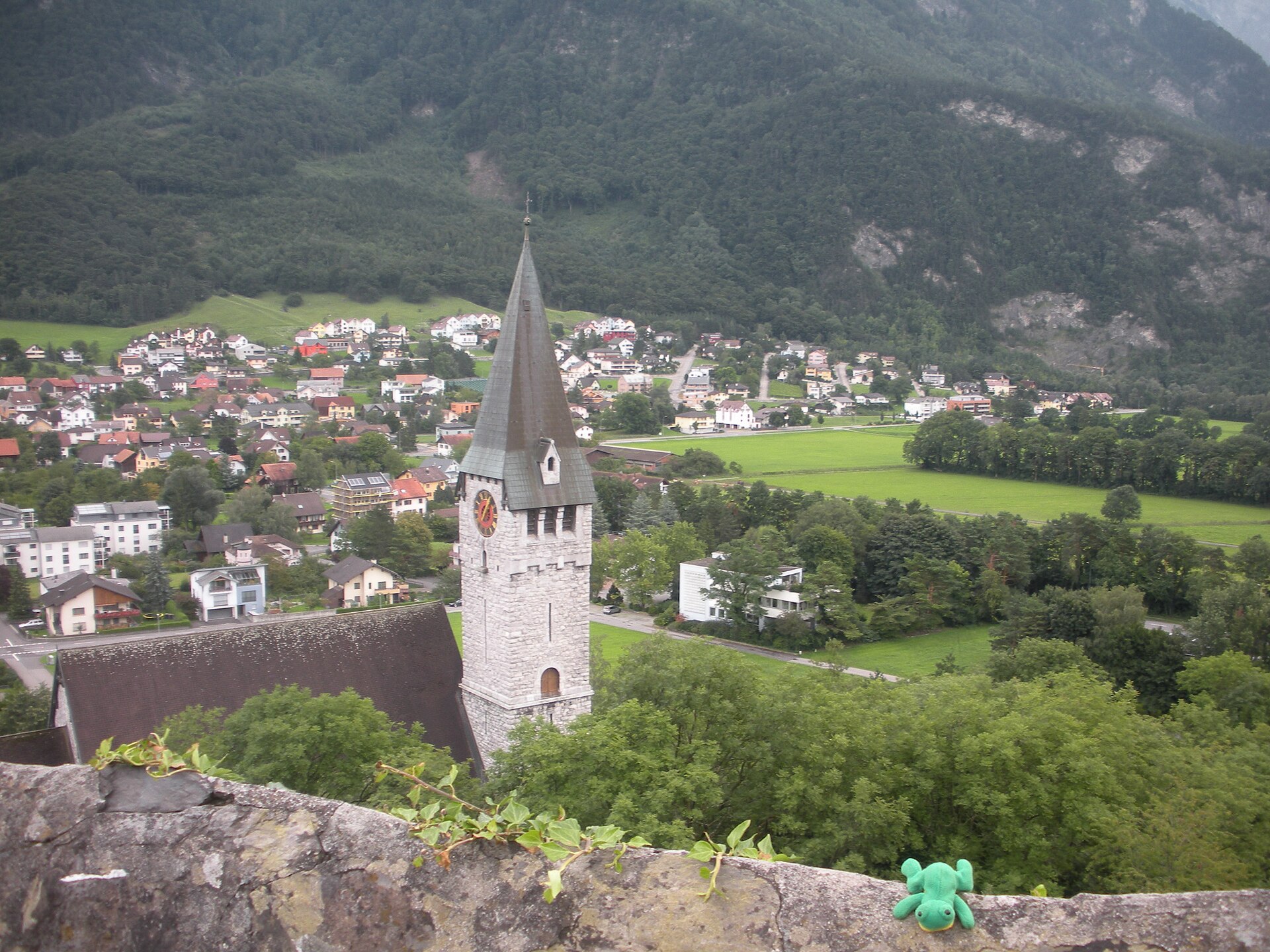
The castle grounds are open year-round, and there’s no admission fee, which makes it an easy stop for anyone exploring Liechtenstein’s quieter corners. From the hilltop, the view stretches across the Rhine Valley, where the river winds like a silver thread through the patchwork of fields and villages below. On clear days, the Swiss Alps rise in the distance, their peaks dusted with snow even in summer. It’s a view that hasn’t changed much in centuries, a reminder of how small human ambitions must have felt against the vastness of the landscape.
Gutenberg is not a place for grand spectacles or guided tours. There are no gift shops, no audio guides, no costumed reenactors. Instead, it offers something rarer: a sense of solitude and timelessness. The best way to experience it is to wander at your own pace, climbing the worn steps of the keep or sitting on one of the benches scattered around the grounds. In spring, wildflowers push through the cracks in the stone, and in autumn, the surrounding vineyards turn gold. Even in winter, when the valley is blanketed in snow, the castle has a stark beauty, its silhouette sharp against the pale sky.
For those interested in Liechtenstein’s history, Gutenberg provides a tangible link to the past. The nearby village of Balzers, just a short walk away, has a small museum with artifacts from the castle and the surrounding area, though it’s modest compared to the grand collections in Vaduz. The real draw, though, is the castle itself—the way the light falls on its walls at dusk, the way the wind carries the scent of grass and earth, the way it feels like a place where time has paused, if only for a moment.
It’s worth noting that Gutenberg is not a destination for those seeking luxury or entertainment. There are no restaurants on the grounds, no guided experiences, no Instagram-worthy backdrops (though the view is undeniably photogenic). What it offers instead is authenticity. It’s a place where you can imagine the clatter of hooves on cobblestones, the murmur of prayers in the chapel, the creak of wooden drawbridges being raised at dusk. In a world where so many historic sites feel sanitized for tourists, Gutenberg remains refreshingly untouched.
If you’re visiting Liechtenstein, Gutenberg is a detour worth making. It’s a short drive or bus ride from Vaduz, and the journey itself is pleasant, winding through rolling hills and past traditional wooden chalets. The castle is especially lovely in the early morning or late afternoon, when the light is soft and the shadows long. Whether you spend an hour or half a day here, it’s the kind of place that lingers in your memory—not for what it has to offer in the way of attractions, but for the quiet sense of connection it provides to a past that feels both distant and strangely familiar.