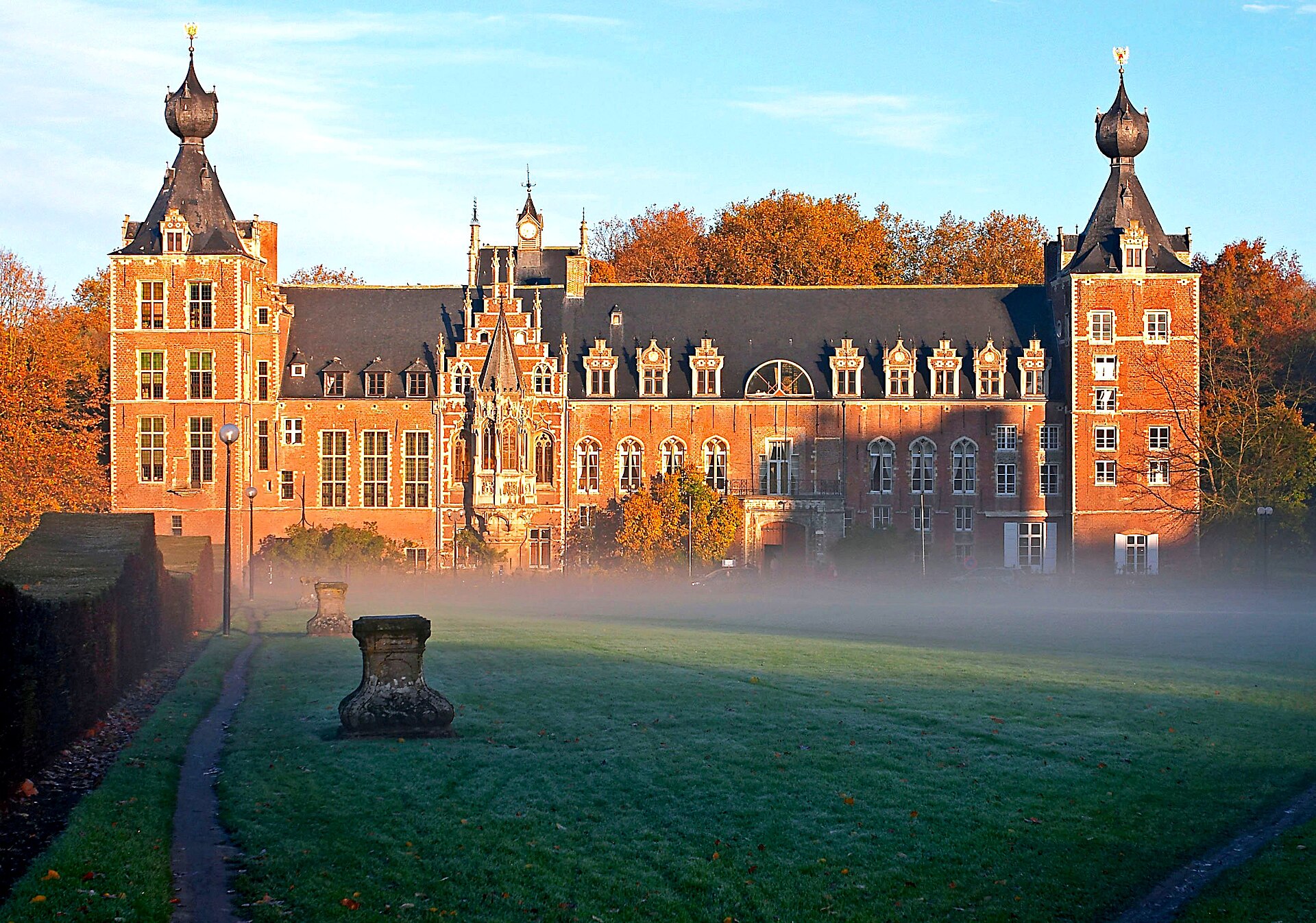
Arenberg Castle stands on the edge of Leuven, where the city’s quiet outskirts meet the rolling Flemish countryside. Its presence is unmistakable—a grand, moated complex of warm brick and pale stone, its towers and gables rising above the treetops like something from a medieval tapestry. Yet the castle is not just a relic of the past; it has been repurposed over the centuries, adapting to the needs of each era while retaining its imposing dignity. Today, it belongs to KU Leuven, the city’s historic university, and serves as a hub for research, education, and occasional public events. The blend of academic life and centuries-old architecture gives the place a unique character, neither fully a museum nor entirely a working institution, but something in between.
The origins of Arenberg Castle trace back to the 12th century, when it began as a modest fortress owned by the lords of Heverlee. Over time, it passed through the hands of various noble families, each leaving their mark on its structure. The most significant transformation came in the 16th century under the Croÿ family, who expanded it into a Renaissance-style residence. Later, the Arenbergs, a powerful dynasty with ties to the Habsburgs, took over and further refined the estate, adding Baroque elements and surrounding it with formal gardens. The castle’s current appearance is largely the result of 19th-century restorations, which sought to preserve its historic charm while making it suitable for modern use.
Walking through the castle grounds, you notice how the architecture balances grandeur and intimacy. The main building, with its symmetrical façade and tall windows, exudes a sense of order, while the side wings and outbuildings create a more relaxed, almost village-like atmosphere. The moat, still filled with water, adds a layer of quiet drama, reflecting the castle’s walls and the sky above. Inside, the halls and chambers have been adapted for university purposes, but traces of their former life remain—ornate fireplaces, intricate woodwork, and the occasional coat of arms hinting at the noble families who once lived here.
One of the most striking features of Arenberg is its park, a vast expanse of greenery that stretches behind the castle. Designed in the English landscape style, it feels more like a natural forest than a manicured garden, with winding paths, small ponds, and clusters of ancient trees. The park is open to the public, offering a peaceful retreat from the city. On weekends, you might see families picnicking near the water or students lounging on the grass, their textbooks forgotten for a moment. The contrast between the wildness of the park and the formal elegance of the castle itself is part of what makes the place so compelling.
Arenberg’s role in Leuven’s history is as much about power as it is about beauty. The castle was not just a noble residence but a center of influence, where decisions were made that shaped the region. During the 16th and 17th centuries, it hosted gatherings of aristocrats, diplomats, and scholars, some of whom would later play key roles in European politics. The Arenbergs themselves were a prominent family, with connections to the Spanish and Austrian courts. Their legacy is still visible in the castle’s architecture, from the grand reception halls to the private chapels where the family worshipped.
In the 20th century, the castle’s fate took another turn when it was acquired by the university. The transition was not without challenges—World War II left its mark, and parts of the estate were damaged. Yet the university’s stewardship has ensured that Arenberg remains a living part of Leuven’s cultural landscape. Today, it houses research institutes, lecture halls, and even a small museum dedicated to the history of science. The blend of old and new is seamless; modern equipment sits alongside antique furnishings, and the sound of students debating in the courtyard mingles with the rustle of leaves in the park.
Visiting Arenberg is not like stepping into a preserved historical site. There are no velvet ropes or guided tours dictating where you can go. Instead, the castle invites exploration at your own pace. You can wander through the park, peek into the courtyards, or even attend a public lecture if one is happening during your visit. The university’s presence means the place is always in use, which gives it a dynamic, lived-in feel. On a quiet afternoon, you might find yourself alone in the gardens, listening to the distant hum of the city beyond the trees.
For those who appreciate history, architecture, or simply a good walk, Arenberg offers something rare—a place where the past and present coexist without tension. It’s not a tourist attraction in the traditional sense, but that’s part of its appeal. The castle doesn’t need to perform for visitors; it has its own rhythm, shaped by the seasons, the academic calendar, and the slow passage of time. Whether you come for the architecture, the park, or just a moment of quiet reflection, Arenberg leaves an impression that lingers long after you’ve left its grounds.