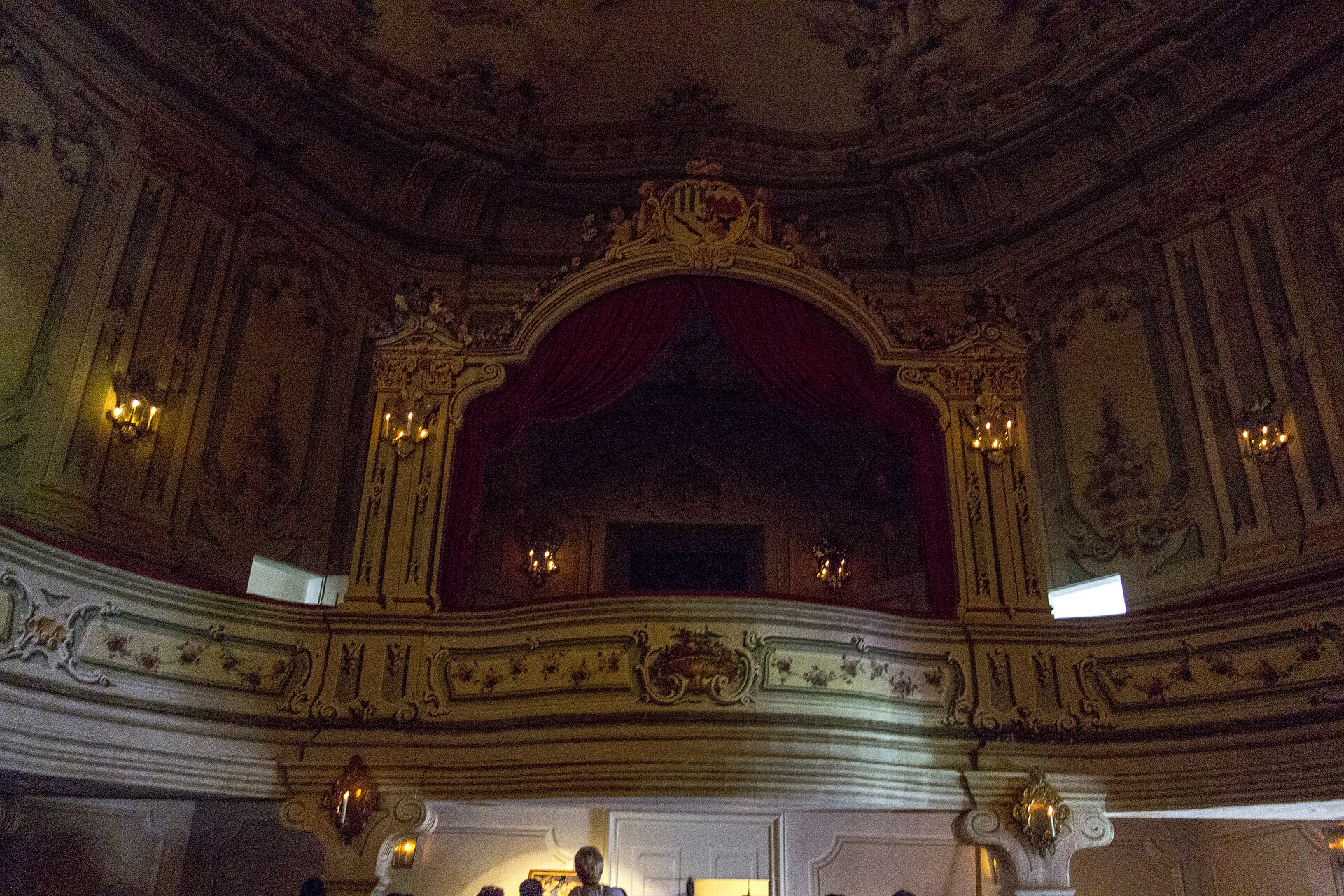
Český Krumlov’s Baroque Theatre is one of those rare places where the past doesn’t just linger—it breathes. Tucked within the sprawling complex of one of the Czech Republic’s most enchanting castles, the theatre feels like a time capsule, untouched by the centuries that have passed since its heyday. Unlike many historic theatres that have been restored or modernized, this one remains almost exactly as it was in the 18th century, from its ornate stage machinery to the delicate hand-painted backdrops. It’s not merely a museum piece; it’s a living stage where performances still unfold according to the traditions of its era.
The theatre’s origins trace back to the mid-17th century, when the Eggenberg family, then owners of the castle, first established a court theatre here. That early version was modest compared to what would come later. The transformation into the grand Baroque theatre we see today happened in the late 1700s under the Schwarzenbergs, who inherited the estate. They spared no expense, commissioning master craftsmen to create a space that was as much a marvel of engineering as it was of art. The result was a theatre where every detail—from the gilded boxes to the intricate stage mechanisms—was designed to dazzle and transport its audience.
Stepping into the auditorium is like entering a different world. The space is intimate, with seating arranged in tiers of ornate boxes, their walls adorned with delicate stucco and gold leaf. The stage is framed by painted scenery depicting classical ruins and idyllic landscapes, each backdrop a masterpiece of perspective and detail. There are nearly twenty of these backdrops, all hand-painted with such precision that they create the illusion of depth, making the stage feel like a window into another time. The effect is mesmerizing, as if the audience has been transported to a grand European court where myths and legends come to life.
This was never a theatre for the masses. In its prime, it was an exclusive retreat for the aristocracy, where performances were staged for a select circle of guests. The repertoire included operas, ballets, and plays, often performed in Italian or French, reflecting the cosmopolitan tastes of the era. Today, the theatre continues this tradition in a more modest form. During the summer months, it hosts performances that recreate the atmosphere of Baroque-era productions, complete with period costumes and music. In winter, the theatre closes to visitors—the fragile decorations and mechanisms can’t withstand the cold, and the space is left to rest until the warmer months return.
A visit here is more than just a tour; it’s an immersion in the craftsmanship and ingenuity of the past. Guides don’t just recount the theatre’s history—they explain how it functioned. The stage, for instance, is a marvel of 18th-century engineering, with a labyrinth of ropes, pulleys, and counterweights hidden beneath the floor. These mechanisms allow the scenery to change in seconds, all operated by a team of stagehands pulling on ropes with the precision of sailors hoisting sails. It’s a reminder of how much effort went into creating the illusion of magic on stage, long before the age of electricity and digital effects.
What makes Český Krumlov’s theatre truly extraordinary is its authenticity. Across Europe, few Baroque theatres have survived in such pristine condition. Many have been rebuilt or heavily restored, but here, almost everything is original—the wooden stage, the velvet curtains, even the candle-like lighting that once illuminated the performances. While modern electric bulbs have replaced the actual candles for safety reasons, the warm, flickering glow remains, preserving the ambiance of the 18th century. It’s a rare glimpse into a world where art and mechanics were intertwined in ways that feel almost alchemical.
The theatre is deeply intertwined with the history of Český Krumlov Castle itself. The castle has stood for centuries, weathering wars, changing hands, and enduring periods of both neglect and revival. Yet through it all, the theatre has remained at its heart, a symbol of the cultural life that once thrived within its walls. Even after the castle was opened to the public as a museum, the theatre retained its significance. It draws visitors who are as interested in the stories of the people who once performed here as they are in the architecture or the artistry of the stage.
There’s something profoundly moving about standing in a space where so much history has unfolded. The theatre isn’t just a relic; it’s a place where the past feels tangible. The air is thick with the echoes of applause, the rustle of silk gowns, and the strains of long-forgotten music. It’s easy to imagine the audience of centuries past, dressed in their finery, watching as actors in powdered wigs and elaborate costumes brought stories to life. Today, the theatre continues to do what it was built for—transporting those who enter its doors to another time, if only for a little while.
For anyone who appreciates history, art, or the sheer ingenuity of human creativity, the Baroque Theatre in Český Krumlov is a must-see. It’s not about flashy special effects or modern spectacle; it’s about the quiet power of authenticity. Here, the past isn’t just preserved—it’s alive, waiting to be rediscovered with every visit.