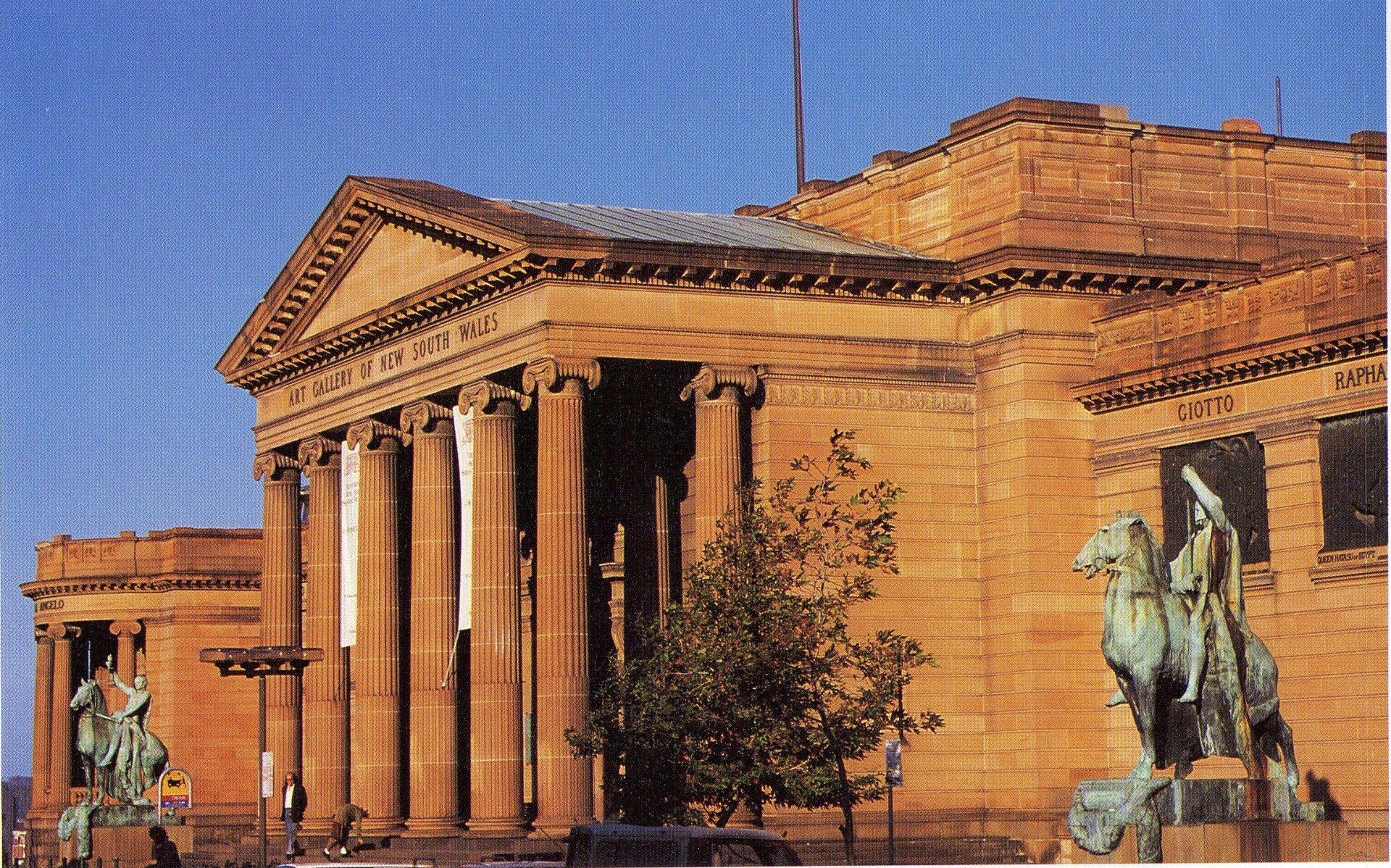
The Art Gallery of New South Wales sits quietly on the edge of Sydney’s Royal Botanic Garden, a place where the city’s usual pace seems to slow just enough to let you breathe. The building itself is part of the story—its sandstone walls and classical columns stand in contrast to the bright, open skies of Australia, while inside, the light spills through tall windows, softening the grand architecture. It’s a short walk from the bustle of George Street, but once you step through the doors, the noise of the city fades into the background.
The gallery opened in 1874, though its origins stretch back further, to a time when Sydney was still finding its identity. In the mid-1800s, as the colony grew, there was a sense that this distant outpost needed more than just ports and settlements—it needed culture. The first works collected were mostly European paintings, alongside early attempts by local artists to capture the unfamiliar landscapes of this new land. Over time, the collection expanded, reflecting the shifts in Australian society, from colonial portraits to the bold, contemporary voices of Indigenous artists, whose work now holds a central place in the gallery’s identity.
Today, the gallery houses over thirty thousand works, spanning centuries and styles. European masters like Rubens, Van Dyck, and Monet share space with Australia’s own artistic legacy. The collection traces the country’s history, from ancient Aboriginal rock art and bark paintings to the vast, sun-drenched canvases of the 20th century, where artists tried to distill the essence of the Australian landscape—its endless deserts, fierce light, and sweeping coastlines. The Indigenous art collection is one of the most significant in the world, blending traditional techniques with modern interpretations, where ancient symbols meet new ways of storytelling.
The architecture tells its own story. The original 19th-century building, with its neoclassical grandeur, now sits alongside modern extensions added in the late 20th century. The design is thoughtful, guiding visitors seamlessly from one era to the next—spacious, light-filled galleries give way to smaller, more intimate rooms, each shaped to suit the art it holds. In summer, exhibitions spill into the gardens outside, where sculptures and installations interact with the natural surroundings, blurring the line between art and landscape.
Beyond exhibitions, the gallery is a hub of activity. Lectures, workshops, and live performances keep the space alive, while educational programs, especially for younger visitors, make art accessible in new ways. For many Sydneysiders, it’s a place to return to, whether for a new exhibition or just an hour of quiet reflection. Weekends can be busy, but even then, the gallery maintains a sense of calm, as if it absorbs the city’s energy and leaves only what’s needed for contemplation.
Visiting on a weekday, when the crowds thin, is a different experience. You can linger in front of a painting—perhaps a familiar masterpiece or an unknown work that catches your eye—and let it pull you into its world. The gallery’s café offers a quiet spot to pause, with views over the botanic garden and the harbour beyond. From here, Sydney feels distant, as if the city has momentarily stilled, allowing space for thought.
More than just a museum, the Art Gallery of New South Wales is a place where art exists in conversation with the city and its people. It evolves alongside Sydney, reflecting changing perspectives—what mattered a century ago may resonate differently today, and that’s part of its strength. The gallery traces Australia’s journey through art, from its colonial beginnings to its growing recognition of Indigenous heritage. But beyond the paintings and sculptures, it’s a reminder that culture isn’t just about objects on display. It’s a living story, told through colour, form, and imagination, one that continues to unfold with every visitor who walks through its doors.