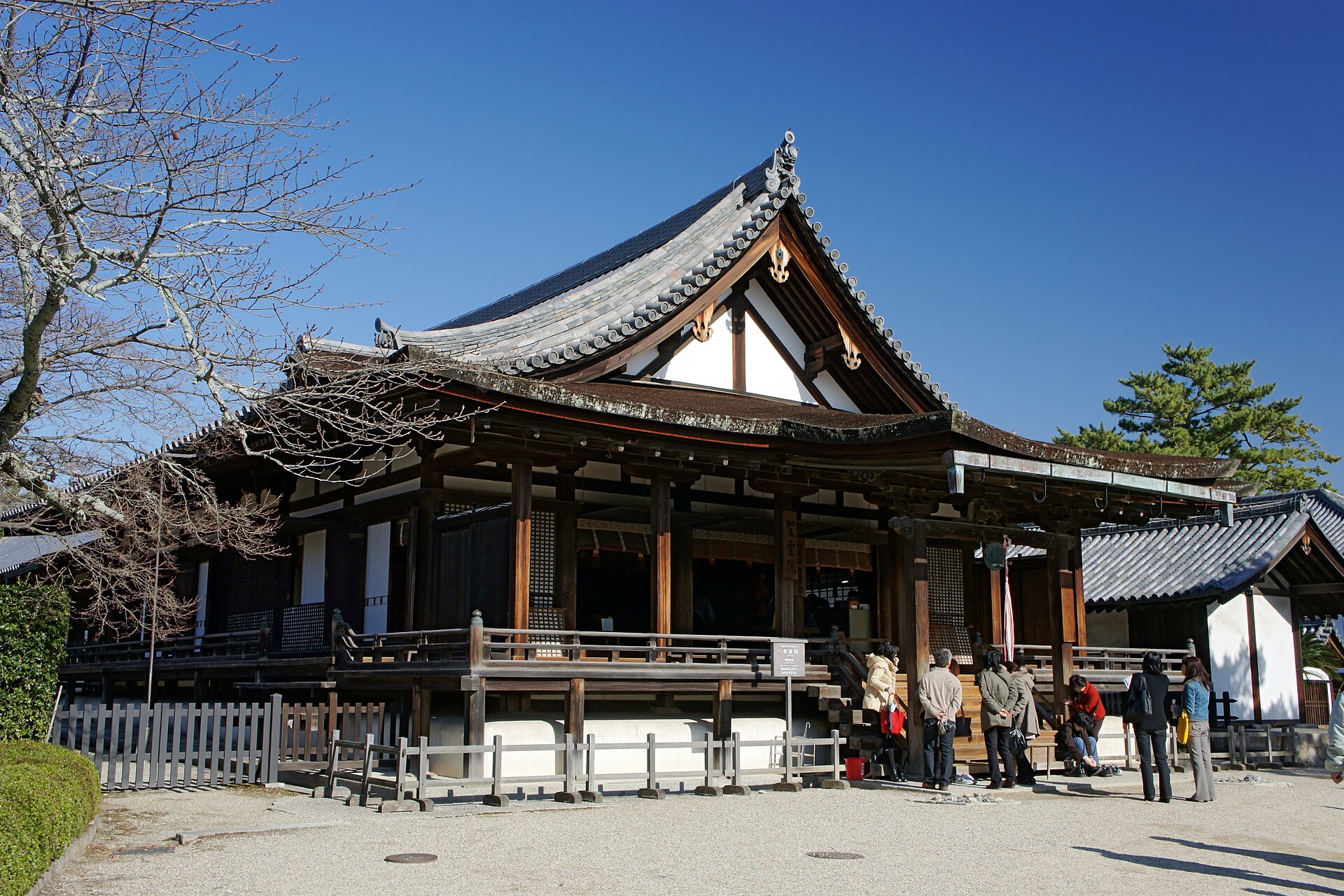
Horyu-ji Temple in Nara is one of those rare places where time seems to soften, as if the weight of centuries dissolves into the quiet rustle of pine needles and the slow drift of incense smoke. Founded in the early seventh century by Prince Shotoku, a figure almost mythic in Japan’s cultural memory, the temple complex is more than just an ancient site—it’s a living connection to the country’s formative years. This was a time when Buddhism was still taking root in Japan, when the nation was shaping its identity, and when the first great works of art and architecture were being created. Walking through Horyu-ji feels less like visiting a museum and more like stepping into a moment that has somehow endured.
The architecture of Horyu-ji is a quiet masterpiece, blending influences from China and Korea with the emerging sensibilities of early Japanese design. The five-story pagoda, its wooden structure weathered by time, is widely regarded as the oldest surviving wooden building in the world. There’s a delicate balance to its proportions, a sense of lightness despite its height, as if the structure is held aloft by something more than just joinery and beams. Nearby stands the Kondo, or Golden Hall, home to some of Japan’s most revered Buddhist treasures. These buildings weren’t just places of worship; they were statements of faith, crafted with an attention to detail that feels almost devotional. Every curve of a roof, every carved bracket, every shadow cast by the eaves tells a story of the people who built them and the beliefs that guided their hands.
Inside the temple’s halls and storehouses, the past feels tangible. Horyu-ji houses over two thousand artifacts—sculptures, paintings, ritual objects, and sacred texts—many of which are designated as national treasures. Among them is the Shaka Triad, a seventh-century bronze statue that captures the serene, almost otherworldly presence of the Buddha. The craftsmanship is astonishing, not just in its technical skill but in the way it conveys a sense of stillness and reverence. These works weren’t created to impress; they were made to inspire contemplation, to bridge the gap between the human and the divine. Even now, standing before them, it’s easy to sense the quiet devotion of the artists who shaped them.
The temple grounds are a world unto themselves, a place where history lingers in the smallest details. Narrow paths wind between ancient maples and stone lanterns, each one worn smooth by time. In one corner, there’s a well said to have been dug by Prince Shotoku himself, its water still clear after more than a thousand years. In another, a small pavilion once held sacred texts, their pages now long gone but their presence still felt in the hush of the surrounding trees. There’s no rush here, no sense of being hurried along. The temple invites you to slow down, to notice the way the light filters through the branches or how the wind carries the scent of cypress.
Horyu-ji isn’t just a relic of the past; it’s a living place of worship. Monks still conduct rituals here, their chants echoing through the halls, and pilgrims come to pay their respects to Prince Shotoku and the sacred relics enshrined within. On certain days, the temple comes alive with the sound of bells and the murmur of prayers, the air thick with the fragrance of burning incense. Even if you don’t follow Buddhism, the atmosphere has a way of settling into you, of making you reflect on the things that endure—faith, art, the quiet persistence of human hands shaping something greater than themselves.
For many Japanese, Horyu-ji is more than a historical site; it’s a touchstone of national identity. The temple has survived fires, earthquakes, and wars, each time being restored with care to preserve its original spirit. In 1993, it became Japan’s first UNESCO World Heritage site, a recognition not just of its architectural significance but of its role in shaping the country’s cultural and spiritual foundations. It’s a place where the past isn’t just remembered—it’s still alive, still speaking to those who take the time to listen.
Visiting Horyu-ji isn’t like ticking off a tourist attraction. There’s no grand spectacle here, no crowds jostling for the best view. Instead, there’s a sense of stepping into a different rhythm, one that moves at the pace of centuries rather than minutes. You might spend hours wandering the grounds, tracing the grain of the wood in the ancient pillars, watching the way the light shifts across the courtyard, or simply sitting on a bench and letting the quiet settle over you. The temple doesn’t demand your attention; it offers itself, unchanged in its essence, just as it has for over a thousand years. And in a world that often feels too loud and too fast, that kind of stillness is its own kind of gift.